WILDFIRE® – orange tea-hybrid rose - Zary
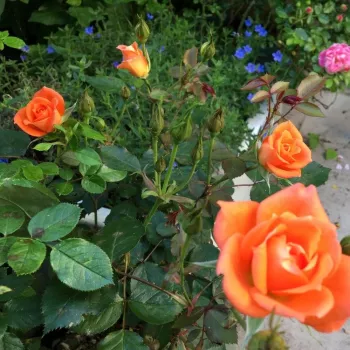
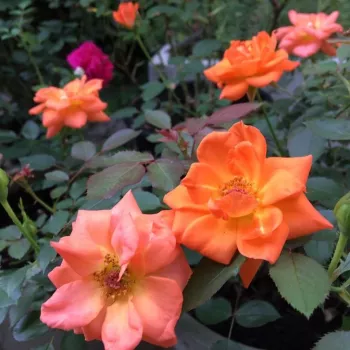
Step out to your front path after rain and meet Wildfire glowing against glossy foliage, an easy, upright hybrid tea bred for reliable performance even in breezy, wetter gardens with challenging soil. Its flame‑toned blooms appear repeatedly through the season, giving long‑lasting colour for minimal effort, whether you plant directly into well‑prepared clay beds or a generous 40–50 litre container. As an own‑root rose, it builds strength steadily, offering dependable resilience, natural regrowth after pruning or minor damage, and a reassuringly long lifespan in a compact family plot. Plant once, water with harvested rain, and watch it move from establishing roots in the first year, to confident shoots in the second, and a fully developed, show‑garden display by the third.
Usage options
| Target area |
Reasoning |
| Front garden focal point |
The tall, upright habit and fiery orange blooms give instant street‑side impact in a small London terrace front garden, working well in a single feature position with simple underplanting, for the busy urban homeowner who wants reliable presence for the design-conscious beginner |
| Cut-flower and exhibition row |
High‑centred, pointed buds on long, straight stems make this variety well suited to home cutting and amateur show benches, repeating strongly so you can harvest blooms without stripping the plant, ideal for the home flower-arranger |
| Container on paved or gravel drive |
In a 40–50 litre pot with peat‑free compost and good drainage, this rose offers height and drama where borders are limited, allowing captured rainwater to be directed into the container rather than down the drain, a practical choice for the urban sustainability-seeker |
| Mixed sunny border with perennials |
Dense dark foliage and vibrant coral‑scarlet flowers stand out among softer perennials such as nepeta or sage, creating long‑season structure with only moderate feeding and pruning, a reassuring solution for the low-maintenance gardener |
| Informal flowering hedge |
Planted at the recommended hedge spacing, the upright, leafy framework knits into a semi‑formal barrier that brings colour, privacy and structure without demanding intricate pruning, suiting the needs of the family-garden planner |
| Weather-resilient showpiece in exposed spots |
The robust framework, very good colour retention and moderate disease tolerance keep the display attractive in typical British wind and rain on heavier soils, reducing the need for frequent replacement, which appeals to the long-term investor |
| Own-root, long-lived specimen |
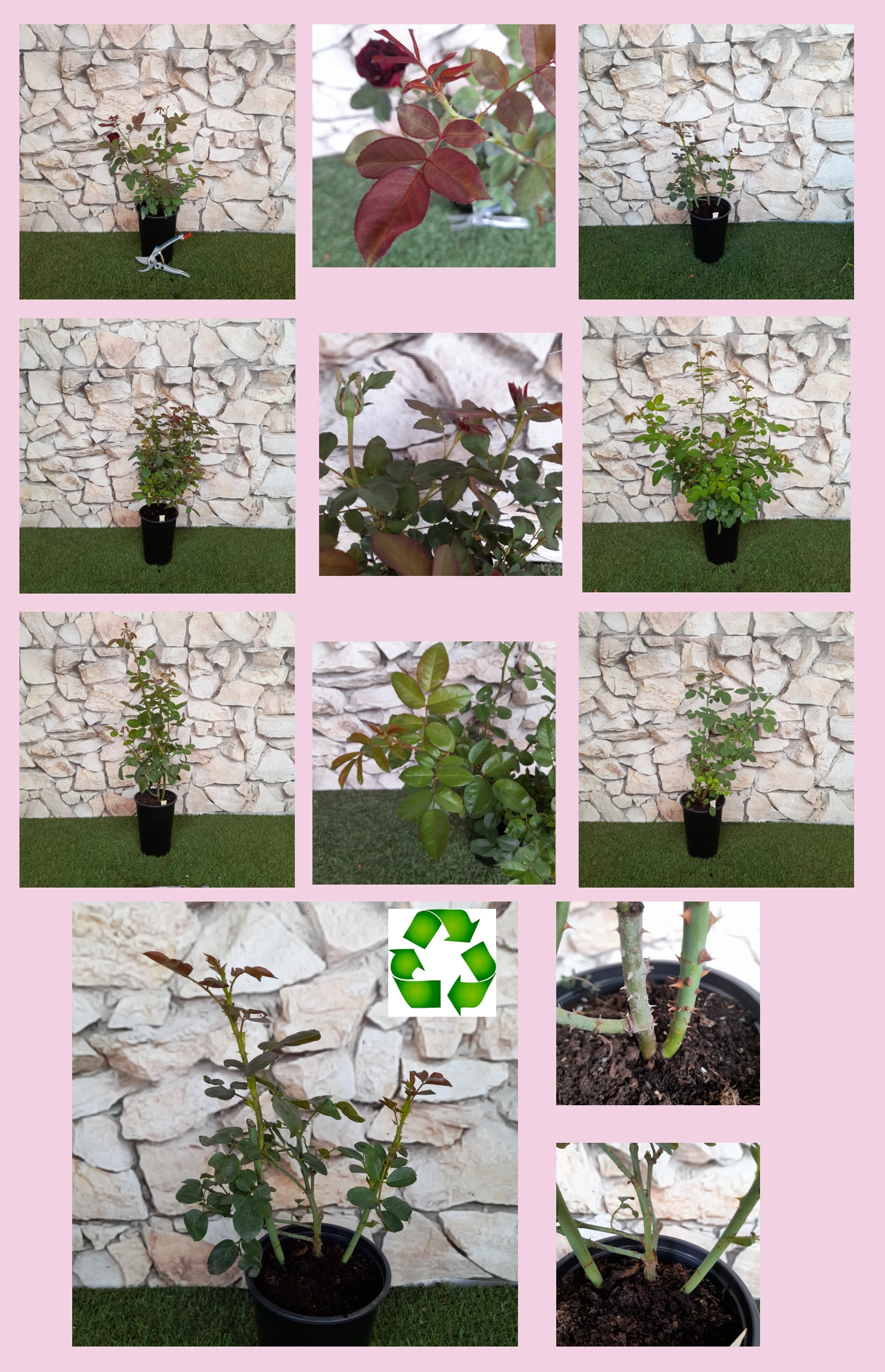
Grafted unions are absent, so the plant matures into a stable, full-height specimen that can regenerate from its own base after hard pruning or winter damage, remaining a consistent presence for years for the time-poor owner |
| Rainwater-smart, “girly” front garden scheme |
Flame-coloured blooms soften to peachy pink, pairing beautifully with airy companions like Russian sage and loosestrife, while a permeable, mulched planting area helps manage heavy rain in small city plots, a thoughtful option for the climate-aware gardener |
Styling ideas
- Terraced-elegance – Place one rose each side of a narrow front path in large clay pots, underplant with low lavender for scent and a soft edge – ideal for small-space homeowners.
- Sunset-border – Combine with nepeta, sage and soft grasses so the fiery flowers rise above a hazy blue base – perfect for relaxed, cottage-style enthusiasts.
- Show-bouquet – Grow in a straight row with easy-access paths so you can cut long stems for vases without stepping into beds – suited to keen home florists.
- Soft-hedge – Plant at hedge spacing along a front boundary with a gravel strip catching runoff, blending privacy, flowers and drainage – designed for practical family gardens.
- Balcony-feature – Use a single specimen in a 50‑litre lightweight container with trailing thyme and sedums, watered from a small rain butt – tailored to eco-minded balcony gardeners.
Technical cultivar profile
| Property |
Data |
| Name and registration |
Hybrid tea rose; registered as JACdouce, marketed as Wildfire® Hybrid tea rose JACdouce, an exhibition-type hybrid tea suitable for both garden use and cutting. |
| Origin and breeding |
Bred by Keith W. Zary for Jackson & Perkins Research, United States; parentage unknown seedling × ‘Elina’ (DICjana); introduced and registered in 2004 for ornamental garden use. |
| Growth and structural characteristics |
Strong, upright habit, 150–190 cm high and 85–115 cm wide, with dense, dark green glossy foliage and moderate prickliness; weak self‑cleaning so spent blooms benefit from deadheading. |
| Flower morphology |
Large, high‑centred hybrid tea blooms, 2.75–3.95 in across, double with 26–39 petals, usually borne singly on stems; strongly remontant with abundant first and second flushes. |
| Colour data and phenology |
Flame‑like orange overall effect; buds fire‑red to coral with orange flush, opening to fire‑orange with golden inner sheen, then coral‑scarlet, finally fading towards brick–peach pink with very good colour retention. |
| Fragrance and aroma |
Delicate, very weak fragrance; a light muscatel nuance noticeable mainly at close range in warm, still conditions, generally grown more for colour and form than for scent impact. |
| Hip characteristics |
Rose hips form only slightly; small 6–10 mm ellipsoidal fruits, red when mature, of limited ornamental interest and not usually a major feature in typical garden plantings. |
| Resistance and winter hardiness |
Rated to around −21 to −18 °C (RHS H7, USDA 6b, Swedish zone 3); moderate resistance to powdery mildew, black spot and rust; performs well in heat with regular watering in dry periods. |
| Horticultural recommendations |
Best in sunny, well‑drained positions; suitable for beds, borders, containers, hedging and cutting; medium maintenance, occasionally needing plant protection plus routine feeding, pruning and deadheading for best display. |
WILDFIRE® Hybrid tea rose JACdouce offers dramatic long-lasting colour, strong repeat flowering and a durable own-root framework; consider it if you want a vivid, reliable feature with years of service.