WHITE MARY ROSE™ – white English rose - Austin
Step out after rain to a path lined with white blooms, their strong, classic perfume held in softly cupped clusters that keep their colour even in bright summer light and breezy coastal conditions; this English shrub rose brings balance to compact front gardens, edging paths and container displays. Its bushy, moderately dense growth, good self-cleaning habit and relatively sparse thorns make it genuinely manageable for those who want beauty without fuss, while its own-root form supports a long natural lifespan, steady regeneration after pruning and a reliable outline year after year. In the first season it concentrates on roots, in the second on more confident shoots, and by the third it settles into full ornamental impact, matching rainwater-conscious, low‑peat planting schemes in small urban gardens.
Usage options
| Target area |
Reasoning |
| Terraced-house front garden feature shrub |
The compact, bushy habit to about 100–150 cm makes an elegant focal point by a front door or bay window without overpowering the space, while the pure white flowers read clearly even on overcast days, ideal for beginners seeking calm kerb appeal for the family garden. |
| Low hedge along a path or boundary |
Planting at 100 cm intervals forms a softly billowing white hedge that repeats flower through summer, with good self-cleaning so faded blooms drop away on their own, reducing deadheading time for the busy homeowner. |
| Mixed flower bed in small to medium gardens |
The mid-height, moderately dense framework fits well among perennials and grasses, and its long-lasting, colour-stable blooms add structure from early summer onwards without dominating, suiting the informal border. |
| Rainwater-conscious urban planting |
Works well in beds where downpipes or rills allow rain to soak into improved heavy soil, and tolerates exposed, humid spots where wind and showers are frequent, supporting a simple, resilient layout for the sustainable gardener. |
| Large container on balcony or paved front |
In a 40–50 litre peat-free container it offers strong fragrance and repeat flowering on a modest footprint, bringing a traditional English rose look to paved or balcony spaces with minimal complexity for the city resident. |
| Own-root long-term specimen |
The own-root form helps it recover if stems are damaged by late frosts or pruning, gradually rebuilding a stable shape over seasons and providing steady, reliable display for the long-term planner. |
| Layered planting with perennials |
Clustered medium-sized blooms in a clean white tone pair easily with lavender, sage, nepeta or airy verbena, creating soft colour layers and textural contrast that stay harmonious as plants mature for the design-conscious owner. |
| Developing garden over the first three years |
It establishes roots strongly in year one, builds fuller top growth and flowering in year two, and by year three reaches its intended form and display, supporting realistic expectations for the new gardener. |
Styling ideas
- Front-door elegance – Flank a terraced-house entrance with two shrubs underplanted with white alyssum for a soft, perfumed welcome – ideal for time-pressed urban homeowners.
- Soft path hedge – Create a low, billowing hedge at 1 m spacing, weaving in dwarf asters for late-season interest – for families wanting gentle structure without rigid formality.
- Romantic container – Plant one rose in a 50 L clay pot with trailing thyme and nepeta for movement and scent – perfect for balcony or paved-front gardeners short on space.
- Calm white border – Combine with silvery lavender, sage and grasses for a restrained, soothing palette that glows in evening light – suited to those seeking a peaceful retreat.
- Rain-friendly strip – Use beside a front path where roof water drains into a mulched bed, adding verbena for height and wildlife interest – for eco-minded city gardeners improving runoff.
Technical cultivar profile
| Characteristic |
Data |
| Name and registration |
WHITE MARY ROSE™ – white English rose - Austin; English Rose shrub, Romantic rose group; registered cultivar AUScat; also known as Winchester Cathedral in exhibition listings. |
| Origin and breeding |
Discovered as a white sport of ‘Mary Rose’ (AUSmary) by David C. H. Austin, bred in the United Kingdom in 1988 and introduced after 1992 by David Austin Roses Ltd. |
| Growth and structural characteristics |
Bushy shrub 100–150 cm high and wide, with moderately dense, mid-green, slightly glossy foliage and relatively sparse thorns; good self-cleaning so most spent petals fall naturally. |
| Flower morphology |
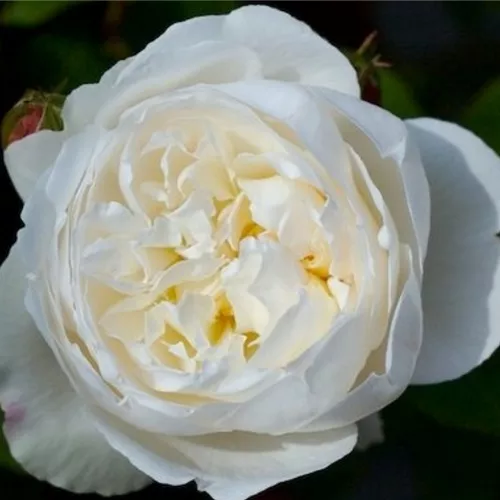
Medium-sized, cupped, double blooms with 26–39 petals, produced in clusters; remontant with an abundant second flush, giving a long flowering window under garden conditions. |
| Colour data and phenology |
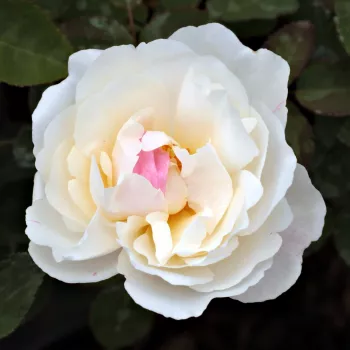
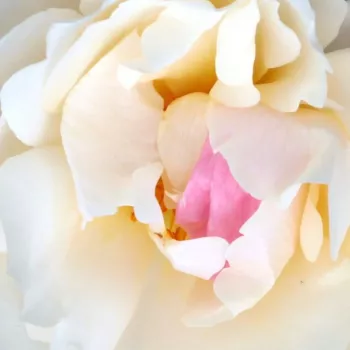
Pure white blooms (RHS NN155A outer, NN155C inner) with a silken sheen; creamy and occasionally pink-tinged in strong sun; colour retention very good, giving a consistently white effect. |
| Fragrance and aroma |
Strong, classic rose scent with good persistence around the plant; suitable for positioning near seating, doors or paths where its perfume can be appreciated in passing. |
| Hip characteristics |
Occasional small orange-red hips, spherical, about 6–10 mm across; generally sparse and not a main ornamental feature, but can add a discreet late-season accent. |
| Resistance and winter hardiness |
Hardy to about −26 to −23 °C (RHS H7, USDA 5b, Swedish Zon 4); moderate resistance to black spot, mildew and rust; benefits from monitoring and spring frost protection. |
| Horticultural recommendations |
Suited to beds, low hedges, edging and large containers; planting distances 100–180 cm; prefers improved, well-drained soil, regular watering in dry spells and occasional pest and disease checks. |
WHITE MARY ROSE™ offers compact, fragrant, repeat flowering in a long-lived, own-root English shrub form, making it a thoughtful choice for understated, enduring structure in smaller gardens and fronts.