WHITE JACQUES CARTIER – white historic perpetual hybrid rose – Pedersen
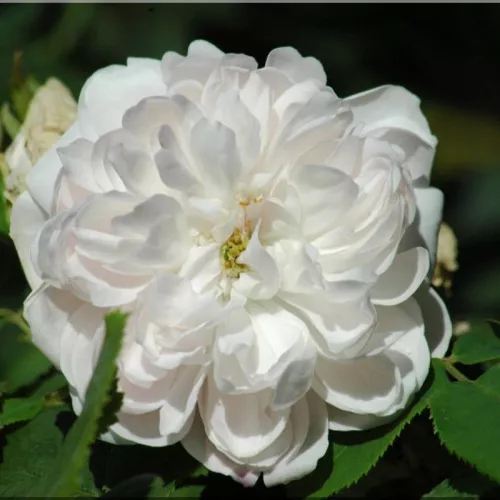
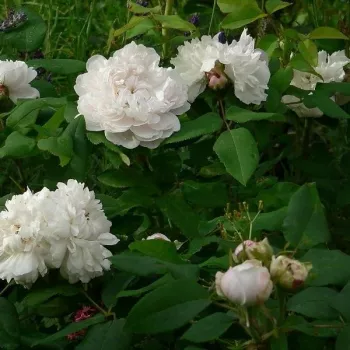
Step through your front gate and be met by petal-packed, antique rosettes of creamy white and ivory, carrying an enveloping, full old-rose fragrance that feels especially vivid after rain in typical British humidity. This historic shrub rose forms a bushy, upright structure with dense, dark foliage, ideal for framed views along a narrow London terrace path. Own-root growing ensures long-term stability and regeneration, helping the plant recover if shoots are damaged or pruned hard. In a 2-litre container it establishes reliably, especially in well-prepared clay borders with improved drainage, and over time it settles into a low-maintenance presence: Year 1 mostly roots, Year 2 stronger shoots and repeat bloom, Year 3 a fully developed ornamental character.
Usage options
| Target area |
Reasoning |
| Front-garden statement shrub by the path |
The bushy, upright habit and dense foliage make this rose an excellent focal point near the front door or along a narrow path, where its very strongly scented flowers can be enjoyed up close by passers-by and visitors, especially beginners. |
| Historic-style rose border in small family gardens |
Its compact 80–130 cm height works neatly in modest borders, where very double rosette blooms and traditional charm sit comfortably with perennials, giving character without dominating limited space for typical family gardens and hobby-gardeners. |
| Part-shaded urban side-return or courtyard |
This variety tolerates partial shade, so it continues to flower and scent short city side-returns and courtyard beds where other roses may struggle, making better use of awkward spaces for time-pressed urban-owners. |
| Rainwater-conscious clay or chalk front gardens |
Once planted in well-prepared soil, it copes reliably with blustery, rain-prone conditions in many UK streets, especially where improved soil structure helps manage heavier ground and better drainage for sustainability-minded gardeners. |
| Containers and large pots on balconies or patios |
In a 40–50 litre or larger container with good drainage, this rose forms a stable, long-lived specimen; own-root growth helps it regenerate from the base if pruned harder after a few seasons, suiting space-limited balcony-owners. |
| Scented seating area or evening terrace |
The very strong, garden-filling perfume is ideal beside a bench or outdoor table, where repeated flushes of bloom provide fragrance through the season, creating a calm, romantic mood appreciated by relaxed evening-sitters. |
| Traditional mixed planting with herbs and perennials |
Its refined, rosette blooms combine beautifully with airy companions such as pinks, catchfly or creeping thyme; these soften the outline, support pollinators where possible, and emphasise the rose’s heritage for creative stylists. |
| Long-term, own-root heritage feature |
As an own-root shrub, the plant matures into a durable, well-shaped bush with renewed basal shoots rather than relying on grafted stock, helping maintain ornamental quality over many years for forward‑thinking homeowners. |
Styling ideas
- Porchframe – Place one on each side of a small terrace doorway, underplanted with creeping thyme to soften the base and echo the rose’s white tones – perfect for symmetry-loving homeowners.
- Cottage-edge – Use a loose row along a low front fence, interplanted with pinks and catmint to blur boundaries and provide soft colour transitions – ideal for romantic stylists.
- Courtyard – In a large clay pot, pair with silver-leaved sage and gravel mulch, letting the rose supply height and scent while the herbs keep maintenance modest – suited to busy city dwellers.
- Shadewalk – Plant in part-shade beside a narrow side path, teamed with ferns and white foxgloves so the bright blooms read clearly in lower light – appealing to owners of awkward side-returns.
- Heritage-mix – Combine in a mixed border with old-fashioned perennials and ornamental grasses, allowing hips to develop for late-season interest and wildlife – attractive to historically minded gardeners.
Technical cultivar profile
| Parameter |
Data |
| Name and registration |
White Jacques Cartier is a historic hybrid perpetual shrub rose sold as a historical rose; current trade name White Jacques Cartier Historical rose Pedersen, ARS exhibition name White Jacques Cartier. |
| Origin and breeding |
A white-coloured mutation of the Portland rose ‘Jacques Cartier’, selected and introduced in Denmark around 2001; breeder recorded as Knud Pedersen, with limited additional breeding data available. |
| Growth and structural characteristics |
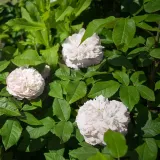
Bushy, upright shrub reaching about 80–130 cm high and 70–120 cm wide, with dense, matte dark-green foliage and moderate prickliness; spent blooms persist and often need manual deadheading for neatness. |
| Flower morphology |
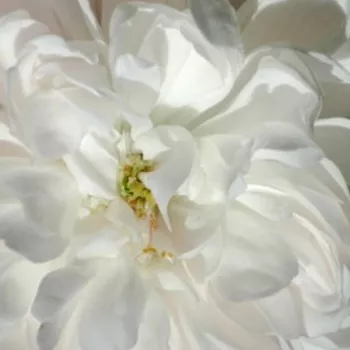
Large, very double, rosette-shaped flowers with more than 40 petals, typically borne singly; remontant with a good first flush and a lighter repeat later in the season under average garden conditions. |
| Colour data and phenology |
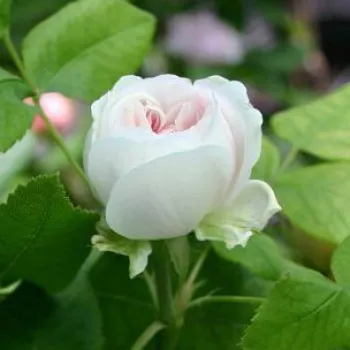
Predominantly pure white with a silky sheen; buds show hints of pale pink, ageing through creamy and pale beige tones in heat, with occasional browned petal edges in strong sun; colour holds reasonably well overall. |
| Fragrance and aroma |
Very strongly scented, with a classic old-rose perfume readily noticeable around the plant; fragrance intensity makes it suitable near paths, windows or seating areas where air movement carries the aroma. |
| Hip characteristics |
Produces moderate numbers of small, spherical red hips around 12–19 mm across, adding discreet autumn interest and potential wildlife value if spent blooms are not all removed after flowering. |
| Resistance and winter hardiness |
Very hardy shrub (approx. –32 to –29 °C; RHS H7, USDA 4b, Swedish Zone 5), but disease resistance is modest, needing regular preventive care against powdery mildew, black spot and particularly rust. |
| Horticultural recommendations |
Best used as a feature shrub, in borders, low hedging or small group plantings; prefers moist but well-drained soil, regular watering in dry spells, and consistent plant protection to manage fungal issues. |
WHITE JACQUES CARTIER offers compact historic charm, powerful fragrance and long-term structure on its own roots, making it a thoughtful choice if you would like a characterful yet manageable rose.