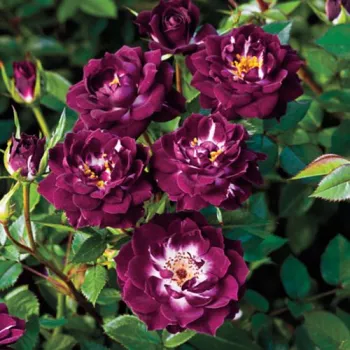
Diamond Eyes – dark purple miniature rose on own roots
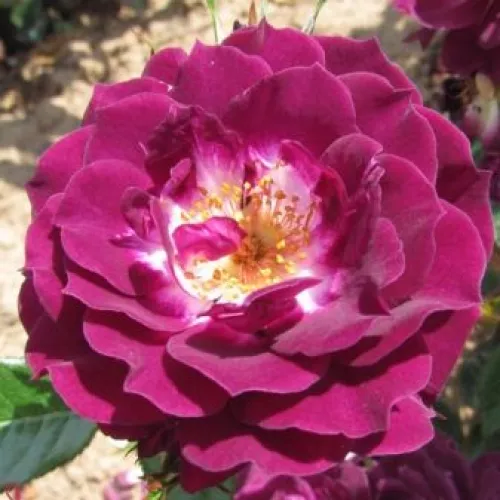
Step outside after rain and you can imagine this compact rose lining a London terrace front path, its deep purple blooms with bright white centres releasing a strong, spicy fragrance while coping reliably with frequent showers and breezy, changeable weather. Compact and easy to place in smaller spaces, it forms a naturally tidy mound of glossy foliage that suits edging, pots and low hedges with minimal shaping. Regular repeat flowering brings a long season of colour, while fragrance and striking contrast make each cluster eye‑catching at close quarters. Own‑root plants quietly build strength below ground for dependable regrowth and a long garden life, with containers of at least 40–50 litres ideal for balcony or front‑garden use. Over time you can expect roots to establish in the first year, top growth to fill out in the second, and by the third season a full display that feels settled and enduring. Medium disease resistance, especially in humid summers, pairs well with simple care routines, letting you enjoy a sense of balance and ease in a rain‑friendly urban space. Use it to soften paving, team it with lavender or nepeta for a sustainable, low‑maintenance frontage, and appreciate how its longevity, reliable colour and compact shape contribute quietly but confidently to a greener city garden.
Usage options
| Target area | Reasoning |
|---|
| Front‑garden edging along a narrow terrace path |
The dwarf, rounded habit stays low and neat, defining paths without overwhelming small London‑style front gardens or needing complex pruning. Plant in a simple single row to create a continuous ribbon of blooms for beginners. |
| Feature container on steps, balcony or patio |
Its naturally compact structure thrives in a 40–50 litre peat‑free container, combining strong root growth with showy repeat flowering, so busy urban gardeners can enjoy reliable colour in tight spaces for city‑dwellers. |
| Low hedge around a rain‑friendly gravel or shingle garden |
Regular rebloom on short, sturdy stems makes a low, fragrant hedge that pairs well with permeable, rain‑absorbing surfaces, supporting sustainable front gardens for eco‑minded owners. |
| Small focal point in a compact family garden border |
The dramatic dark‑purple petals with a clear white eye draw attention even in modest beds, giving a sense of design without complicated planting plans for homeowners. |
| Mixed planting with lavender, sage or nepeta |
Its long flowering season harmonises with classic drought‑tolerant companions, offering layered colour and texture through summer with limited maintenance for time‑poor gardeners. |
| Long‑term planting for low‑input family gardens |
As an own‑root rose, it can regenerate from the base after hard pruning or weather damage, supporting a long garden life with relatively simple yearly care for practical gardeners. |
| Urban beds exposed to wind and variable rain |
The sturdy dwarf framework and medium disease resistance suit changeable British conditions, coping well with showery, breezy spells typical of coastal‑influenced, rain‑catching front gardens for urban households. |
| Fragrant seating‑area planting near doors or windows |
Strong, spicy scent and frequent flushes of bloom create an immersive experience at close range, giving everyday entrances a special atmosphere with little extra effort for scent‑lovers. |
Styling ideas
- Terrace‑Ribbon – line both sides of a narrow front path with Diamond Eyes for a low, fragrant border, underplanting with creeping thyme – ideal for townhouse owners wanting structure without heavy upkeep.
- Balcony‑Pot – plant one rose in a 50‑litre container with fine gravel mulch and trailing nepeta for a soft, cloud‑like edge – suited to flat‑dwellers seeking long‑season colour in limited space.
- Contrast‑Circle – group three plants in a small circular bed, backed by pale grasses, to highlight the striking white eye against deep petals – perfect for gardeners who like bold yet compact focal points.
- Lavender‑Low – alternate Diamond Eyes with narrow‑leaved lavender along a sunny fence for a scented, textural low hedge – good for families wanting a classic look that still feels modern and manageable.
- Rain‑Border – set plants in a gravelled strip beside a drive, using permeable surfacing to manage runoff while the glossy foliage and dark blooms soften hard edges – suited to eco‑conscious urban gardeners.
Technical cultivar profile
| Characteristic | Data |
|---|
| Name and registration |
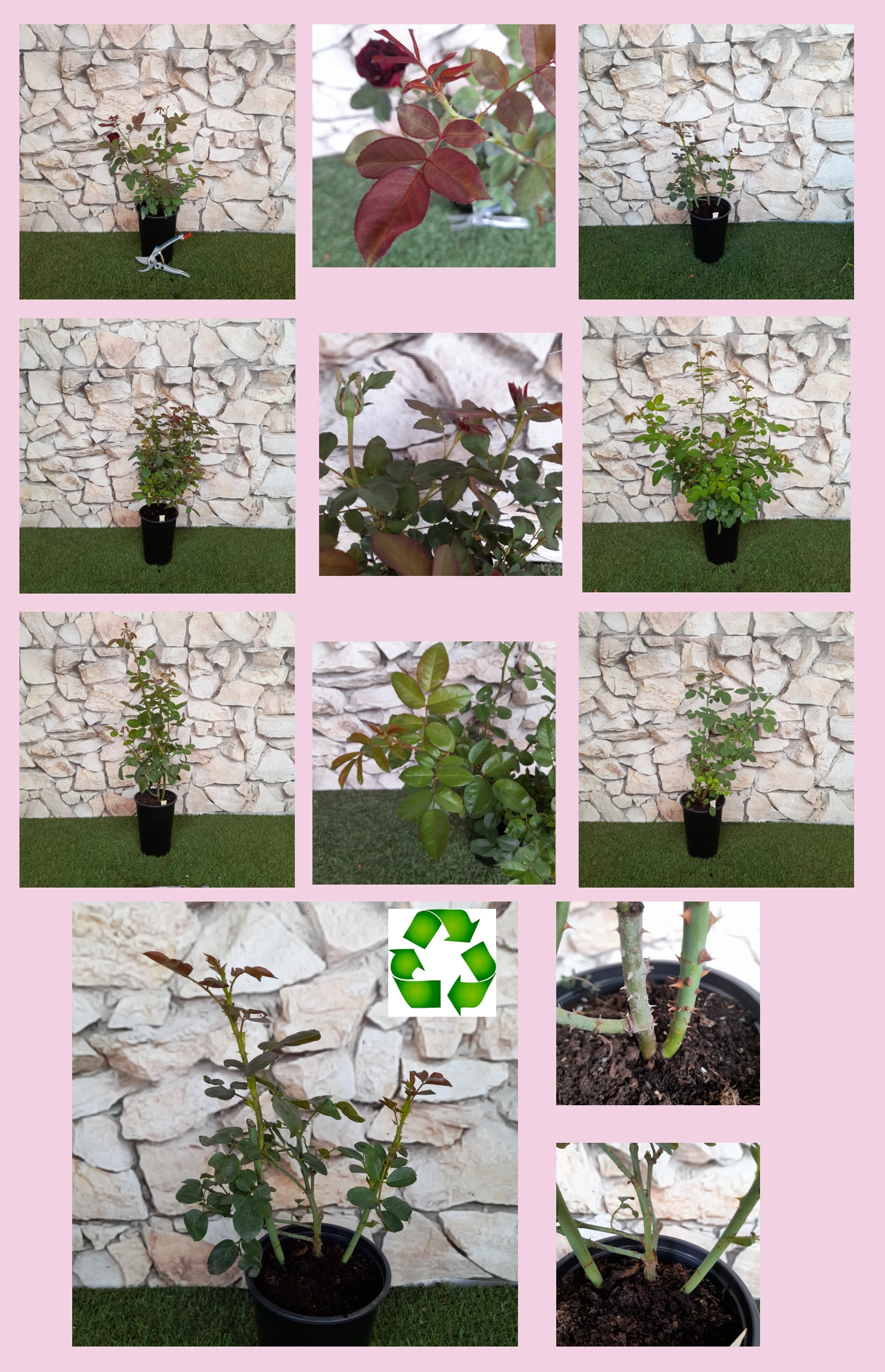
Miniature, mini‑dwarf rose registered as WEKwibypur, marketed as Diamond Eyes; exhibition miniature in ARS listings, supplied here as an own‑root, 2‑litre container plant. |
| Origin and breeding |
Bred by Tom Carruth (United States) in 2011 from ‘Wild Blue Yonder’ and complex seedling lines including ‘Baby Love’ and ‘Night Owl’; introduced commercially after 2015. |
| Awards and recognition |
American Rose Society Award of Excellence (2013) in the miniature class, reflecting strong overall performance and ornamental value in formal trial conditions. |
| Growth and structural characteristics |
Dwarf, bushy plant 45–55 cm high and wide, with dense, glossy dark green foliage and moderate prickles; forms a naturally rounded, compact mound suited to edging and containers. |
| Flower morphology |
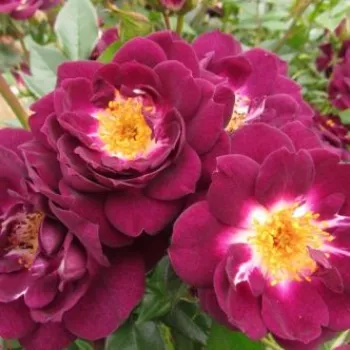
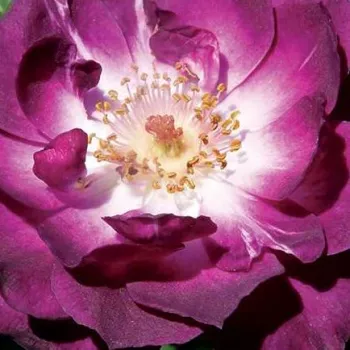
Semi‑double, flat flowers in small clusters, each 0.5–1.5 inches across with 13–25 petals; repeat‑flowering strongly with an abundant second flush when spent blooms are removed. |
| Colour data and phenology |
Velvety dark purple petals (RHS 79A) with cream‑white central eye (RHS 155D); colour deepens in cooler conditions, lightens in strong heat, retaining a sharp eye contrast at full bloom. |
| Fragrance and aroma |
Strong, spicy fragrance clearly noticeable at close range and around seating areas in still air; characterful scent adds sensory interest beyond the striking flower colouration. |
| Hip characteristics |
Rose hips form only lightly; small, spherical, red hips approximately 6–8 mm may appear sporadically, but generally the plant is grown primarily for its flowers and fragrance. |
| Resistance and winter hardiness |
Hardy to around –29 to –32 °C (RHS H7, USDA 4b, Swedish Zone 5); medium resistance to black spot, mildew and rust, needing basic, preventive care in humid seasons. |
| Horticultural recommendations |
Best in sun to light shade in fertile, well‑drained soil; suitable for containers, borders, low hedging and edging, with 35–75 cm spacing depending on use and modest deadheading to extend flowering. |
Diamond Eyes offers compact form, long repeat flowering and distinctive dark blooms on resilient own roots, making it a thoughtful choice for enduring beauty in smaller gardens and containers.