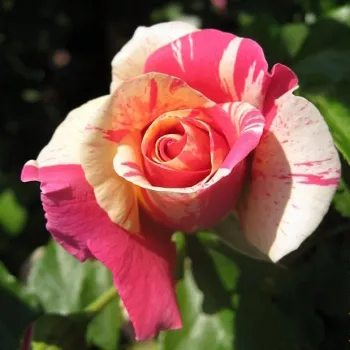
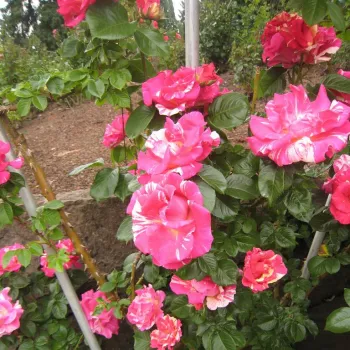
WEKrosopela – pink-cream climbing rose for sustainable city front gardens
Step out after rain and be greeted by candy stripes of pink and cream climbing gently up a wall or arch, lending a quietly poised balance to compact London front gardens and shared urban spaces. This semi-double, bee-magnet flower form offers natural pollinators support while its medium maintenance needs remain reassuringly simple for busy schedules. As an own-root climber it matures steadily for a long, reliable life, giving you years of renewal and stable flowering. It handles cool, damp UK weather with dependable health, even where humidity and summer showers raise fungal pressure, especially if planted with good air flow and drainage. In a large 40–50 litre container or open ground it will gradually reach its full height, with Year 1 focused on roots, Year 2 on stronger shoots and Year 3 on complete impact and a sense of continuity in your green, rainwater-friendly entrance.
Usage options
| Target area | Reasoning |
|---|
| Front-garden house wall or railings |
Trained as a vertical accent, this rose uses limited ground space yet delivers generous striped bloom clusters and fragrance at eye level, ideal for small terraced-house front gardens seeking low-effort decorative height for the urban homeowner. |
| Pergola, arch or arbour over a path |
The climbing habit and repeat flowering make it perfect for greening a simple arch, creating a gently scented tunnel effect that feels immersive without demanding expert pruning, suiting the romantic beginner. |
| Rainwater-conscious front garden planting |
Planted into improved clay or a permeable gravel strip, it responds well to steady rainwater, matching sustainable, low-lawn front gardens where slightly damp, breezy conditions bring periods of higher fungal pressure for the eco-focused gardener. |
| Bee-friendly mixed border with perennials |
Semi-double, open flowers with accessible stamens draw in bees, while its height lets you underplant with lavender, sage or nepeta to extend forage, making a compact wildlife corridor for the pollinator-conscious resident. |
| Balcony or patio in a 40–50 litre container |
In a sufficiently large pot with peat-free compost and a sturdy trellis, this own-root climber builds a durable vertical screen and recovers well if cut back, giving lasting structure for the space-limited balcony owner. |
| Low-maintenance family seating area backdrop |
Once tied in to supports, its medium care level mainly means occasional deadheading and basic feeding, yet it repays you with colour and scent over a long season, ideal behind a small terrace for the time-poor family. |
| Feature climber on a garden fence |
Its dense, glossy foliage and striped blooms soften plain fences while own-root vigour supports gradual thickening over the years, providing a resilient living boundary for the long-term planner. |
| Cut-flower source near the front door |
Clustered, medium-sized blooms in candy-striped shades give charming, informal bunches; regular cutting encourages new flowering wood, making it a practical, decorative larder for the home flower arranger. |
Styling ideas
- CANDY-FRONT – Train along black metal railings with underplanting of soft pink anemones to echo the stripes – for design-aware terraced-house owners.
- BALCONY-ARCH – Grow in a 50 litre pot with a slim arch and trailing nepeta at the base – for renters wanting reversible structure.
- GIRLY-GATE – Weave through a white picket gate, pairing with pale sage and thyme for a sweet, informal welcome – for those seeking a playful, “girly” entrance.
- RAIN-GARDEN – Position beside a permeable gravel strip and mix with Euonymus ‘Minimus’ and Phormium ‘Tom Thumb’ – for eco-minded front-garden renovators.
- SCENTED-SEAT – Frame a small bench with twin plants on either side of a trellis, adding lavender at foot level – for relaxation-focused city gardeners.
Technical cultivar profile
| Parameter | Data |
|---|
| Name and registration |
Climbing rose cultivar WEKrosopela, trade name Candy Land; large-flowered exhibition climber in the Climber group, registered in 2008 with ARS exhibition name Candy Land. |
| Origin and breeding |
Bred by Thomas F. Carruth (USA) in 2006 from ‘Rosy Outlook’ × ‘Pretty Lady’; introduced after 2008 by Weeks Roses, part of the Weeks Wholesale Rose Grower programme. |
| Growth and structural characteristics |
Strong climbing habit to around 2.4–3.6 m high and 1.6–2.6 m wide, with dense, glossy mid-green foliage and moderate prickles; self-cleaning is partial, so some deadheading is helpful. |
| Flower morphology |
Semi-double, cupped then flat-opening blooms in medium size, typically cluster-flowered; 13–25 petals, remontant with abundant second flush, suitable for both display and informal cutting. |
| Colour data and phenology |
Vivid mallow-pink ground with irregular cream to ivory stripes; buds deep carmine-pink with pale striping, lightening to pastel pink and off-white tones as flowers age; striping remains visible until petal drop. |
| Fragrance and aroma |
Medium-strength, pleasantly sweet fragrance, noticeable at close range along paths or seating; scent combines with the visual striping to enhance sensory value in small gardens and entrances. |
| Hip characteristics |
Rose-hip set is usually low due to semi-double flowers, though occasional small ellipsoid hips 10–14 mm across may appear, coloured orange-red, adding modest late-season interest. |
| Resistance and winter hardiness |
Hardy to around −21 to −18 °C (RHS H7, Swedish zone 3, USDA 6b); disease resistance medium for black spot, mildew and rust, benefiting from airy planting and regular good husbandry. |
| Horticultural recommendations |
Best on sunny walls, fences, arches or pergolas at 1.75–3.2 m spacings; prefers improved, well-drained but moisture-retentive soil, with medium maintenance and occasional plant protection where disease pressure is high. |
WEKrosopela offers long-season striped colour, bee-friendly flowers and resilient own-root longevity for compact, sustainable front gardens; consider it if you value easy beauty that matures gracefully over time.