VEILCHENBLAU – purple historic rambler, running-climbing rose - Kiese
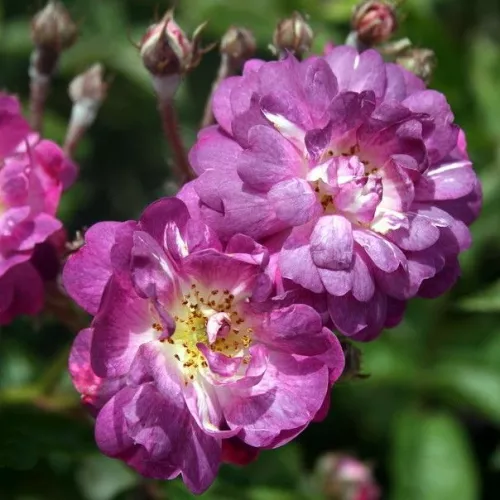
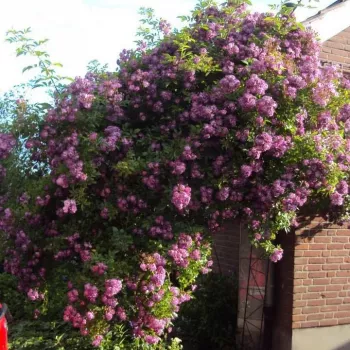
Discover a century-old garden classic that still feels perfectly at home in today’s sustainable, rainwater‑wise London front gardens. VEILCHENBLAU brings a soft cascade of lilac‑purple clusters, ideal for transforming brick walls, railings or a compact pergola into a romantic vertical veil with minimal input from you. Its semi‑double blooms are openly welcome to bees, while the dense mid‑green foliage quickly weaves a leafy screen that copes reliably with blustery showers and typical British coastal weather. As an own‑root rose, it regenerates steadily and offers a reassuringly long lifespan with no graft line to fail, building roots in the first year, strong shoots in the second and full ornamental presence by the third. Planted in peat‑free compost, given good drainage and trained with light, occasional tying‑in, it rewards even beginners with a dramatic, low‑fuss summer display.
Usage options
| Target area |
Reasoning |
| Front garden pergola or arch |
Long, flexible canes and dense foliage quickly clothe arches and compact pergolas, creating a romantic summer tunnel of lilac‑purple clusters with very little pruning needed once trained – ideal for the busy urban gardener |
| Wall or fence greening |
The climbing habit and 4–6 m height allow you to turn plain brick or timber boundaries into a leafy screen, softening hard lines and improving privacy without taking up precious ground space – ideal for the small family garden |
| Rainwater‑friendly front strip or trellis |
Thriving on normal garden soils and tolerating poorer ground, it pairs well with permeable surfacing and rain‑collecting beds that cope calmly with frequent showers and strong winds – suitable for the sustainability‑minded homeowner |
| Pollinator‑supporting feature rose |
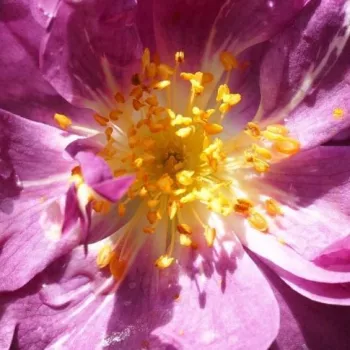
Semi‑double, open flowers with easily accessed stamens are highly attractive to bees during its main flush, adding real ecological value along a path, driveway or railings – perfect for the wildlife‑conscious beginner |
| Historic accent in a modern planting |
As a 1909 rambler with RHS Award of Garden Merit, it delivers heritage charm and proven garden performance, blending beautifully with contemporary perennials without demanding specialist care – appealing to the style‑aware collector |
| Peat‑free large container (40–50 L+) on terrace |
In a substantial, well‑drained 40–50 litre container, its own‑root vigour and medium maintenance needs make it a realistic choice for terraces or paved yards where in‑ground planting is impossible – convenient for the courtyard balcony owner |
| Informal screen between neighbours |
Dense, glossy foliage and arching canes create a soft, informal green division along boundaries, offering privacy and seasonal colour without rigid hedging or frequent clipping – suitable for the low‑maintenance household |
| Family garden play‑area backdrop |
Slight prickliness and good hardiness mean you can train it up and away from ground level, giving a flower‑laden backdrop that asks only moderate upkeep while staying resilient through cold winters – reassuring for the practical family gardener |
Styling ideas
- Romantic archway – Train VEILCHENBLAU over a narrow metal arch, underplant with lavender and nepeta for soft pastels and bee‑supporting flowers – ideal for time‑pressed urban romantics
- Permeable frontage – Let it cloak railings above a gravel strip with meadow sage and drought‑tolerant grasses, keeping parking practical yet green – suited to car‑owning city households
- Cottage facade – Combine against brick with bluebeard shrub and cottage perennials for a relaxed, historic feel that still needs only modest care – attractive to heritage‑loving beginners
- Shady side return – Use in partial shade along a side passage, mingling with Cornus sericea for stems and foliage interest where space is tight – perfect for narrow London terraces
- Courtyard vertical – In a large 50 L container with peat‑free compost and a slim pergola, it adds height and lilac colour without sacrificing floor area – ideal for compact paved courtyards
Technical cultivar profile
| Property |
Data |
| Name and registration |
Historic rambler rose marketed as VEILCHENBLAU, exhibited as an exhibition rambler and surface‑covering climber; unregistered variety with no separate registered cultivar name recorded. |
| Origin and breeding |
Bred by Hermann Kiese in Germany from ‘Turner’s Crimson Rambler’ × ‘Souvenir de Brod’; introduced by Johann Christoph Schmidt in 1909 and now widely grown as a classic historic climber. |
| Awards and recognition |
Holds the Royal Horticultural Society Award of Garden Merit (1993), indicating dependable garden performance, ornamental impact and reasonable disease resistance in a range of UK conditions. |
| Growth and structural characteristics |
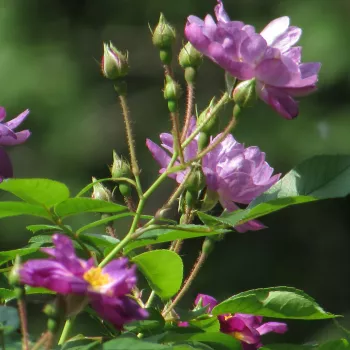
Vigorous climbing rambler reaching about 4–6 m high with a 2–4 m spread; slightly prickly, with dense, glossy, mid‑green foliage forming a full leafy curtain on arches, pergolas and walls. |
| Flower morphology |
Semi‑double, flat, small flowers (around 1–3.5 cm) borne in large, showy clusters; once‑flowering main summer flush, with medium self‑cleaning so clusters may persist decoratively after bloom. |
| Colour data and phenology |
Buds open crimson‑purple, then lighter purple‑lilac with paler centres; shades fade in heat towards bluish‑grey pastel tones, creating a distinctive lilac‑blue impression across the flowering period. |
| Fragrance and aroma |
Mild but noticeable sweetly spicy scent, especially around the main flush; sufficient to add atmosphere along paths and seating areas without overwhelming smaller enclosed urban garden spaces. |
| Hip characteristics |
Forms occasional small, spherical brownish‑red hips about 5–9 mm across, adding a light touch of late‑season interest without heavy fruiting that might weigh down the slender flowering shoots. |
| Resistance and winter hardiness |
Hardy to about −32 to −29 °C (RHS H7, USDA 4b), tolerating cold UK winters; medium resistance to black spot, mildew and rust, needing only basic care in well‑ventilated, not overly humid sites. |
| Horticultural recommendations |
Best on well‑drained soil, tolerating poorer ground; prefers sun to light shade. Water in prolonged drought, especially in containers. Train and tie in canes; prune lightly after flowering to manage size. |
VEILCHENBLAU offers romantic lilac‑purple summer cover, bee‑friendly clusters and proven hardiness, while its own‑root form promises long, steady growth in your garden; an excellent candidate when you are choosing a lasting climbing feature.