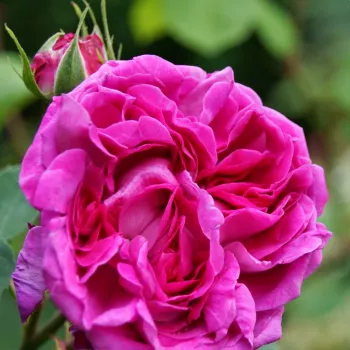
TROMPETER VON SÄCKINGEN – carmine-red historic old garden rose - Geschwind
Step out to your front garden after rain and you will understand why this historic rambler still matters: soft carmine-red clusters spill over fences and arches in a single, unforgettable June flush, then settle into a quietly dignified framework of dark green foliage that copes well with typical British weather even where heavy soil needs careful drainage and summer humidity raises disease pressure. Its long, flexible canes lend natural structure to compact London plots, creating a vertical curtain of bloom that makes the most of limited space while leaving ground level free for simple, low-care planting. Own-root plants promise reassuring longevity, regenerating steadily from the base so your investment in a young 2‑litre rose matures into a characterful, full-sized feature over time rather than needing regular replacement; give it patient establishment and you can expect roots to settle in the first year, vigorous new shoots by the second, and a truly complete ornamental presence by the third, all with only modest maintenance from a busy urban gardener.
Usage options
| Target area |
Reasoning |
| Narrow London front gardens |
This tall, climbing old rose brings a strong sense of history and colour into tight urban spaces, rising above bins and paving without stealing precious ground space, ideal when you want classic impact with a relatively light touch of care for the busy urban owner. |
| Arches, arbours and pergolas |
The long, flexible canes and once-a-year cascade of carmine-red blooms are made for training over simple metal or timber structures, giving a romantic tunnel of flower in early summer and a leafy green framework for the rest of the season for the beginner gardener. |
| Rainwater-conscious front gardens |
Planted into improved heavy clay with a slightly raised planting pocket, this rose will sit above short bouts of waterlogging, turning downpipes and run-off edges into a vertical flower curtain that fits neatly beside permeable paving for the sustainability-focused owner. |
| Low-intervention family boundaries |
Its vigorous, upright rambler habit and medium disease resistance make a good living screen on fences or along boundaries, with only periodic tying-in and winter tidying needed, suiting those who prefer seasonal sessions over weekly tasks for the time-poor homeowner. |
| Wildlife-friendly, traditional schemes |
The dense clusters of flowers give way to small, orange-red hips later in the year, supporting birds and adding autumn interest; combined with a mixed, shrub-and-perennial planting, it reinforces a soft, biodiversity-minded garden for the nature-aware family. |
| Historic or cottage-style planting |
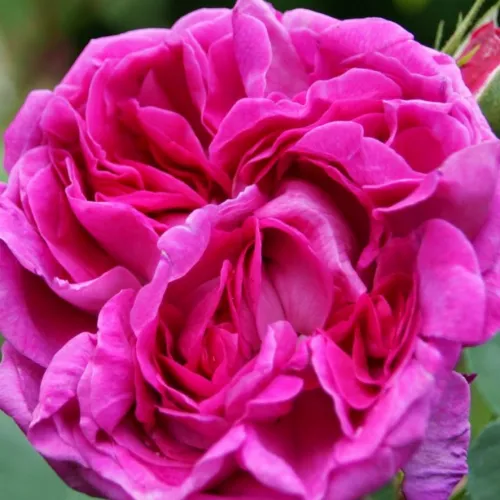
The rich, slightly purplish carmine tones and flat, very full old-rose blooms sit naturally among foxgloves, cranesbills and nepeta, creating a period feel that suits older properties and those seeking a more authentic, heritage look for the romantic traditionalist. |
| Mixed shrub borders in small gardens |
Used as a tall backdrop in a mixed border, this rose gives one major show followed by a structured, matt dark-green screen that complements lower, longer-flowering perennials, providing balance without demanding constant attention for the casual hobby gardener. |
| Large containers on patios (40–50+ litres) |
Grown in a generous, 40–50 litre peat-free container with a sturdy support, this own-root climber forms a long-lived, movable vertical accent that suits paved front yards or rented spaces coping gracefully with typical UK rain and wind for the flexible city dweller. |
Styling ideas
- CITY-ARCH – Train over a simple metal arch inside a small front garden, underplant with lavender and nepeta for soft scent and colour – ideal for busy urban households wanting maximum impact from limited soil.
- HERITAGE-HEDGE – Use several plants along a low fence, weaving canes through wires, and mix in scented cranesbill to soften the base – suited to families seeking a traditional, period feel with modest upkeep.
- RAINFALL-FRONT – Position beside permeable gravel or brick setts, with the rose climbing a porch frame and ground-layer planting to slow run-off – for sustainability-minded owners balancing beauty and rainwater management.
- ROMANTIC-PERGOLA – Let its carmine-red clusters spill from a wooden pergola, teamed with pale clematis for extended colour and dappled shade – perfect for those dreaming of a classic, summer-once spectacle.
- CONTAINER-VERTICAL – Plant one specimen in a 50‑litre peat-free pot with a slim obelisk and soft, trailing thyme at the rim – for renters and balcony gardeners needing a movable, long-lived vertical feature.
Technical cultivar profile
| Parameter |
Data |
| Name and registration |
Trompeter von Säckingen is a historical Hybrid Multiflora shrub rambler, marketed as a heritage rose; an old garden rose with no formal registration but recognised exhibition name. |
| Origin and breeding |
Bred by Rudolf Geschwind in Austria around 1890 and introduced commercially in 1929; parentage and initial distributor remain unknown, typical of many robust historical ramblers. |
| Growth and structural characteristics |
Strong, climbing rambler habit with 210–350 cm height and 150–250 cm spread; moderately dense, matt dark green foliage and relatively sparse thorns make training and handling easier. |
| Flower morphology |
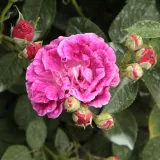
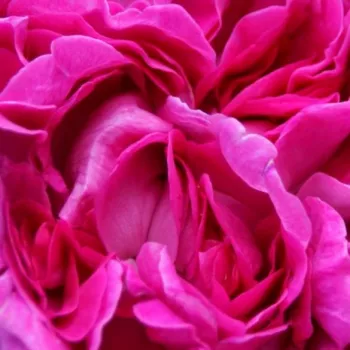
Medium, flat, very full blooms with over 40 petals, produced in clusters; flowers once per season in a generous flush, creating a striking but time-limited early summer display. |
| Colour data and phenology |
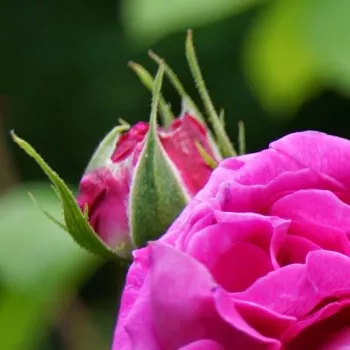
Carmine-red flowers (RHS 53A, 60B) open bright, then fade through crimson to violet-lilac and purplish tones; strong visual impact at peak, with softer vintage shades as blooms age. |
| Fragrance and aroma |
Delicate, rose-like scent of very faint strength, best appreciated at close range; fragrance is a subtle background note rather than the dominant feature of the cultivar. |
| Hip characteristics |
Produces small, globular orange-red hips, 5–9 mm in diameter, in moderate quantities; decorative in autumn and providing light additional interest for birds and wildlife. |
| Resistance and winter hardiness |
Medium resistance to powdery mildew, black spot and rust; reliably hardy to approximately –29 to –26 °C (RHS H7, USDA 5a, Swedish Zone 4), suitable for most exposed UK gardens. |
| Horticultural recommendations |
Best on supports such as arches, pergolas or fences; allow space for vigour, prune after flowering, and use improved soil with good drainage, particularly on heavier clays or damp sites. |
Trompeter von Säckingen offers a single, spectacular early-summer display, long-lived own-root resilience and reliable vertical structure in compact gardens; it is a thoughtful choice if you value characterful, enduring planting.