TRAVIATA® – deep red hybrid tea rose - Meilland
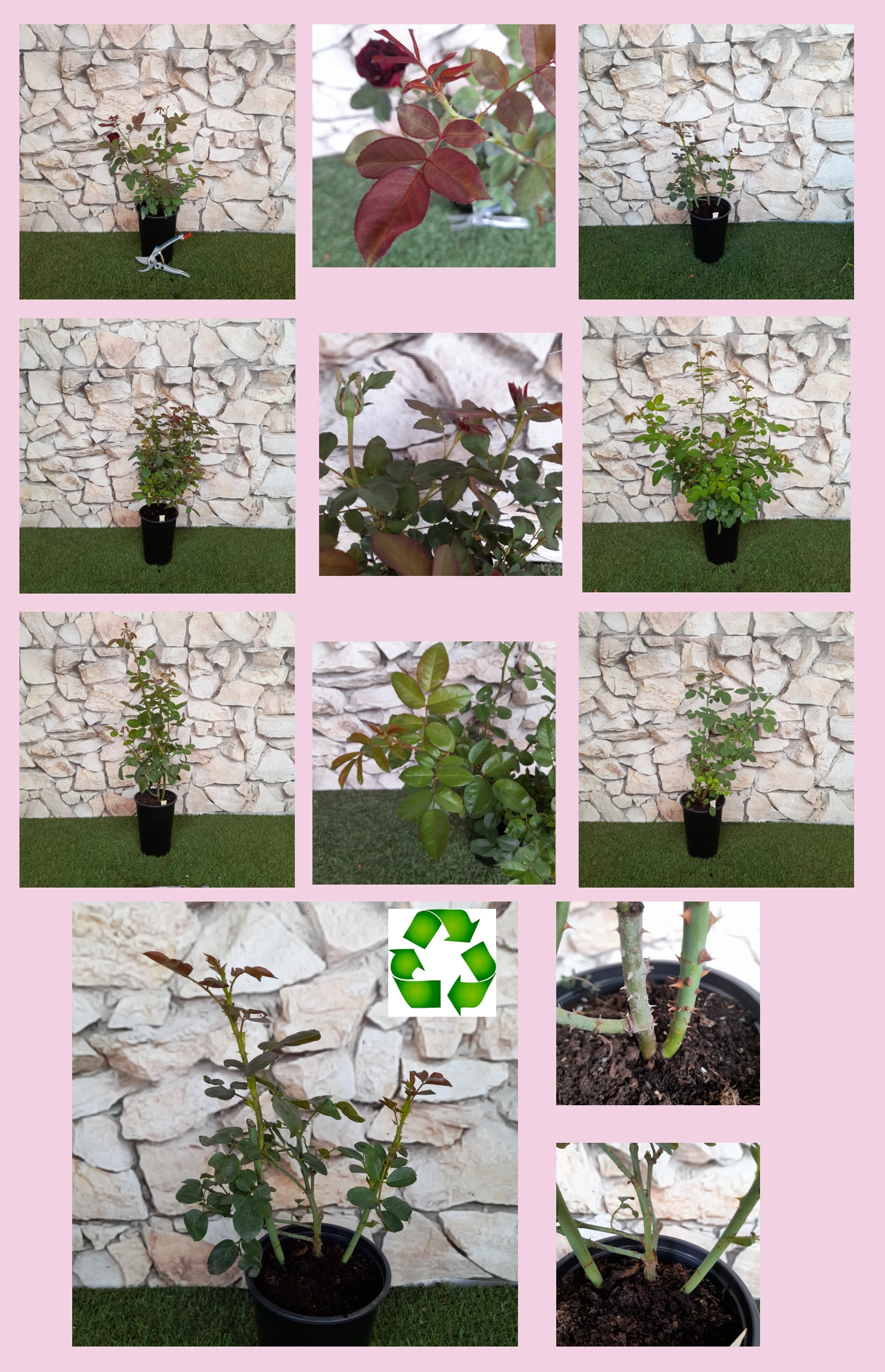
Imagine a London front garden where rain-darkened paving meets a single, perfectly formed deep-red bloom: TRAVIATA® brings that sense of poised balance to small city spaces, while coping confidently with breezy, moisture-laden conditions typical of British coastlines. As a Romantica® hybrid tea, it offers sumptuous, velvety blooms on a bushy, upright plant that holds its shape well in modest beds or narrow borders, making it ideal for compact, family-sized plots. Own-root production means this rose establishes steadily and lives longer, quietly regenerating from its own roots if stems are damaged, so you invest once and enjoy reliable structure for years. In its first season you will mainly see strong establishment, year two brings more confident flowering shoots, and by year three TRAVIATA® reveals its full ornamental presence with a generous display of deep-red flowers that stay richly coloured even in changeable UK summer weather.
Usage options
| Target area | Reasoning |
|---|
| Front garden focal point beside a path |
The upright, bushy habit and large, very full blooms create a clear visual focus in even the narrowest terraced-house front garden, giving a sense of occasion each time you pass the door, ideal for the aesthetically minded homeowner. |
| Low-maintenance flowerbed in a family garden |
Strong disease resistance to black spot, powdery mildew and rust keeps foliage healthy with minimal spraying, so borders stay attractive with limited intervention, well suited to the busy but quality-conscious gardener. |
| Long-term “investment” rose in a permanent bed |
As an own-root plant, TRAVIATA® builds a durable framework over time, regenerating from its base rather than relying on a graft, making it a deliberate, long-term choice for those planning a stable, enduring feature planting. |
| Structured, formal planting with generous spacing |
Clear planting distances and moderate height allow you to design tidy rows or repeated clumps that keep their form, ideal for homeowners seeking classic structure without complex pruning regimes, especially the time-pressed beginner. |
| Rain-aware, sustainable front garden design |
The dense, upright bush copes well where paving meets planting in rainwater-conscious schemes, helping anchor gravel or permeable surfaces in breezy, moisture-laden urban settings, attractive to sustainability-focused city residents. |
| Cut-flower corner for home arrangements |
Hybrid tea, long-stemmed flowers with very full, velvety petals are bred for cutting, so a small dedicated patch can supply refined, deep-red stems for indoor vases, rewarding the creatively inclined home florist. |
| Large container on balcony or paved area (40–50 L+) |
In a substantial, well-drained pot of at least 40–50 litres, this rose provides height and form without spreading excessively, giving colour and structure where border space is limited, ideal for balcony and courtyard gardeners. |
| Mixed planting with perennials and ornamental grasses |
Its saturated deep-red blooms hold their colour well, contrasting beautifully with heuchera, salvia or low miscanthus, creating a rich, layered look that evolves over the season and appeals to design-conscious planting enthusiasts. |
Styling ideas
- Opera-Edge – Frame a narrow front path with two TRAVIATA® bushes underplanted with dark-leaved heuchera for a theatrical entrance – for homeowners who enjoy a touch of drama at the doorstep.
- Velvet-Border – Combine TRAVIATA® with purple salvia and nepeta in a sunny strip to soften fencing while keeping a smart outline – for busy families wanting colour with straightforward upkeep.
- City-Vase – Dedicate a 40–50 litre pot to one plant, adding fine gravel mulch to echo its cut-flower heritage – for balcony gardeners seeking a single, reliable source of home-cut roses.
- Rain-Rhythm – Set TRAVIATA® into a permeable, gravelled front garden where downpipes drain into a planted strip, backed by low miscanthus – for eco-aware urban owners rethinking hardstanding.
- Heritage-Row – Plant a loose row along a front boundary with repeated heuchera clumps between roses to reference traditional rose gardens in a compact form – for romantically inclined but novice rose growers.
Technical cultivar profile
| Characteristic | Data |
|---|
| Name and registration |
Hybrid tea rose, Romantica® collection; registered as MEIlavio, marketed as TRAVIATA® Romantica® MEIlavio, ARS exhibition name TRAVIATA, named in homage to Verdi’s opera “La Traviata”. |
| Origin and breeding |
Bred by Alain A. Meilland (France, 1997) from (Meirgano × Tanaloap) × Ausroyal; introduced after 1999 by Meilland International SA, with US registration in 1999 under Plant Patent PP 10,845. |
| Awards and recognition |
Recognised on the European show circuit, including a silver medal at Monza, Italy (1997) and a certificate award at Rome, Italy (1997), confirming its value as an exhibition-quality hybrid tea. |
| Growth and structural characteristics |
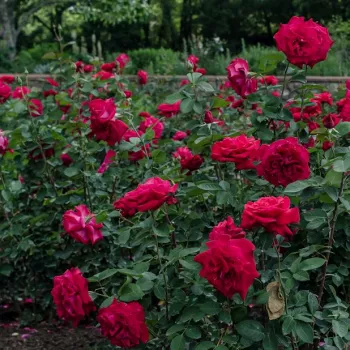
Bushy, upright shrub reaching about 95–125 cm in height and 110–150 cm in spread, with dense, dark green, slightly glossy foliage and moderate prickliness, forming a substantial yet manageable garden presence. |
| Flower morphology |
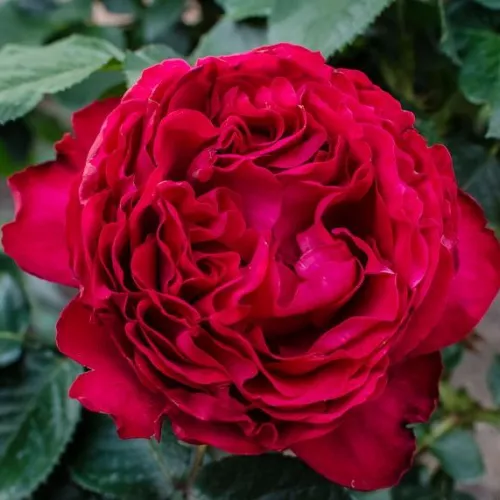
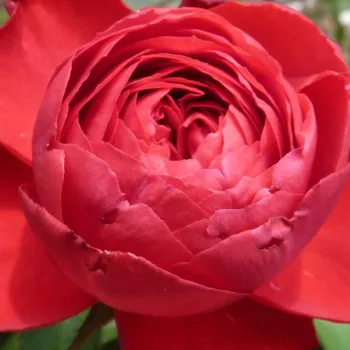
Large, very full, solitary hybrid tea blooms with more than 40 petals and a rosette form; remontant, producing repeat flushes and a notably plentiful second flowering phase during favourable conditions. |
| Colour data and phenology |
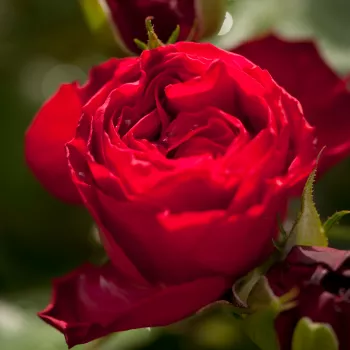
Deep, velvety red flowers (ARS DR, RHS 53A–53B) with darker buds; colour holds well, fading moderately in strong sun, with subtle crimson radiance and a balanced, uniform appearance at full bloom. |
| Fragrance and aroma |
Fragrance is very weak, with only a light, classic rosy nuance detectable at close range; chosen primarily for visual impact and flower form rather than for strong scent in the garden or in the vase. |
| Hip characteristics |
Occasional ovoid hips form, around 10–14 mm in diameter, coloured orange-red; hips are a minor ornamental feature and not a primary reason to select this cultivar for most garden settings. |
| Resistance and winter hardiness |
Hardy to approximately –23 to –26 °C (RHS H7, Swedish Zone 4, USDA 5b) with good resistance to black spot, powdery mildew and rust, plus medium tolerance of heat if watered during extended dry spells. |
| Horticultural recommendations |
Best in a sunny site with well-drained soil; plant 110–120 cm apart in groups or 180 cm as a specimen, with about 0.7–0.8 plants/m² for massed schemes, and occasional deadheading to tidy spent blooms. |
TRAVIATA® offers long-lasting, velvety deep-red flowers on a resilient, own-root bush that builds steadily into a stable feature, making it a thoughtful choice for gardeners seeking enduring structure and colour.