AUSDIR – dark crimson English rose - Austin
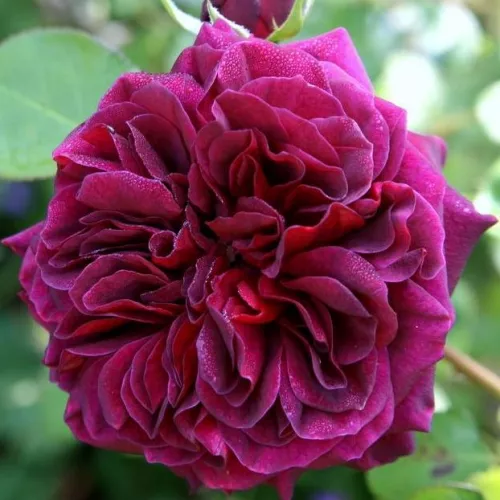
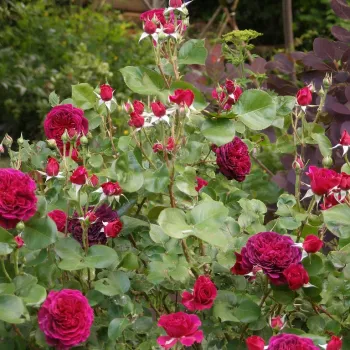
Step out after rain and brush past the velvety blooms of Tradescant, where deeply coloured petals and a strong, nostalgic perfume create an intimate, front‑garden sanctuary. This compact English climbing shrub settles comfortably into small London plots and copes well with cool summers and blustery coastlines, provided soil drains reliably on heavier ground. As an own‑root rose, it offers dependable long‑term regeneration, quietly rebuilding from the base if stems are damaged and giving you steady structure with minimal intervention. In its first season it concentrates on roots, in the second on framework and flowering stems, and by the third you enjoy its full, mature ornamental presence. Repeating flushes of richly double, dark crimson rosettes bring months of flowering, while the medium, upright habit is easy to guide against railings, walls or an obelisk without dominating a narrow boundary.
Usage options
| Target area | Reasoning |
|---|
| Small front garden feature |
The compact, upright habit and moderate spread make Tradescant ideal for tight, terraced‑house front gardens where every metre matters, giving depth of colour without overwhelming the space, especially for the busy city homeowner. |
| Against a wall or railing |
Used as a modest climber, its flexible stems can be tied to railings or a warm wall, creating vertical interest and screening while remaining easy to prune and re‑shape over time for the relaxed urban gardener. |
| Low, flowering backdrop in a mixed border |
Medium height and moderately dense foliage form a calm, dark green backdrop that lets perennials like lavender, nepeta or sage shine in front, keeping the border structured yet soft for the design‑conscious beginner. |
| Rain‑aware clay or chalk garden |
Once established in improved, free‑draining soil, this own‑root shrub copes reliably with cool, damp spells and blustery weather, suiting households managing wetter conditions and heavier ground who still want roses, particularly the sustainability‑minded family. |
| Cut flowers for the house |
The very double, velvety crimson rosettes and pronounced old‑rose fragrance translate beautifully into short, luxurious cut stems, offering repeat bunches through the season for the scent‑loving urban resident. |
| Long‑term structural planting |
Being on its own roots, the plant thickens from the base, replaces older canes naturally and remains ornamental for many years with simple pruning, suiting those planning their garden for the long‑term future. |
| Part‑shaded side return or passage |
Its tolerance of partial shade allows planting in the side return or a narrow passage that gets only part‑day sun, still delivering colour and scent where other roses might struggle, which helps space‑conscious terrace owners. |
| Large container on a balcony or paved front |
In a 40–50 litre peat‑free container with regular watering, Tradescant offers an easy‑to‑manage, upright presence and repeat bloom, bringing traditional rose character to paved, low‑soil spaces for balcony and patio‑focused city dwellers. |
Styling ideas
- Velvet-Entrance – Pair Tradescant by a black iron railing with lavender and nepeta in front, letting crimson blooms hover over soft blues – perfect for London terrace fronts wanting a quietly dramatic welcome.
- Heritage-Corner – Train it loosely on an obelisk surrounded by grey santolina and soft grasses – suited to gardeners seeking a traditional feel in a compact, low‑maintenance corner.
- Rainwise-Border – In a free‑draining clay bed, combine with pink lupins and salvias to break up heavy soil and absorb rainfall – ideal for urban owners adapting to wetter seasons.
- Perfumed-Patio – Grow in a 50‑litre terracotta pot near seating, underplanted with thyme for extra scent – good for balcony or courtyard users wanting fragrance close at hand.
- Calm-Passage – Line a narrow side return with a single Tradescant and light‑foliage perennials, keeping the palette deep crimson and soft green – for those chasing order and balance in tight spaces.
Technical cultivar profile
| Property | Data |
|---|
| Name and registration |
Registered as AUSdir, marketed as Tradescant in the English Rose Collection; modern shrub / climbing English rose, approved exhibition name Tradescant with verified cultivar authenticity. |
| Origin and breeding |
Bred by David C. H. Austin (UK, 1992), from ‘Prospero’ × (Charles Austin × ‘Gloire de Ducher’); introduced after 1994 by David Austin Roses, registered 1994 with US plant patent. |
| Awards and recognition |
Recognised on the show bench as a Modern Shrub Rose, with awards from Cleveland & Northeastern Ohio, Grand Valley, and Sacramento Rose Society shows between 1999 and 2000. |
| Growth and structural characteristics |
Medium upright, bushy but slightly spreading habit, around 120–210 cm tall and 100–190 cm wide, with moderately dense, dark green, slightly glossy foliage and moderate thorniness on the canes. |
| Flower morphology |
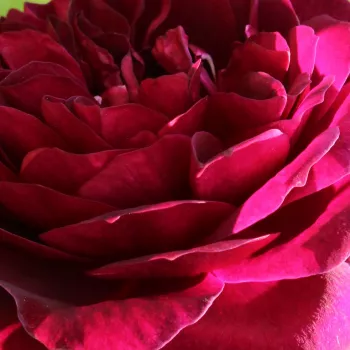
Medium-sized, very double rosette blooms with 40+ petals, produced mainly in clusters; remontant with an abundant second flush, though spent flowers usually need manual deadheading to stay tidy. |
| Colour data and phenology |
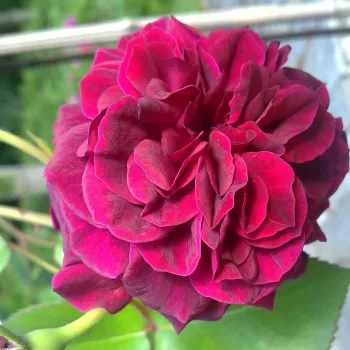
Dark crimson-red, velvety blooms deepen towards crimson-purple tones; buds open burgundy to purplish-violet and may darken to blackish-purple, with generally good colour retention and limited fading in sun. |
| Fragrance and aroma |
Strong, pronounced perfume with a slightly sweet, old-rose character; fragrance is noticeable at close range and adds classic English rose atmosphere around paths, seating and frequently used doorways. |
| Hip characteristics |
Very double form encloses the stamens, so hips are sparse; where formed they are tiny, around 0–2 mm diameter, and generally insignificant for ornamental or wildlife gardening purposes. |
| Resistance and winter hardiness |
Rated H7 and hardy to about −26 to −23 °C, with medium resistance to powdery mildew, black spot and rust; appreciates regular watering in prolonged drought and basic preventative care in humid spells. |
| Horticultural recommendations |
Suited to borders, specimen use, walls or railings and cutting; plant 140–250 cm apart depending on use, in moderately fertile, well-drained soil, with occasional pruning and health checks as required. |
AUSDIR – dark crimson English rose - Austin offers rich repeat bloom, strong scent and long-lived own-root reliability for compact, sustainable gardens; a thoughtful choice if you value enduring structure with minimal fuss.