Climbing and Rambling Roses

52-487-1
52-487-2

Titian™

Climbing rose

- – Francis Lewis Riethmuller

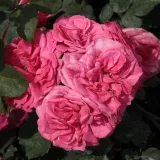
Rich, intense pink shade with a subtle carmine tint. - climber, climbing rose - medium-strength, clearly scented rose - fresh, tea-scented, subtle fruity notes

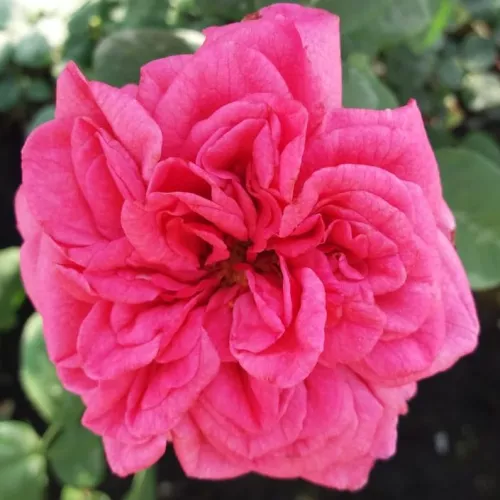
– Luxuriant deep pink rosette clusters
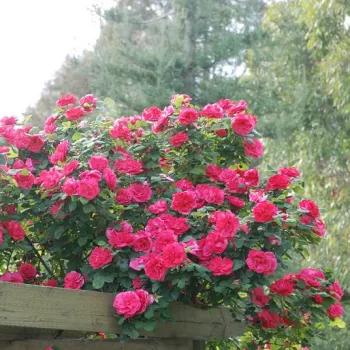
– Vigorous short-climber for arches and pillars
– Reliably remontant with abundant second flush
– Medium, clearly perceptible tea-fruity fragrance
– Proven hardiness to around –30 °C, H7 rated
Special feature: Historic Gold Medal winner, awarded “Particularly healthy” by Wilhelm Kordes in 1964.
Value-based choice – Responsible gardening mindset
Titian™
eleanorROSE® ORIGINAL 2-litre own-root potted rose
21,20 £
Unfortunately, we are currently unable to ship to the United Kingdom; we only deliver to countries within the European Union. For more information, please contact us!
5 (7427)
facebook   twitter

TITIAN™ – deep pink climbing rose - Riethmuller

Step out after rain to a curtain of colour, medium-height climber canes hung with raspberry-pink rosettes that cope calmly with blustery, damp British weather while keeping foliage looking reassuringly clean. This compact short-climber is easy to train on a London front fence or terrace arch, making the most of vertical space when borders are small, and its medium maintenance suits busy lifestyles. Own-root stock builds a long-lived framework that regenerates from the base, so you see steady improvement from a settling first year through a leafy second to full garden presence by year three. The medium, tea-scented fragrance gives a soft, nostalgic note to school-run mornings and late returns, while dependable repeat flowering keeps the entrance cheerful well into autumn using only harvested rainwater and a light annual tidy.


Usage options

Target areaReasoning
Terraced-house front fence or railings Tidy, medium-height canes clothe railings without overwhelming the pavement, and moderate thorns remain manageable for everyday access; repeat blooms maintain kerb appeal with only light tying-in for beginners.
Narrow side return or passageway Short-climbing habit fits confined side alleys, where vertical growth frees ground for recycling bins or bikes while flowers sit above head height; reliable structure makes long-term use of modest space for urban families.
Small arch or porch entrance Flexible growth and dense foliage quickly define an inviting entrance, while own-root resilience supports a long-lived framework that can be refreshed by occasional pruning, suiting low-fuss homeowners.
Rainwater-fed gravel strip or sustainable front garden Good heat tolerance and moderate disease resistance suit gravel or permeable drives where watering is mainly from collected rain, offering reliable flowering with simple mulching and runoff-aware planting for eco-conscious gardeners.
Clay or chalky boundary beds Robust roots establish well once drainage is improved with organic matter, creating a durable hedge-like screen that copes with typical suburban soils and reduces the need for frequent replacements for budget planners.
Mixed border with perennials Clustered raspberry-pink rosettes combine beautifully with lavender, sage or nepeta, adding height and fragrance while own-root stability keeps the display consistent year after year for relaxed hobby-gardeners.
Training along a low wall or balustrade Medium-length canes are easy to fan out along wires, giving a neat, low screen that is simple to maintain with occasional deadheading and tie-in, ideal for those preferring straightforward routines for busy professionals.
Large container on balcony or patio (50–60 L) In a substantial peat-free planter the plant develops a lasting framework and can be underplanted with herbs, while good heat tolerance suits sheltered patios; regular rainwater use supports sustainable, low-input care for city dwellers.

Styling ideas

  • Renaissance – Train along black railings with lamb’s ear and salvias below for a painterly deep-pink and silver contrast – ideal for design-aware terrace owners.
  • Porchway – Arch over a modest doorway, pairing with pots of lavender to echo the tea-scented blooms – suited to time-pressed homeowners.
  • Gravel – Let canes spill from a rainwater-fed gravel strip with low nepeta and calamint for a soft, sustainable frontage – perfect for eco-conscious city gardeners.
  • Balcony – Grow in a 50–60 litre container with cascading herbs beneath, using vertical height without cluttering the floor – good for compact balconies.
  • Boundary – Fan along wires on a side fence, interplanted with Crocosmia ‘Lucifer’ for late-summer fire against steady pink – appealing to colour-focused hobby gardeners.

Technical cultivar profile
PropertyData
Name and registration Climbing rose from the short-climber group, marketed as Titian™ – deep pink climbing rose – Riethmuller; exhibition name Titian; unregistered cultivar used as shrub, pillar and cut rose.
Origin and breeding Bred by Francis Lewis Riethmuller in Australia from ‘Crimson Glory’ × ‘Eutin’; introduced by Hazlewood Bros. from 1950 and by W. Kordes’ Söhne in Europe from 1955 catalogue listings.
Awards and recognition Gold Medals from Your Garden magazine in 1959 and the National Rose Society of New South Wales in 1958, plus a “Particularly healthy” professional designation from Wilhelm Kordes in 1964.
Growth and structural characteristics Climbing habit with dense, matt dark green foliage; moderate prickles; typically 240–400 cm high and 160–260 cm spread, needing support but remaining compact for a short-climber.
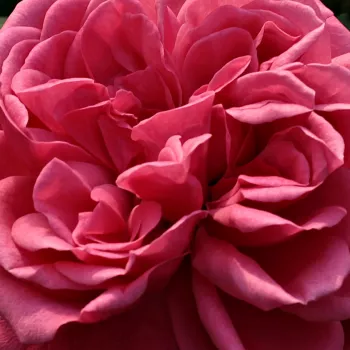
Flower morphology Double, rosette-shaped blooms with 26–39 petals, carried in clusters on medium stems; flower size medium at around 4–7 cm, with remontant, abundant repeat flushes after the main flowering.
Colour data and phenology Deep pink with carmine tones; raspberry-pink when opening, sometimes with silvery edges; slightly paler in strong sun, richer in cool weather; colour codes align with ARS dp and RHS 53A–53B.
Fragrance and aroma Medium-strength fragrance clearly perceptible in still air, combining a fresh tea-scented character with light fruity nuances, giving a classic but not overpowering scent around entrances and paths.
Hip characteristics Occasional small ellipsoidal hips, about 10–15 mm across, ripening to an orange-red colour; mainly ornamental interest in late season rather than a heavy-hipped landscape feature.
Resistance and winter hardiness Good heat tolerance with watering during extended drought; medium resistance to black spot, powdery mildew and rust; hardy to around −29 to −32 °C, corresponding to RHS H7 and USDA Zone 4b.
Horticultural recommendations Best on supports in beds, borders or urban green spaces; spacing 185–320 cm depending on use; suits partial shade; prefers improved clay or chalk with good drainage and consistent moisture.

TITIAN™ – deep pink climbing rose - Riethmuller offers compact vertical colour, reliable repeat flowering and a durable own-root framework that rewards patient gardeners seeking a long-term, low-fuss feature.
Detailed product attributes

Product Identification Data

Product Name: TITIAN™ – deep pink climbing rose - Riethmuller
Product Type: eleanorROSE® ORIGINAL - 2-litre own-root potted rose
Cultivar Authenticity: Verified:24.04.2025
Cultivar Quality Rating: premium bronze
Item Number: [34] 52-487 (14.02.2026) eleanorrose.co.uk

Name and Registration

Meaning of Cultivar Name: The name evokes the colour palette of the Italian Renaissance painter Tiziano Vecellio, known in English as Titian, through the flower’s carmine-pink shade.

Cultivar Synonym: Tizian; Climbing Titian
Current Trade Name: Titian™ Climbing rose Riethmuller
Rose Group: Short-Climber
Commercial Type: climber, climbing rose
Commercial Group: Climbing rose
Exhibition Category: shrub rose; pillar rose; climbing rose; cut flowers
Collection: Climbing rose

Origin and Breeding

Initial Distributor: Hazlewood Bros. Pty. Ltd. (Australia, 1955); W. Kordes’ Söhne (Germany)
Introduction Year: 1950 (in Australia); 1955 (catalogue appearance)
Registration Year: unregistered cultivar
Breeder: Francis Lewis Riethmuller
Breeding Company / Institution: unknown / no data
Breeding Year: Australia, 1955
Parentage: 'Crimson Glory' × 'Eutin'

Awards and Honours

Horticultural Ratings and Recommendations: Wilhelm Kordes "Particularly healthy" certification (internal professional recognition) (1964)
Competition and Show Awards: Your Garden magazine – Gold Medal for Titian Rose (1959); National Rose Society of New South Wales – Gold Medal (1958); Wilhelm Kordes – 'Particularly Healthy' designation (internal professional recognition) (1964)

Growth and Structural Characteristics

Height: 7.9-13.1ft (240-400 cm)
Spread: 5.2-8.5ft (160-260 cm)
Growth Habit: climbing
Foliage: The variety has dense foliage. The leaves are matt with a dark green hue.
Prickliness: moderately thorny
Self-Cleaning Description: Some of the spent blooms drop off naturally, but occasional deadheading is required.
Self-Cleaning Intensity: Self‑cleaning: moderate.

Flower Morphology

Petal Count: 26-39
Flower Fullness: double-flowered
Flower Shape: rosette
Flower Size: M (1,5-2,75 in)
Inflorescence Type: cluster-flowered
Colour Code: ARS code: dp RHS code: 53A (outer), 53B (inner)
Repeat Flowering: It is remontant and its second flowering is also abundant.

Colour Data and Phenology

Colour: deep-pink
Flower Colour Description: Rich, intense pink shade with a subtle carmine tint.
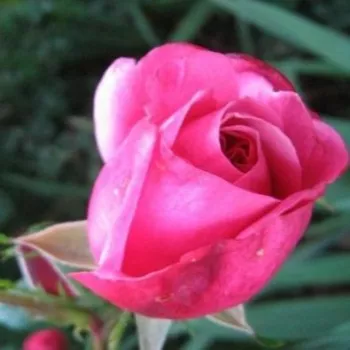
Closed Bud: Glossy, deep purple-pink toned, slightly darkening at the tip.
Newly Opened Flower: Vivid raspberry-pink with a paler edging on the outer petal whorl.
Full Bloom: Even, deep pink with occasional carmine tones in the inner quarters.
Before Fading: Slightly faded raspberry pink, with a powdery rosy–silvery sheen at the edges.
Colour Fading Description: In strong sunlight it becomes slightly paler; in cooler weather its colour is more vivid.

Fragrance and Aroma

Fragrance Strength: medium-strength, clearly scented rose
Fragrance Character: fresh, tea-scented, subtle fruity notes
Pollinator Attraction: Double (26–39 petals) flowers attract pollinators only to a limited extent, because the full flower form and reduced stamen accessibility hinder insects’ access to nectar and pollen.
Pollinator-Friendly Rating: With double flowers (26–39 petals) it is primarily ornamental and attracts pollinators only to a limited extent.

Hip Characteristics

Hip Shape: ellipsoidal
Hip Colour: orange-red
Hip Comment: An occasionally formed, 10–15 mm diameter, ellipsoid-shaped, orange-red rose hip.

Resistance and Hardiness

Hardiness (°C): -32–-29 °C
Heat and Drought Tolerance Description: Tolerates heat well; requires watering during prolonged dry periods.
Disease Resistance: medium
  • powdery mildew – medium
  • black spot – medium
  • rust – medium

Horticultural Recommendations

Recommended Planting Distance: for mass planting: 200 cm, for hedging: 185 cm, as a specimen: 320 cm
Planting Density: in square planting 0,3 plants/m², in hexagonal arrangement 0,3 plants/m²
Partial Shade Tolerance: suitable for partial shade
Maintenance Requirement: Maintenance requirement medium; occasionally requires pest and disease control.
Primary Uses: flower bed, park, urban green space, border

Comments

Strengths: Value-based choice – Responsible gardening mindset
Companion Plants: Stachys byzantina - lamb's ear Crocosmia x crocosmiiflora 'Lucifer' - montbretia Calamintha nepeta ‘Blue Cloud Strain’ - lesser calamint
Comment: -
TITIAN™ – deep pink climbing rose - Riethmuller
Rich, intense pink shade with a subtle carmine tint. - climber, climbing rose - medium-strength, clearly scented rose - fresh, tea-scented, subtle fruity notes
Online rose order - deep-pink - Titian™ - climber, climbing rose - (7.9-13.1ft (240-400 cm))
Inflorescence: cluster-flowered Height: 7.9-13.1ft (240-400 cm) Flower shape: rosette Winter hardiness: 6b deep-pink - Hazlewood Bros. Pty. Ltd. (Australia, 1955); W. Kordes’ Söhne (Germany) climber, climbing rose - Flower size: M (1,5-2,75 in) Flower size: M (1,5-2,75 in) - Height: 7.9-13.1ft (240-400 cm) Height: 7.9-13.1ft (240-400 cm) - Flower fullness: double-flowered Titian™ - Roses in the garden | eleanorROSE® Original - premium bronze Francis Lewis Riethmuller

We showcase the external appearance of the roses available for online purchase from our webshop.


Which product type is right for you?


Information

In what condition do we send the rose from our online webshop?

Let us ask ourselves the question: What would I like to use the rose for?
Flower? - Location? - Screening? - Fragrance? - Height? - Breeder? - Rose hip?

Information on buying roses
Methods of payment - Delivery costs - Delivery - Complaints handling

Care guide

Our product is a rose grown with pharmaROSA®’s unique cultivation technology!

2-litre, own-root, potted rose.
With a shoot system appropriate to the season.
With a root system that thoroughly permeates the growing medium.
Quality compliant with the requirements of the E.N.A. (European Nurserystock Association).
Supplied in unique packaging that prevents damage.
Can be planted during frost-free periods.
True-to-variety rose bush with a unique identifier.

The pharmaROSA® own-root potted rose is a well-rooted plant that supports reliable establishment when planted and cared for properly, so it can be planted whenever the soil is not frozen.


Crop overview: several varieties and growth stages in a short crop section.
Shoot system: intensive growth of fresh basal shoots on a young plant.
Root system: demonstration of a vigorous root system permeating the growing medium, by removing the pot.
Balance: mature plant with root system and shoots in harmony with each other.

Information about the videos
The video series is not a “seasonal showcase”; it illustrates the essence of pharmaROSA® own-root cultivation in a tangible way: how the plant is built up, what the root system is like and how the shoot system regenerates. The recordings were therefore made at different times and with plants at various stages of development, so mixed foliage levels and differing stages of growth may appear in the videos. They are not a ‘sample’ of the batch dispatched, but a visual explanation of how the technology works. The current condition of the rose available to order — typical for the given period and similar to what you can expect to receive in the parcel — is shown in the upper part of the product page.

pharmarosa.compharmarosa.skpharmarosa.ropharmarosa.depharmarosa.co.ukpharmarosa.sipharmarosa.czpharmarosa.atpharmarosa.hrpharmarosa.plpharmarosa.frpharmarosa.espharmarosa.bepharmarosa.nlpharmarosa.lupharmarosa.ptpharmarosa.iepharmarosa.grpharmarosa.bgpharmarosa.lvpharmarosa.ltpharmarosa.rufrancescarose.itpharmarosa.dkpharmarosa.sepharmarosa.eepharmarosa.fi

Product types

Pages for private customers
Garden roses for the family garden, with minimal care  → ORIGINAL®
Premium garden roses – instant impact, a truly showpiece garden  → EXTRA®
Pages for professionals and private customers
Roses for public spaces – large areas, sustainable maintenance  → NATURAL®
Roses for projects – hedge and row planting, fast implementation  → RAPID®
For professional partners only
Production – propagation material for garden roses, wholesale  → NEONATAL®

Company details

PharmaRosa Ltd.
Company registration number: 01-09-717479
VAT number: 13075314-2-43
Plant health registration no.: HU130721
Bank account (IBAN):
HU85117631891388688400000000
BIC (SWIFT): OTPVHUHB
Bank name: OTP Bank Nyrt.