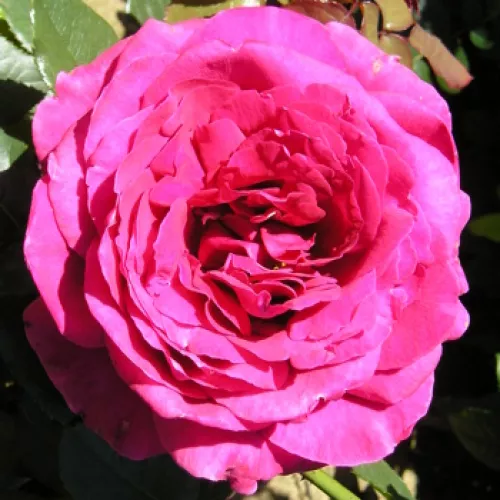
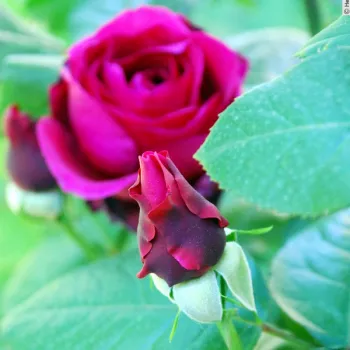
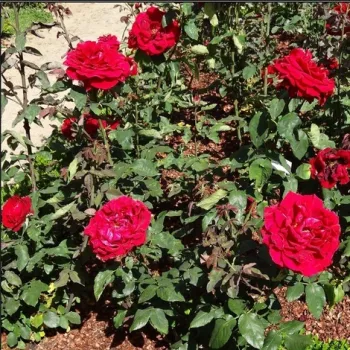
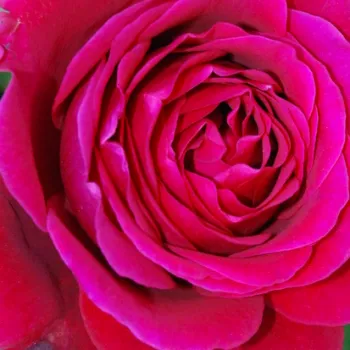
Thomas Barton PERFUMELLA® MEIhirvin – deep pink hybrid tea rose
In a compact London front garden or small family plot, Thomas Barton offers a refined way to introduce richly scented, deep pink blooms without demanding expert care, remaining composed even in blustery, damp weather typical of coastal towns. This hybrid tea produces classic exhibition-style flowers for cutting, yet stays neatly upright and moderate in size for narrow beds, paths and containers, fitting a rainwater-conscious, green urban aesthetic. Its own-root form supports long-lived resilience, steady regeneration and low-intervention maintenance; you simply plant, mulch and water, then let it settle. From the first season’s quiet root-building through the second year’s stronger shoots to the third year’s full ornamental presence, you are rewarded with a reliable, repeat-flowering centrepiece for everyday enjoyment.
Usage options
| Target area | Reasoning |
|---|
| Front garden focal point beside a path |
Upright, moderate growth (around 75–105 cm) makes it ideal for a narrow border by the front path, giving you exhibition-quality, deep pink blooms at eye level without overwhelming a small London terrace frontage, perfect for the busy urban gardener. |
| Low-maintenance family rose border |
Strong resistance to black spot, powdery mildew and rust keeps foliage clean with minimal spraying, so routine care is largely reduced to basic watering, mulching and occasional feeding, well suited to the time-poor home gardener. |
| Perfumed seating corner |
The very strong, garden-filling scent is designed for close appreciation; planting near a bench or back door lets fragrance pool after rain, creating a calm, balanced atmosphere that appeals to the scent-loving homeowner. |
| Cut-flower and exhibition bed |
Large, very double, solitary hybrid tea blooms on upright stems lend themselves to home cutting and amateur showing, giving you florist-style roses for vases while still performing reliably outdoors for the enthusiastic hobby exhibitor. |
| Rainwater-conscious urban planting strip |
Suited to sunny, open positions with simple drainage improvements on heavier soils, it integrates well into sustainable front-garden schemes where rainwater is directed into planting rather than paving, ideal for the eco-aware city gardener. |
| Own-root long-term garden investment |
As an own-root rose it develops a stable framework that regrows true to type after hard pruning or winter damage, maturing steadily into a dependable feature that keeps its character for years, reassuring for the long-term planner. |
| Large container on patio or balcony |
In a 40–50 litre or larger pot with peat-free compost, its compact, upright habit and glossy foliage give a tidy, vertical accent, while repeat flowering ensures colour through the season, appealing to the space-conscious balcony owner. |
| Climate-conscious, resilient planting scheme |
Reliable disease resistance and medium heat tolerance mean it copes well in mixed borders exposed to wind and frequent showers, reducing chemical inputs and fitting thoughtfully into climate-conscious designs for the sustainability-focused gardener. |
Styling ideas
- Terrace Welcome – Place as a single specimen by the front step with low lavender and nepeta along the path, letting fragrance greet visitors – ideal for scent-focused city dwellers.
- Raspberry Border – Combine with dusky salvias and soft ornamental grasses to echo its raspberry-pink tones while keeping maintenance light – suited to relaxed family gardeners.
- Cutting Corner – Group three plants in a sunny side bed with simple access for deadheading and cutting, so you always have classic blooms indoors – perfect for home flower arrangers.
- Pot Perfection – Grow one plant in a 50-litre peat-free container with trailing thyme at the base, creating a vertical accent for balcony or patio – great for compact-space gardeners.
- Modern Classic – Set against pale gravel and evergreen structure, using its upright form as a deep-pink punctuation mark in a clean, contemporary scheme – appealing to design-conscious homeowners.
Technical cultivar profile
| Property | Data |
|---|
| Name and registration |
Hybrid tea rose; registered as MEIhirvin, marketed as Thomas Barton PERFUMELLA® MEIhirvin, ARS exhibition name Thomas Barton, part of the PERFUMELLA® collection for strongly scented varieties. |
| Origin and breeding |
Bred by Alain A. Meilland, Meilland International, France; bred 1987, registered 1988 and introduced 1991, distributed by Meilland Richardier as a premium hybrid tea garden and cut-flower cultivar. |
| Awards and recognition |
Gold Medal at Monza trials in 1987 for overall garden and exhibition quality; Fragrance Award in Glasgow in 1995, confirming its strong scent and ornamental reliability across differing climates. |
| Growth and structural characteristics |
Upright, bushy habit 75–105 cm high and wide, with moderately dense, glossy mid-green foliage and moderate prickliness; forms a balanced, compact shrub well suited to borders, hedging and container use. |
| Flower morphology |
Large, very double, cup-shaped blooms with over 40 petals, typically borne singly on strong stems; remontant, giving a generous main flush followed by plentiful repeat flowering in suitable conditions. |
| Colour data and phenology |
Dark burgundy-crimson buds open to vivid fuchsia-magenta petals with deep raspberry-red tones, ARS code dr, RHS 60B outer and 53A inner, gradually fading to a softer raspberry-rose with a slight lilac veil. |
| Fragrance and aroma |
Very strongly scented hybrid tea, described as garden-filling and best appreciated near seating or paths; fragrance character not fully documented but recognised by awards for intensity and overall olfactory impact. |
| Hip characteristics |
Hip set is usually minimal due to regular deadheading of double blooms; where allowed, it can form occasional small, spherical red hips 12–18 mm in diameter, mainly of ornamental rather than wildlife value. |
| Resistance and winter hardiness |
Rated resistant to powdery mildew, black spot and rust, supporting low-input care; hardy to approximately −15 to −12 °C (RHS H6), corresponding to USDA zone 7b and Swedish hardiness zone 2 in trials. |
| Horticultural recommendations |
Best in full sun with well-drained but moisture-retentive soil; plant 55–65 cm apart or 100 cm as a specimen; prefers regular watering in dry spells and benefits from mulching in peat-free, sustainable schemes. |
Thomas Barton PERFUMELLA® MEIhirvin offers award-winning, powerfully scented blooms on a compact, disease-resistant, own-root shrub that matures into a long-lived, low-fuss feature, making it a thoughtful choice for your next garden planting.