TERRACOTTA® – brick-red tea-hybrid rose - Simpson
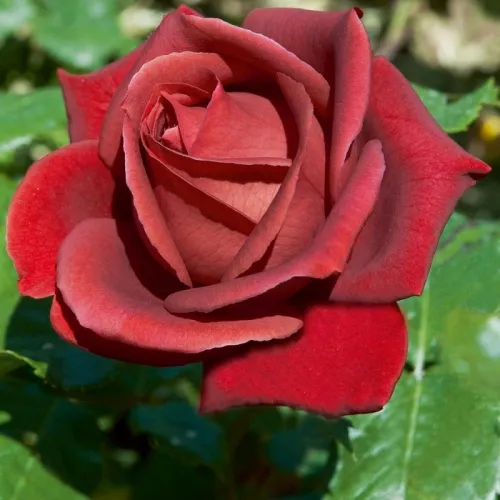
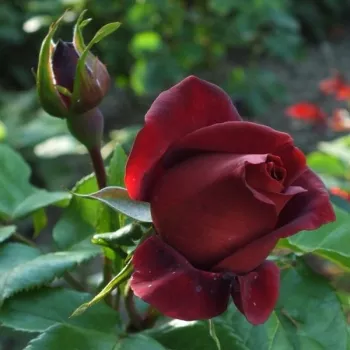
Imagine stepping outside after rain, along a narrow, glistening path where the brick-red blooms of TERRACOTTA® catch the light in a calm, balanced way. This upright, bushy hybrid tea brings a quietly dramatic colour accent to compact London front gardens and small terraces, and settles in reliably even where chalky soils and heavier clays need careful drainage. Large, double, exhibition-quality flowers appear generously in summer, followed by a plentiful second flush that keeps the display going with minimal fuss. As an own-root rose, it establishes steadily for a long, resilient garden life, building strong roots in the first year, graceful shoots in the second, and full ornamental presence by the third. Its matte, dark green foliage frames the warm, fired-clay tones, while the relatively sparse thorns make everyday care and cutting easier. TERRACOTTA® suits 40–50 litre or larger containers on patios and balconies as well as beds and borders, giving you a durable feature plant with a responsible, value-based gardening mindset.
Usage options
| Target area | Reasoning |
|---|
| Front garden focal point |
The warm brick-red flowers offer an immediate focal point beside a path or front door, especially in smaller London-style gardens where a single statement rose makes a big impact with limited space, ideal for the busy urban gardener. |
| Cutting and exhibition bed |
With XL, solitary, cup-shaped blooms on upright stems, this hybrid tea is well suited to cutting and exhibition use, providing uniform flowers that hold their shape and colour attractively in the vase, appealing to the home flower arranger. |
| Container on balcony or terrace |
Its compact, bushy habit and moderate height suit a 40–50 litre or larger pot, giving structure and long-season blooms where ground space is scarce, especially for paved, rainwater-friendly spaces attractive to the apartment balcony owner. |
| Small, structured rose border |
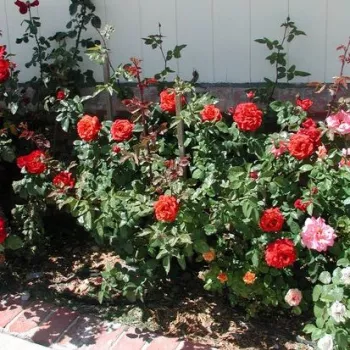
Recommended planting distances allow you to create a tidy, formal line or low hedge, while consistent growth and medium maintenance needs simplify care for those who want order without complexity, reassuring for the time-pressed beginner. |
| Mixed bed with perennials |
The dense, matte dark foliage and brick-red flowers pair beautifully with airy companions, adding depth without overwhelming nearby planting, a flexible choice for the creative home gardener. |
| Rainwater-conscious front garden |
Performs well with regular watering and benefits from thoughtful drainage on heavier or chalky soils, making it a good fit for urban plots that harvest and slowly release rainwater, aligning with the sustainability-focused homeowner. |
| Part-shade city plots |
Its tolerance of partial shade helps when neighbouring houses, fences or street trees limit direct sun, maintaining ornamental value where some roses would struggle, which supports the challenging-site gardener. |
| Long-term feature planting |
As an own-root rose it can regenerate from the base, avoiding graft failure and giving a longer, more stable life in the garden once established, suiting the long-view garden planner. |
Styling ideas
- Urban Classic – Plant TERRACOTTA® in a square, 50-litre clay pot with low-growing Gypsophila paniculata for a soft, cloud-like edge – ideal for design-conscious balcony dwellers.
- Brick-Harmony – Echo brick façades by lining a short front path with evenly spaced bushes, underplanted with silver Nepeta for contrast – suited to tidy-minded terraced-house owners.
- Soft-Contrast – Combine with Bupleurum rotundifolium ‘Garibaldi’ and pale Lychnis viscaria ‘Alba’ in a narrow bed for a fresh, light-green foil to the warm blooms – perfect for romantic minimalists.
- Cutting-Strip – Create a slim, dedicated cutting row along a sunny fence, using simple mulch and drip-watering for easy upkeep – attractive to home florists who value low-effort abundance.
- Rain-Garden – Position in a free-draining mound within a gravelled, rain-collecting front garden, partnered with lavender and small sage for fragrance and texture – designed for eco-aware city gardeners.
Technical cultivar profile
| Parameter | Data |
|---|
| Name and registration |
Hybrid tea rose; registered as SIMchoca, marketed as Terracotta® Hybrid tea rose SIMchoca; ARS exhibition name Terracotta; commercial hybrid tea type for garden and cutting use. |
| Origin and breeding |
Bred by Nola M. Simpson from cross ‘Princesse’ × ‘Hot Chocolate’; introduced and first distributed in 2001 by Meilland Richardier (France); developed as a strong-coloured hybrid tea. |
| Awards and recognition |
Recognised on the show circuit: New Zealand Silver Star 2001 and Durbanville Gold Medal 2006, confirming its exhibition-quality blooms and reliable performance under judging conditions. |
| Growth and structural characteristics |
Upright, bushy shrub reaching about 90–125 cm high and 60–85 cm wide; dense, dark matte foliage; sparsely thorned shoots simplify handling; best used as specimen, in groups or large containers. |
| Flower morphology |
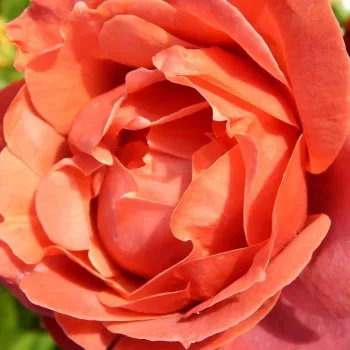
Large, double, solitary, cup-shaped blooms with 26–39 petals; XL flower size on long stems; remontant with a plentiful second flush, providing extended seasonal interest and good cutting stems. |
| Colour data and phenology |
Brick-red, warm reddish-brown with orange tones (RHS 167A–167B); colour deepens in cooler weather and lightens in strong sun; newly opened blooms show darker rust-brown edges that soften as they age. |
| Fragrance and aroma |
Fragrance is very weak and often barely noticeable; chosen primarily for colour effect and flower form rather than perfume, making it suitable where scent-sensitivity is a consideration. |
| Hip characteristics |
Rose hip set is generally low due to the full, double blooms; where formed, hips are small, ellipsoid, 10–14 mm across, orange-red (around RHS 32A i), adding only light seasonal interest. |
| Resistance and winter hardiness |
Hardy to approximately –21 to –18 °C (RHS H7; Swedish zone 3; USDA 6b); disease resistance moderate to powdery mildew, black spot and rust; dislikes prolonged drought and needs regular watering in heat. |
| Horticultural recommendations |
Best in fertile, well-drained soil; space 40–75 cm depending on use, 4.2–4.8 plants/m² for massing; medium maintenance with occasional pest and disease control; suitable for beds, specimens and containers. |
TERRACOTTA® rewards you with large, brick-red blooms over a long season on a compact, upright plant that lives and regenerates well on its own roots, an enduring choice if you would like a quietly dramatic garden feature.