Taxandria – cream-coloured park rose – VIScampina
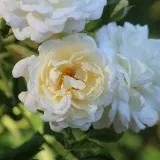
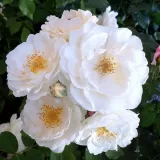
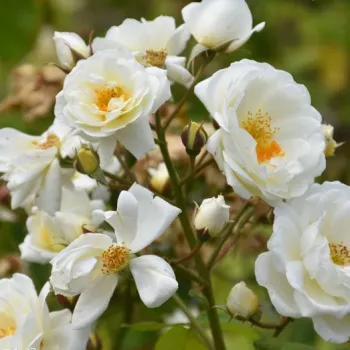
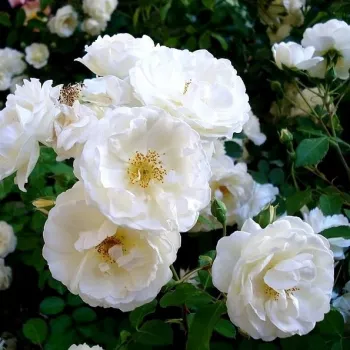
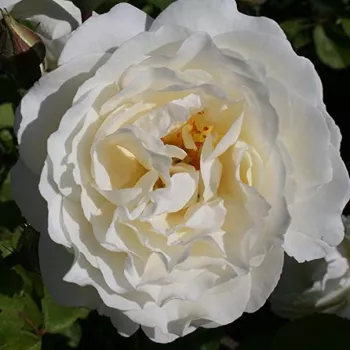
Step off the pavement and into calm: Taxandria frames a London-style front garden with airy clusters of cream-white blooms that glow even on overcast days. Its semi-double flowers leave stamens open and welcoming for bees, while an upright, shrub-like habit builds a light, see-through screen that lets your space breathe. Plant once and enjoy a long-lived, own-root structure that quietly settles in, with roots establishing in year one, top growth filling out in year two and full ornamental presence by year three. Ideal where you want beauty that copes with typical UK rain and wind on heavier soils, it suits both ground-level beds and large containers of at least 40–50 litres. A soft, honeyed fragrance and glossy dark foliage complete the sense of balance, while its resilient framework rewards patient, low-fuss gardeners. Chosen by international juries for award-winning garden performance, it suits relaxed, naturalistic plantings as well as more formal hedging lines. Over time, the own-root base supports regeneration and stable structure without complicated tasks, making it a thoughtful choice for sustainable, rainwater-conscious spaces.
Usage options
| Target area |
Reasoning |
| Front-garden focal shrub |
The upright, 110–170 cm framework builds a calm, see-through screen for small city front gardens, with cream flowers that read clearly from the pavement and a gentle, honeyed scent at the gate – ideal for the busy urban homeowner. |
| Light, informal hedge |
Dense, glossy foliage and repeat-flowering clusters create a soft boundary hedge at around 1–1.5 m, giving privacy without feeling heavy, while own-root planting supports long-term structure and steady, low-intervention shaping for the time-poor gardener. |
| Rainwater-friendly mixed border |
Semi-double, open blooms invite pollinators, while a deep shrub root system works well with improved drainage on heavier clay, helping a border cope more gracefully with wet spells and downpours for the sustainability-minded beginner. |
| Large container on balcony or terrace |
In a 40–50 litre or larger pot, its upright habit and repeat blooms give vertical interest without dominating space; own-root resilience makes it a sensible long-term choice where you want one reliable feature rose as an urban renter. |
| Naturalistic, “girly” meadow bed |
The airy flower clusters and pastel cream tones blend beautifully with light grasses and frothy perennials, softening hard edges and adding romance without fuss, well suited to those curating a dreamy yet manageable front-garden. |
| Pollinator-friendly family garden |
Semi-double flowers with exposed stamens are easy for bees and hoverflies to use, bringing movement and life around play areas and seating, while the mild fragrance keeps things gentle for children and scent-sensitive visitors. |
| Long-term specimen shrub |
A robust shrub form on its own roots offers a long-lived framework that can regenerate from the base if cut back hard, making it a sound, future-proof choice for those planning a garden to mature with them as a patient owner. |
| Cut stems from the garden |
Medium-sized, cup-shaped clusters in soft cream tones are easily gathered for relaxed arrangements; regular cutting encourages new growth and more flowering, giving steady returns to anyone who enjoys simple home floristry. |
Styling ideas
- Soft-hedge ribbon – Plant a loose line along a short London front path, underplant with low Nepeta x faassenii to blur edges and invite bees – ideal for time-poor terrace-house owners.
- Balcony-feature – Use one plant in a 50-litre clay pot with trailing thyme and dwarf grasses, watering with saved rainwater – suited to sustainability-focused flat dwellers.
- Romantic-meadow strip – Mix with Panicum virgatum 'Sangria' and low Gypsophila for a light, “girly” swaying border – perfect for those wanting softness without high maintenance.
- Cream-and-lavender calm – Pair in a small family garden with lavender and sage for fragrance and pollinators, keeping the look restrained and elegant – good for beginners seeking harmony.
- Gate-side welcome – Position as a single specimen by the front gate, underplanted with catmint and spring bulbs to give a long, friendly season – ideal for homeowners who like simple impact.
Technical cultivar profile
| Characteristic |
Data |
| Name and registration |
Hybrid Musk shrub rose registered as VIScampina, marketed as Taxandria – cream-coloured park rose. Part of the Park – shrub rose collection, approved exhibition name Taxandria in American Rose Society lists. |
| Origin and breeding |
Bred by Martin Vissers in Belgium from Echo × Alden Biesen, introduced by Viva International BVBA in 2009. Developed as a landscape shrub with abundant flowering and a light, airy habit for broader plantings. |
| Awards and recognition |
Gold medals at Baden-Baden and Monza, plus special juried prizes including Rose of the Year at Monza; also holds the Excellence Roses certificate 2019/2020, confirming high ornamental performance in trials. |
| Growth and structural characteristics |
Vigorous upright shrub, typically 110–170 cm tall and 90–150 cm wide, with dense, dark glossy foliage and moderate prickles. Creates a substantial yet permeable mass suitable for hedging, specimen use and mixed borders. |
| Flower morphology |
Semi-double, cup-shaped flowers with 13–25 petals, produced in medium-sized clusters. Blooms are remontant with a notably abundant second flush, maintaining decorative effect across the main growing season in UK gardens. |
| Colour data and phenology |
Buds open buttery yellow with a greenish hint, quickly fading to soft cream-white; nearly snow-white at full bloom, sometimes edged delicately with pink. Colour is cool-toned and clean, though the initial cream tones fade relatively fast. |
| Fragrance and aroma |
Soft, sweet, honeyed fragrance of mild intensity, noticeable at close range without overwhelming nearby seating. Suits family gardens and entrance plantings where a gentle, unobtrusive scent is preferred over strong perfumed varieties. |
| Hip characteristics |
Produces moderate quantities of small, spherical red hips around 6–10 mm across. These add fine-textured autumn interest and modest wildlife value without overpowering the clean appearance of the shrub in everyday garden settings. |
| Resistance and winter hardiness |
Hardy to approximately -26 to -23 °C (RHS H7, Swedish Zone 4, USDA 5b). Flowering continues in warm spells, though it needs irrigation in prolonged drought; disease susceptibility is high, so preventative care improves appearance. |
| Horticultural recommendations |
Best in well-prepared soil with good drainage; space 95–110 cm for hedges and beds, up to 165 cm as a specimen. Own-root form aids long-term resilience; use regular hygiene and timely treatments where fungal pressure is significant. |
Taxandria offers a long-lived, own-root shrub with repeat cream flowering and gentle fragrance, providing enduring structure and pollinator appeal; an informed, rewarding choice if you value sustainable beauty over quick effects.