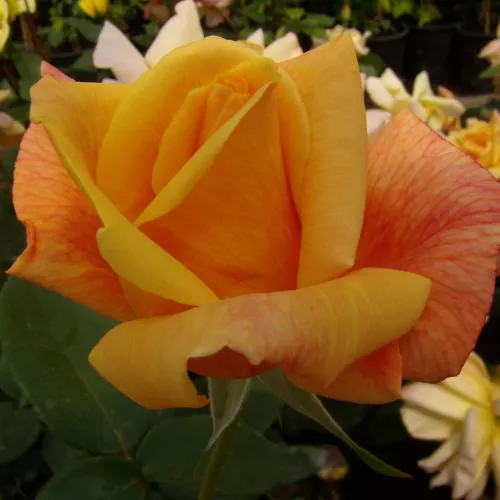
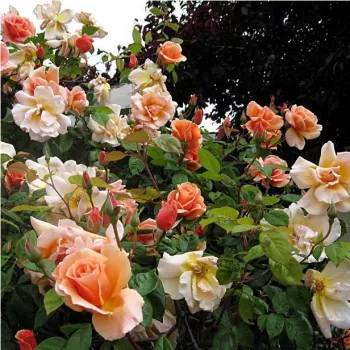
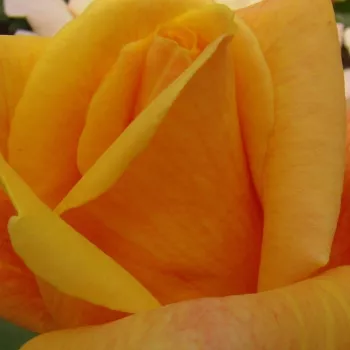
SUTTER'S GOLD – yellow climbing rose – Weeks
Step out after rain and let Sutter’s rich golden blooms glow against dark brickwork, filling your narrow front garden with a fragrant, sweet‑spicy atmosphere that feels both calm and quietly luxurious. This reliable climber copes well with typical British showers and breezes, easing the worry of exposed sites where drainage and changeable weather can challenge less robust roses. As an own‑root plant it settles steadily, building a long‑lived, resilient framework that shrugs off common fungal issues and supports years of colour. In a 40–50 litre container or directly into the ground, you simply give it room, guide its young shoots, and allow its remontant flowering cycles to unfold. From first planting, roots establish, then shoots strengthen, and by the third year it offers its full ornamental impact with generous, exhibition‑grade blooms that can also be cut for the vase, all with a reassuringly low‑input routine.
Usage options
| Target area |
Reasoning |
| London terraced front garden façade |
Perfect for training up railings or beside the front door, this climber stays relatively compact yet showy, bringing golden, strongly scented flowers close to eye level with minimal pruning – ideal for busy urban gardeners. |
| Rainwater-conscious small garden border |
Plant in improved, free-draining soil to work with downpipes or soakaway zones; it copes well with frequent rain and wind while its own roots build a deep, stable framework that rewards patient beginner gardeners. |
| Large container on balcony or patio (40–50 litres+) |
In a generous pot, its upright, bushy habit and moderate spread give a vertical accent without overwhelming the space, while the scented hybrid tea blooms provide elegant, easily enjoyed colour for apartment owners. |
| Feature arch or narrow pergola |
The relatively controlled height and good disease resistance let you cover a slim arch with fewer plants, enjoying long flowering flushes without complicated spraying regimes, suiting time-poor family gardeners. |
| Cut-flower corner in a compact garden |
Exhibition-style, long-stemmed blooms in rich yellow tones offer reliable cutting material; with remontant flowering, you can harvest repeatedly through the season, appealing to home arrangers and creative homeowners. |
| Part-shade side return or alleyway |
Its tolerance of partial shade makes it a smart choice for those tricky side paths; trained flat against a fence, it brightens dim areas with luminous colour, ideal for overlooked terraced-house owners. |
| Low-intervention sustainable front garden |
Strong resistance to black spot, mildew and rust means less spraying and simpler care, aligning with low-input, wildlife-aware planting schemes for environmentally minded city gardeners. |
| Clay or chalky suburban plots |
Once planted into improved, well-drained soil, its own-root vigour adapts reliably to heavier or alkaline ground, pairing well with drought-tolerant perennials for resilient planting chosen by practical homeowners. |
Styling ideas
- GoldenWelcome – Train SUTTER’S GOLD around a terraced-house doorway with soft-blue lavender at its feet for a sunny, perfume-rich entrance – ideal for scent-loving front-garden owners.
- SunlitScreen – Use it on slim trellis with Nepeta and low sage beneath to create a light, semi-private green screen – suited to small urban patios seeking gentle enclosure.
- CopperGlow – Combine the coppery buds with dusky heucheras and creeping thyme for a warm, contemporary palette – good for design-aware gardeners wanting year-round structure.
- BalconyElegance – Grow it in a 50-litre container with trailing sweet alyssum to soften the rim, giving a refined, vertical accent – perfect for balcony gardeners with limited floor space.
- HeritagePath – Line a narrow garden path with this climber on posts and wires, underplanted with sea thrift for a coastal-inspired, low-care look – fitting for those who enjoy classic but unfussy schemes.
Technical cultivar profile
| Characteristic |
Data |
| Name and registration |
Climbing sport of hybrid tea ‘Sutter’s Gold’; ARS exhibition name ‘Sutter’s Gold, Cl.’; commercial names include Sutter’s Gold climbing rose; unregistered but widely established in gardens. |
| Origin and breeding |
Sport of ‘Sutter’s Gold’ raised by O. L. “Ollie” Weeks for Armstrong Nursery, California; introduced by Armstrong Nurseries in the United States around 1950 as a climbing hybrid tea. |
| Growth and structural characteristics |
Vigorous, bushy upright climber reaching about 100–180 cm high and 80–140 cm wide; moderately thorny shoots with moderately dense, slightly glossy dark green foliage forming a structured framework. |
| Flower morphology |
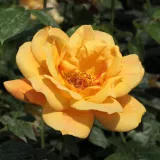
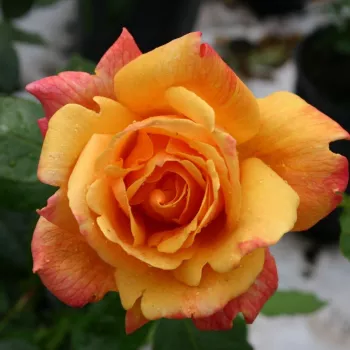
Large, double, cup-shaped blooms with 26–39 petals; hybrid tea style, mostly solitary on stems; remontant habit with abundant second flush, offering exhibition-grade flowers suited to cutting. |
| Colour data and phenology |
Rich golden yellow with orange undertone; buds copper-gold, opening deep yellow with orange edges, then lightening to lemon-yellow and peach; can fade in strong sun, best colour in moderate conditions. |
| Fragrance and aroma |
Strong, distinctive fragrance of classic rose with sweet-spicy notes; well-recognised scent quality, suitable for planting near doors, seating or paths where air movement carries the perfume. |
| Hip characteristics |
Rose hips usually sparse due to double flowers; where formed, ovoid, orange-red hips around 12–18 mm may appear late season, adding modest ornamental interest without significant self-seeding. |
| Resistance and winter hardiness |
Rated resistant to black spot, powdery mildew and rust; hardy to around −29 to −32 °C (USDA 4b, RHS H7, Swedish Zone 5), giving reliable performance across most UK garden climates. |
| Horticultural recommendations |
Suited to walls, arches, trellis, large containers and cutting gardens; plant about 140–230 cm apart; prefers well-drained soil, regular watering in drought and light annual pruning to shape. |
| Awards and recognition |
Decorated parentage: Portland Gold Medal 1946, Bagatelle Gold Medal 1948, Genova Gold Medal 1949, All-America Rose Selection 1950 and James Alexander Gamble Fragrance Medal 1966 for fragrance excellence. |
SUTTER’S GOLD offers richly fragrant golden blooms, reliable disease resistance and compact climbing structure on a long-lived own-root framework, making it a thoughtful choice for enduring beauty in small gardens or containers.