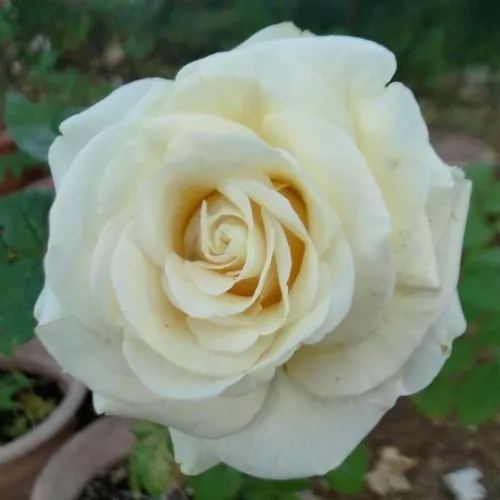
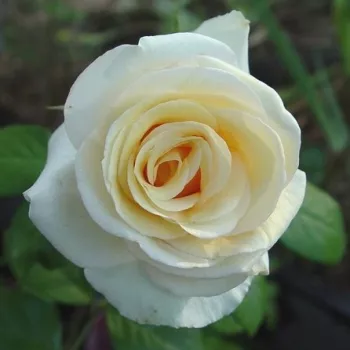
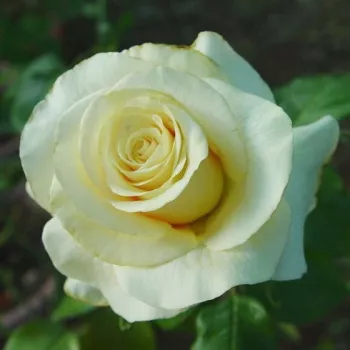
SALLY KANE – cream-white hybrid tea rose – Fryer
Step outside after rain and meet balance in the creamy, high‑centred blooms of SALLY KANE, a compact hybrid tea rose that feels instantly at home in a London front garden, even where humidity and fungal pressure are part of everyday weather. Its bushy, compact habit and dense, glossy foliage make it a natural choice for small spaces, while repeat flowering throughout the season ensures a reliable succession of elegant, long‑stemmed blooms for cutting. Grown on its own roots for longevity and quiet resilience, it builds a discreet underground framework in year one, strong new flowering shoots in year two, and a fully developed display by year three. Medium, noticeably scented flowers add a soft fragrance, and the creamy‑white tones sit beautifully with sustainable planting, gravel, and rainwater‑fed borders. In generous containers of at least 50–litres, or in the ground on improved clay with good drainage, SALLY KANE offers a refined yet easy‑to‑live‑with focal point for busy urban gardeners.
Usage options
| Target area | Reasoning |
|---|
| Small front garden focal point |
The upright yet bushy habit stays within 70–95 cm, creating a neat, eye‑level feature beside a path or doorway without overwhelming a modest London terrace plot, ideal for the beginner. |
| Cutting rose for home vases |
High‑centred, exhibition‑style blooms on long, straight stems provide classic hybrid tea flowers that cut cleanly and last well indoors, suiting those who enjoy arranging flowers at home, especially the hobby‑gardener. |
| Rainwater‑fed urban border |
Compact roots on an own‑root plant cope well in improved heavy clay, and once established can make good use of downpipe‑directed rainwater, reassuring the sustainably minded homeowner. |
| Refined “girly” front garden scheme |
The creamy‑white, almost snow‑white flowers pair beautifully with soft pinks and pastels, creating a feminine, romantic look that still feels tidy and well‑structured for the style‑conscious city‑dweller. |
| Low‑maintenance specimen in a large pot |
In a 40–50 litre or larger container, its moderate size and tidy form are easy to manage, with occasional deadheading all that is needed to keep flowers coming for the busy balcony‑owner. |
| Long‑lived feature in family gardens |
Being grown on its own roots supports gradual regeneration from the base after pruning or weather stress, helping it remain a reliable presence over many years for the practical family‑gardener. |
| Fragrant seating‑area rose |
Medium, noticeable scent released around nose height makes this ideal near a bench or patio, where a gentle perfume can be enjoyed without overwhelming the space, suiting the relaxation‑seeking urbanite. |
| Coastal and exposed town gardens |
Moderate disease tolerance and a dense, leafy framework allow it to perform respectably where wind and frequent showers are normal, offering steady results for the weather‑aware gardener. |
Styling ideas
- Front‑door Elegance – Plant SALLY KANE in a narrow border with lavender and soft pink tulips to frame a townhouse entrance – ideal for urban homeowners wanting a polished yet romantic welcome.
- Rainwise Romance – Combine with Nepeta, hardy geraniums and a gravel mulch under a downpipe to create a pretty, rainwater‑fed strip – suited to sustainability‑minded city gardeners.
- Balcony Classic – Grow one plant in a 50‑litre pot with trailing ivy and white bacopa for a clean, classic look – perfect for beginners with a small balcony or roof terrace.
- Pastel Bed – Mix SALLY KANE with pale pink echinacea, heuchera and airy grasses for a soft “girly” bed – good for families wanting gentle colour that still feels refined.
- Evening Perfume Corner – Place near a bench with sage and white cosmos to catch scent and light petals at dusk – appealing to busy professionals seeking a quiet, fragrant retreat.
Technical cultivar profile
| Parameter | Data |
|---|
| Name and registration |
Hybrid tea rose, registered as FRYgroovy and marketed as SALLY KANE; ARS exhibition name Sally Kane. Commercially listed as Sally Kane hybrid tea rose FRYgroovy in the hybrid tea rose group. |
| Origin and breeding |
Bred by Gareth Fryer of Fryer’s Roses, United Kingdom, with unknown parentage; introduced and registered with PBR protection in 2005 by Fryer’s Roses / Fryer’s Nurseries for garden and exhibition use. |
| Growth and structural characteristics |
Bushy, compact shrub reaching about 70–95 cm high and 50–70 cm wide, with dense, dark green, glossy foliage and moderate prickling; weak self‑cleaning, so spent blooms usually require manual deadheading. |
| Flower morphology |
Large, double, high‑centred hybrid tea blooms with 26–39 petals, borne mainly singly on stems; repeat‑flowering with a particularly abundant second flush, making it suitable for both display and cutting. |
| Colour data and phenology |
Cream‑white flowers (RHS 155C–155D) opening from pale butter‑yellow buds; petals fade towards snow‑white edges with a pale greenish‑cream centre, giving a luminous, almost pure white effect at full bloom. |
| Fragrance and aroma |
Medium‑strength, soft perfumed scent that is clearly noticeable at close range; fragrance quality is refined rather than overpowering, making it well suited to seating areas and small enclosed gardens. |
| Hip characteristics |
Produces moderate numbers of ellipsoidal orange‑red hips, around 10–14 mm in diameter, adding a discreet autumn interest where flowers are not all removed for cutting or deadheading. |
| Resistance and winter hardiness |
Hardy to around −21 to −18 °C (RHS H7, Swedish zone 3, USDA 6b); disease resistance is moderate, with average tolerance to powdery mildew, black spot and rust under normal garden conditions. |
| Horticultural recommendations |
Best in full sun with fertile, well‑drained soil; plant 50–90 cm apart depending on use. Needs occasional plant protection and regular deadheading; suitable for beds, specimen planting and high‑quality cut flowers. |
SALLY KANE offers compact structure, elegant cuttable blooms and gentle fragrance on a resilient own-root plant that will settle in for years, making it a thoughtful choice if you value calm, enduring beauty in a small garden.