RUBY™ – red-pink bedding polyantha rose – Ilić
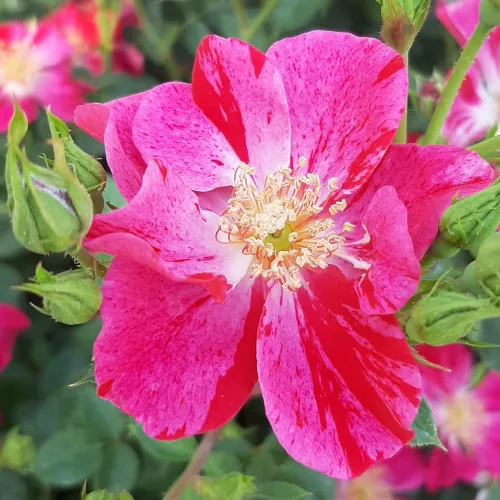
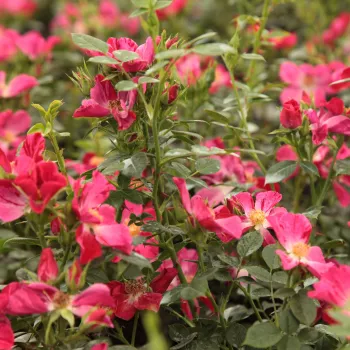
Step out after rain and be met by ruby clusters of single blooms, their open centres alive with visiting pollinators, while this compact bush forms a neat, low border that suits the scale of most family front gardens. RUBY™ settles reliably even where soils are heavy, supporting gardens that must cope with blustery showers and demanding coastal weather, yet it remains easy to look after with only moderate attention. Its twiggy, bushy habit makes it perfect for small beds, rainwater-friendly gravel strips or generous containers, and the own-root form offers reassuring longevity and recovery after harsh winters or pruning. In the first year it concentrates on roots, the second brings bolder top growth, and by the third season the full display of colour and hips is usually established, giving lasting visual balance in a sustainable, low-fuss planting.
Usage options
| Target area |
Reasoning |
| Small front garden bed |
The bushy, compact habit (around 35–55 cm high and wide) makes RUBY™ ideal for narrow London front gardens, offering a long season of bright colour without overwhelming limited space, well suited to the needs of busy homeowners. |
| Low-maintenance pollinator patch |
Single, open blooms with clearly exposed stamens are highly attractive to bees, so even a short row or small cluster becomes a lively foraging stop while you enjoy colour with only occasional basic care, perfect for the aspiring urban naturalist. |
| Rainwater-friendly strip by the path |
Planted into improved soil alongside a gravel or permeable path, RUBY™ copes well where rain runs off paving, making use of extra moisture and shrugging off showers and wind in changeable weather, fitting well with the aims of the climate-aware gardener. |
| Statement container on steps or balcony |
In a 40–50 litre or larger pot with peat-free compost, this rose forms a rounded, flower-laden shrub, giving a strong focal point that is easy to water and tend from the doorstep, attractive for the space-conscious apartment dweller. |
| Mixed border with perennials |
The mid-green, slightly glossy foliage and ruby-red, streaked blooms combine beautifully with lavender, nepeta or sage, creating gentle colour echoes and soft movement through the season, appealing to the style-driven home gardener. |
| Family-friendly, durable planting |
As an own-root shrub, RUBY™ can regenerate from its base if stems are damaged, supporting a long-lived, stable presence in busy family gardens with children and pets, reassuring for the practical long-term planner. |
| Season-long colour accent near seating |
Remontant flowering provides repeated flushes of bright blooms from early summer, keeping a seating area cheerful for months with minimal deadheading, aligning with the expectations of the relaxed weekend gardener. |
| Wildlife-friendly edge or low hedge |
Clusters of flowers followed by small orange-red hips add autumn interest and extra wildlife value, helping you turn a simple edge or short hedge into a biodiverse ribbon that suits the values of the environmentally aware city resident. |
Styling ideas
- Ruby-Edge – line a narrow terraced-house front border with RUBY™ and soft nepeta for a low, bee-friendly fringe – suited to design-conscious city homeowners
- Balcony-Grove – plant one shrub in a 50-litre container with trailing thyme and gravel mulch for easy watering – ideal for space-limited flat dwellers
- Perennial-Blend – mix RUBY™ with lavender and echinacea for layered colour and pollinator movement – appealing to beginner wildlife gardeners
- Path-Ribbon – repeat small groups along a permeable front path to catch rainwater and brighten daily walks – perfect for eco-minded families
- Hip-Harvest – allow hips to form behind the flowers for autumn colour beside low grasses – attractive to year-round interest seekers
Technical cultivar profile
| Characteristic |
Data |
| Name and registration |
Polyantha shrub rose from the Mella® collection; registered as BOZrubybor and marketed as Ruby™ Mella®, a compact bedding rose suitable for modern small gardens and decorative front plots. |
| Origin and breeding |
Bred by Dr Olivera Ilić for PhenoGeno Roses (Serbia / Netherlands); introduced in 2021 after registration in 2020, combining compact growth with long seasonal display for adaptable garden use. |
| Growth and structural characteristics |
Bushy, moderately thorny shrub reaching about 35–55 cm in height and spread, with moderately dense, mid‑green, slightly glossy foliage, forming a neat, low mound ideal for beds, borders and containers. |
| Flower morphology |
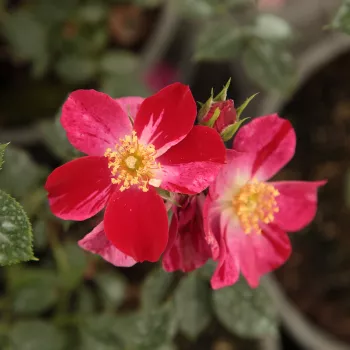
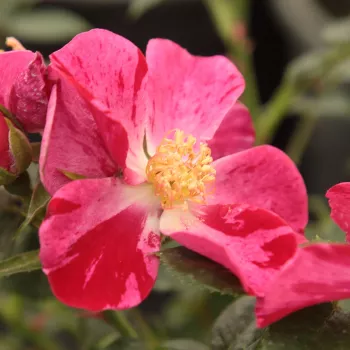
Small single blooms, around 0.5–1.5 inches across, carried in clusters on short stems; 5–12 petals with a flat, open shape and good stamen visibility, repeating freely in several waves through the season. |
| Colour data and phenology |
Bright ruby-red base with thin whitish‑pink streaks; colour fades only slightly, with striping lightening towards creamy white; buds deep ruby-red; open blooms show clear contrast between red ground and pale striping. |
| Fragrance and aroma |
No noticeable fragrance; this cultivar is selected mainly for visual impact and pollinator accessibility rather than scent, making it a good choice where colour and ecological value take priority. |
| Hip characteristics |
Frequently sets small, spherical hips around 6–10 mm in diameter; hips turn orange‑red as they mature, adding modest autumn interest and extra wildlife value once the main flowering period has passed. |
| Resistance and winter hardiness |
Medium disease resistance to black spot, powdery mildew and rust; hardy to approximately −21 to −18 °C (RHS H7, USDA 6b), with moderate heat tolerance when watered during prolonged dry spells. |
| Horticultural recommendations |
Best in full sun with improved drainage on heavy soils; plant 35–45 cm apart in beds or low hedges; suitable for 40–50 litre containers; maintenance is moderate, requiring occasional health checks and timely watering. |
RUBY™ Mella® brings compact, repeat colour, pollinator-friendly single blooms and long-lived own-root reliability to small gardens and generous containers, making it a thoughtful choice when you want lasting impact from a modest planting.