RUBRIFOLIA – pink wild rose - Pourret
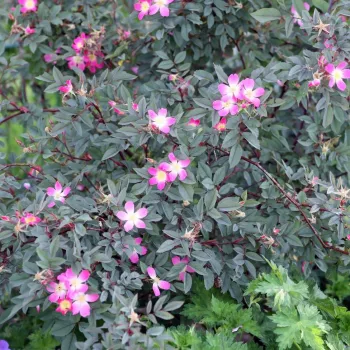
Step outside after rain and this species rose answers with texture, blue‑green leaves and soft pink, single blooms that invite bees and hoverflies into even the smallest London front garden. Its arching branches and natural structure bring instant character to railings, low fences or a shared boundary, while the decorative dark red hips extend the season well into winter. Once planted into improved clay or chalky soil with sensible drainage for breezy, wetter plots, this own‑root shrub settles in steadily, building resilience below ground for long life above. Medium maintenance suits busy households: an annual tidy is usually enough to keep the outline balanced, and you avoid the worries of graft failure or suckers. Over time it forms a tall, airy screen that feels genuinely naturalistic, supports urban wildlife and needs little intervention beyond mulching and occasional shaping. Chosen for its long service in parks and gardens since the 1830s, it offers a quietly sustainable answer to paved‑over spaces, rewarding patient gardeners who enjoy watching year‑on‑year maturity unfold through spring flowers, summer foliage and autumn hips. Own‑root planting means you can expect it to invest first in roots, then in taller shoots, and by the third year deliver its full ornamental presence with relaxed yet purposeful elegance.
Usage options
| Target area |
Reasoning |
| Small London front garden screen |
Tall, arching growth and glaucous foliage create a semi‑transparent privacy veil without feeling oppressive, while flowers and hips keep interest across seasons for a soft, lived‑in frontage – perfect for the busy urban garden owner. |
| Rainwater‑friendly boundary hedge |
Deep‑rooting own‑root plants knit together into a tough, long‑lived hedge that copes well with redirected downpipes and occasional waterlogging once established, supporting greener drainage solutions – ideal for the sustainability‑minded homeowner. |
| Pollinator‑rich wildlife strip |
Single, open flowers with accessible stamens are highly attractive to bees and hoverflies, while autumn hips feed birds, turning a narrow bed or side return into a linear wildlife corridor – suited to the pollinator‑conscious beginner. |
| Naturalistic mixed shrub border |
Soft pink blooms, blue‑green leaves and dark red hips weave effortlessly among grasses and perennials, giving a relaxed, meadow‑edge feel that needs only light annual pruning to stay in shape – appealing to the low‑maintenance gardener. |
| Urban park or shared green |
Proven performance in public landscapes, combined with medium disease resistance and very good drought tolerance, keeps chemical inputs and watering runs low while still looking composed – valuable for the resource‑aware community. |
| Solitary specimen in a narrow bed |
Its upright, arching habit and strong seasonal presence mean a single plant can anchor a slim border, giving height, colour and movement without complex care or fussy underplanting – reassuring for the first‑time rose grower. |
| Large container on a paved front |
In a 40–50 litre peat‑free container it becomes a vertical feature softening hard landscaping; good self‑cleaning flowers and hips reduce deadheading demands so you can simply water and enjoy – convenient for the time‑pressed balcony owner. |
| Clay or chalk garden re‑greening |
Well‑prepared heavy or chalky soils suit this tough species, which then thrives through coastal wind, rain and humidity with minimal fuss, gradually forming a durable framework of stems and roots – a sound choice for the long‑term planner. |
Styling ideas
- Soft-hedged – Plant as an informal hedge along a short front boundary, underplanted with lavender and nepeta to echo the blue‑green foliage – ideal for family gardeners wanting gentle privacy.
- Pink-focus – Combine with coral bells and Japanese forest grass for a layered, “girly” palette that moves elegantly in the breeze – suited to urban homeowners refreshing a narrow plot.
- Wildwalk – Line a slim path with a loose row of shrubs, letting hips and arching stems frame your post‑rain stroll – appealing to beginners seeking a natural, low‑effort look.
- Four-season – Use as a specimen among spring bulbs, summer perennials and autumn dogwoods so flowers, foliage and hips all earn their place – perfect for small gardens needing year‑round interest.
- Green-screen – Train lightly along railings to soften bins or parking spaces without structural work – useful for busy city households wanting quick visual improvement.
Technical cultivar profile
| Property |
Data |
| Name and registration |
Rosa rubrifolia Botanical rose Pourret, also known as Rosa glauca; a botanical wild rose from the Botanical rose collection, classified as a bushy species shrub used as a landscape and garden ornamental. |
| Origin and breeding |
Natural species selected and described by Pierre André Pourret, introduced to cultivation around 1830; unregistered as a modern cultivar yet widely established in European horticulture and public planting schemes. |
| Awards and recognition |
Recognised for reliability and garden value with the RHS Award of Garden Merit (1993) and listed by Great Plant Picks (2002), confirming its long‑term ornamental and landscape performance. |
| Growth and structural characteristics |
Strong, upright to arching shrub reaching about 200–300 cm high and 120–190 cm wide, with moderately dense, matt, blue‑green to purplish foliage and moderate prickliness, forming a graceful, bushy framework. |
| Flower morphology |
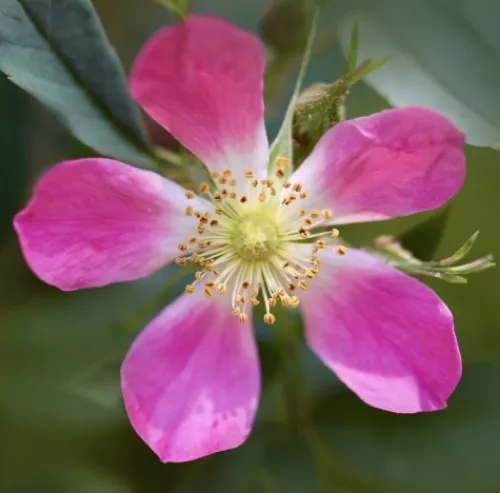
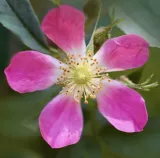
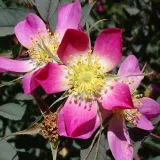
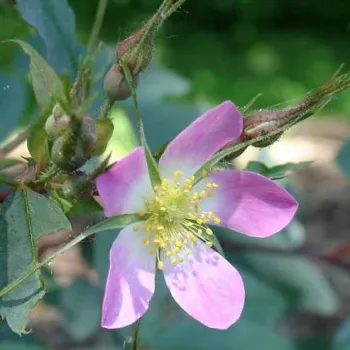
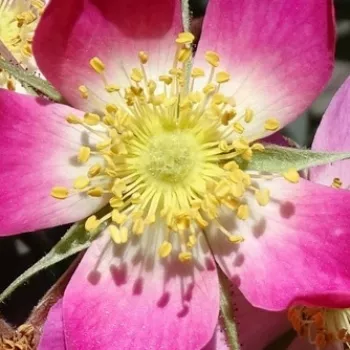
Small, single, flat flowers, typically 5–12 petals, borne in clusters on the current season’s wood, with a once‑flowering display followed by self‑cleaning petals that reveal decorative rose hips as the season advances. |
| Colour data and phenology |
Flowers open dark deep pink with paler centres, coded ARS DPk and RHS 55C/65D; blooms gradually fade to pale pink and near white, giving a soft, changing effect across the flowering period before hips develop. |
| Fragrance and aroma |
Displays a mild, restrained rosy fragrance that adds delicacy rather than intensity; scent is noticeable at close range on still days, supporting contemplative use along paths and near seating without overpowering. |
| Hip characteristics |
Produces moderately abundant, spherical dark red hips around 12–18 mm in diameter, offering extended autumn and winter interest, visual contrast with the foliage and an additional food resource for birds. |
| Resistance and winter hardiness |
Exceptionally hardy to about −46 to −43 °C (RHS H7, USDA 2a) with very good heat and drought tolerance once established; disease resistance is medium, usually manageable with sensible spacing and hygiene. |
| Horticultural recommendations |
Suited to hedges, solitary specimens, naturalistic gardens and urban greens; plant about 90–165 cm apart, in sun or light shade, using mulching and modest pruning to maintain form and reduce maintenance needs. |
RUBRIFOLIA – pink wild rose - Pourret offers long‑lived structure, pollinator‑friendly single flowers and durable own‑root growth, making it a thoughtful, enduring choice for naturalistic family gardens and urban front spaces.