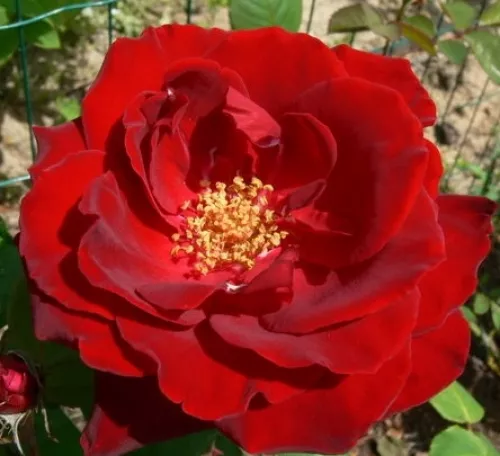
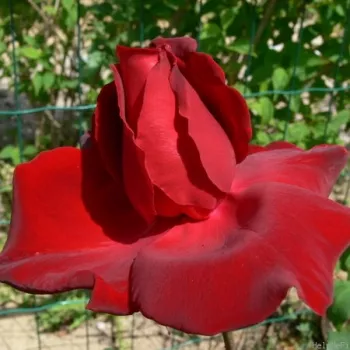
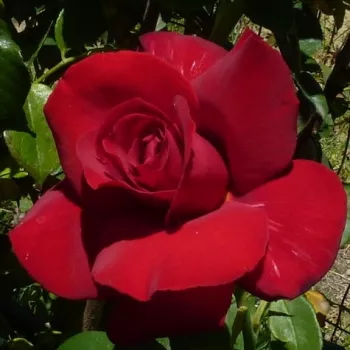
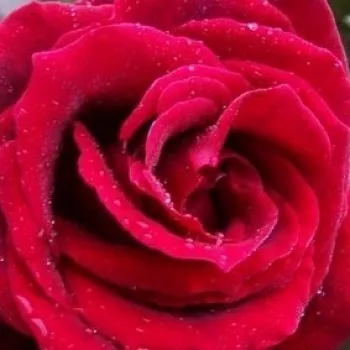
ROSENTHAL – dark red hybrid tea rose - Kordes
Step out after rain into a front garden that feels naturally composed and softly perfumed: ROSENTHAL brings balance to compact London plots with its classic, velvety blooms and strong, rose-scented fragrance, thriving even where winds and showers often buffet exposed beds and door-side borders. This upright hybrid tea forms a dense, glossy foliage backdrop for its large, exhibition-quality flowers, ideal for cutting straight into a vase. Bred by Kordes on its own roots, it offers reassuring longevity, regenerating steadily from the base and keeping its shape attractive over many seasons. Plant it once and let it settle in: easy-care by nature, with strong disease resistance that limits the need for sprays or complicated routines. In a 40–50 litre container or a small front bed, it responds best to simple, regular watering and good drainage, gradually building the familiar “year one roots, year two shoots, year three full display” rhythm that turns a hardstanding space into a green, sustainable retreat.
Usage options
| Target area |
Reasoning |
| Front garden focal point by the doorstep |
The upright habit and XL, velvety blooms create a clear visual focus in the limited depth of a terraced-house front garden, giving structure without crowding paths or bins, ideal for a time-pressed homeowner. |
| Cutting rose in a small family garden |
High-centred, very double flowers on strong stems perform well in a vase, so you can take several stems at a time without stripping the plant, suiting the needs of an occasional-cutting hobby-gardener. |
| Low-maintenance feature in mixed flowerbeds |
Reliable disease resistance to black spot, mildew and rust keeps foliage presentable with minimal spraying, fitting a low-intervention approach and freeing weekends for the busy urban garden-owner. |
| Long-lived specimen for sustainable planting plans |
As an own-root hybrid tea, ROSENTHAL rebuilds from the base if cut back hard or weather-damaged, helping maintain design continuity in long-term planting schemes valued by the sustainability-minded planner. |
| Rainwater-aware front border beside paving |
An upright, medium-height framework allows underplanting with groundcovers that help absorb runoff, while the rose itself tolerates exposed, showery sites with typical British rain and wind, supporting the eco-conscious city-dweller. |
| Formal line or short hedge along a path |
Regular height, dense dark-green foliage and consistent flower form give a smart, repeated look when planted at recommended spacings, suiting those who prefer an orderly, classical aesthetic-seeker. |
| Large container on balcony, patio or small yard |
Performs reliably in a 40–50 litre pot with drainage, combining showy flowers and manageable size, making it suitable for paved spaces where beds are limited for the practical balcony-gardener. |
| Year-round structure with seasonal fragrance highlights |
Glossy foliage and upright stems give backbone from spring to autumn, while strong classic scent adds seasonal drama during repeat flushes, appealing to those wanting impact beyond flowers-first beginners. |
Styling ideas
- Doorstep-Drama – position ROSENTHAL by the front step with low evergreen candytuft at its feet to soften edges and catch runoff – ideal for compact front gardens.
- Classic-Bouquet – group three plants in a sunny bed with airy pink gypsophila for effortless cutting combinations – perfect for home florists.
- Glossy-Structure – anchor a mixed border with ROSENTHAL and weave in blue nepeta to contrast its dark foliage – suited to design-conscious homeowners.
- Container-Couture – plant one rose in a 50 litre pot, underplant with trailing thyme and gravel mulch for easy watering – designed for balcony and patio users.
- Formal-Frontage – line a short path with evenly spaced plants, edging with low lavender to echo the rose’s fragrance – attractive to lovers of traditional style.
Technical cultivar profile
| Parameter |
Data |
| Name and registration |
Hybrid tea rose; registered as KORtat, traded as Rosenthal Hybrid tea rose KORtat; ARS exhibition name ‘Tatjana’; meaning “rose valley” from the German word Rosenthal. |
| Origin and breeding |
Bred by Reimer Kordes (W. Kordes’ Söhne, Germany) from ‘Liebeszauber’ × ‘Präsident Dr. H.C. Schroder’; introduced and registered in 1970 as a garden and exhibition hybrid tea. |
| Growth and structural characteristics |
Upright, medium-height bush 70–95 cm tall, 50–70 cm wide; dense, glossy dark-green foliage; moderately thorny stems; suited to beds, low hedges and large containers. |
| Flower morphology |
Very double, high-centred, pointed buds in classic hybrid tea form; over 40 petals; solitary XL blooms ideal for cutting; remontant with a generous second flush in season. |
| Colour data and phenology |
Deep, velvety dark red; buds burgundy to almost black; opens ruby with deeper centres; holds colour well in heat, with only slight fading on outer petals in strong sun. |
| Fragrance and aroma |
Strong, classic rose scent clearly noticeable in the garden and in the vase; fragrance is most intense in warm, still conditions and during peak flushes of bloom. |
| Hip characteristics |
Produces hips sparingly; fruits are 10–14 mm, ellipsoidal and orange-red; not primarily ornamental but may offer modest seasonal interest if spent blooms are left. |
| Resistance and winter hardiness |
Good resistance to powdery mildew, black spot and rust; hardy to approximately −21 to −18 °C (RHS H7; USDA 6b; Swedish Zone 3); moderate heat tolerance needing water in dry spells. |
| Horticultural recommendations |
Prefers sunny, well-drained soil; plant 50–60 cm apart in groups or 90 cm as specimen; deadhead for repeat; performs well in large 40–50 litre containers with regular watering. |
ROSENTHAL – dark red hybrid tea rose - Kordes offers strong fragrance, reliable repeat flowering and long-lived own-root resilience, making it a thoughtful choice if you value lasting structure and classic blooms in a modest garden.