ROSE-MARIE VIAUD – lilac rambler climbing rose - Igoult
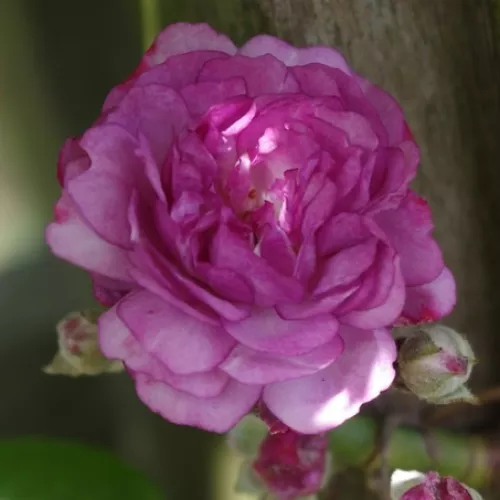
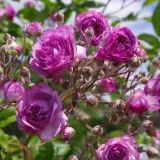
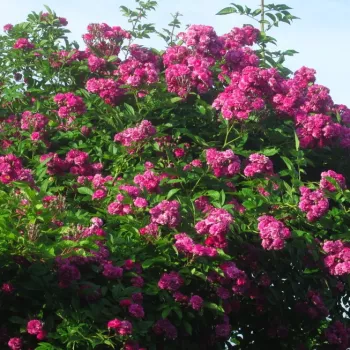
Choose ROSE-MARIE VIAUD if you want a softly romantic rambler that clothes walls, arches and old fences in relaxed waves of muted violet–lilac blossom, creating an enveloping sense of calm after rain and making the most of naturally moist or heavier soils where drainage is still managed. This once‑flowering heritage rose produces a single, spectacular early‑summer display, its small, cup‑shaped clusters forming a dreamy tunnel of colour ideal for London terraced‑house fronts and narrow urban plots. As an own‑root plant it offers reassuring longevity, quietly thickening from the base and renewing older wood over time, so you enjoy stable structure without re‑grafting. Its barely‑there prickles are an everyday comfort on busy paths, while the moderately dense, mid‑green foliage adds a soft backdrop to perennials and ornamental grasses. Given a tall support and a little guiding, its graceful height and measured spread transform vertical space into a green, sustainable screen that feels both intimate and airy in the family garden.
Usage options
| Target area |
Reasoning |
| Front-garden pergola in a terraced street |
Trained over a simple wooden or metal pergola, this rambler creates a cool-toned, lilac tunnel above eye level while leaving ground space free for everyday use, suiting narrow, rainwater-conscious city front gardens and the beginner gardener. |
| Soft privacy screen along a boundary fence |
Its tall, climbing habit and moderately dense mid-green foliage form a gentle visual barrier without feeling oppressive, ideal for softening wire or timber fencing where you want privacy with a romantic, heritage look for the family homeowner. |
| Wall-trained accent for small to medium gardens |
Given horizontal wires or a trellis, the long, flexible canes can be fanned out across a house or garage wall, turning a bare surface into a lilac haze that maximises vertical space for the space-conscious urbanist. |
| Feature arch over a path or side entrance |
Once established, its arching growth frames gateways and side passages with a single dramatic early-summer flowering, evoking a “secret garden” feel while keeping footprints compact for the romantic traditionalist. |
| Own-root long-term structure in a family garden |
As an own-root plant it rebuilds from its base after pruning or weather damage, giving a long-lived framework that matures steadily over several seasons instead of needing replacement, reassuring the long-term planner. |
| Low-prickle climber near busy walkways |
The barely prickly stems make it more practical beside narrow paths, bin stores or parking bays where people brush past, reducing snags on clothes and making routine access easier for the busy household. |
| Rain-aware planting with improved drainage |
Used with a free-draining planting pocket in heavier London clays, this rambler responds well to regular moisture while its tall frame lifts foliage and flower clusters clear of splashback, supporting the eco-minded city gardener. |
| Once-a-year seasonal highlight in low-input spaces |
Its non-remontant habit focuses care around one main flowering, allowing you to enjoy a generous early-summer show and then a largely green backdrop with only light pruning and tidying needed for the time-poor beginner. |
Styling ideas
- Romantic Archway – Weave ROSE-MARIE VIAUD over a metal arch, underplant with lavender and nepeta for a scented lilac-and-blue entrance – ideal for the cottage-style front-garden dreamer.
- Pastel Pergola – Train it along a slim pergola and pair with soft grasses like Pennisetum and white Liatris for a hazy, rain-friendly seating nook – perfect for relaxed evening unwinders.
- Heritage Wall – Combine this rambler on a sunny brick wall with old-fashioned perennials and sage in the foreground for a classic period-house feel – suited to lovers of vintage character.
- Gentle Screen – Let it form a tall, semi-transparent veil between garden “rooms”, backed by Caryopteris and low shrubs to keep interest after flowering – great for designers of small family plots.
- Urban Ribbon – Run it along slim wires above a front boundary, with drought-tolerant planting at ground level and a large 50-litre container start if soil is limited – helpful for creative balcony and frontage planners.
Technical cultivar profile
| Property |
Data |
| Name and registration |
Rose-Marie Viaud is a rambler climbing rose from the Climbing rose collection; ARS exhibition name Rose-Marie Viaud, an unregistered cultivar traded under this historic commercial name. |
| Origin and breeding |
Bred by M. Igoult in France around 1924, from an open-pollinated seedling of ‘Veilchenblau’; introduced by Hazlewood Bros. Pty. Ltd. in Australia in 1926, precise breeding institution unrecorded. |
| Awards and recognition |
Certified as a successful garden performer in the Longwood Gardens 10-year Rose Trial, indicating reliable ornamental value under long-term landscape conditions rather than show bench performance. |
| Growth and structural characteristics |
Strong, climbing growth reaching about 360–550 cm high and 150–220 cm wide, with flexible, barely prickly canes and moderately dense, slightly glossy mid-green foliage forming an elegant, arching framework. |
| Flower morphology |
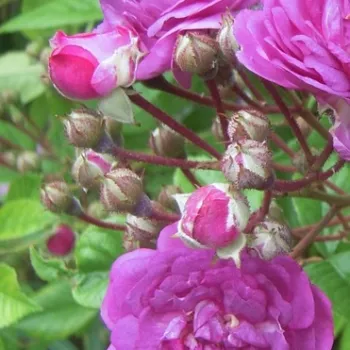
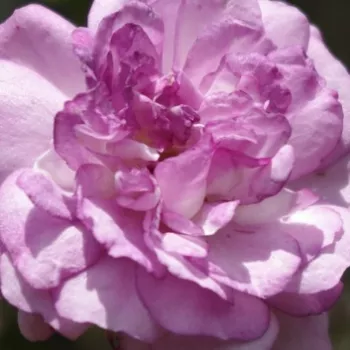
Semi-double cup-shaped blooms, 13–25 petals, produced in cluster-flowered trusses; small-flowered rambler type that flowers once in early summer, with medium self-cleaning so some spent blooms need removing. |
| Colour data and phenology |
Cool violet-purple buds open crimson-purple, then soften through even purple to pastel lilac-grey; overall a muted violet–lilac effect, with colour retention moderate and a single extended early-summer flush. |
| Fragrance and aroma |
Fragrance is very weak and barely noticeable; primarily grown for its distinctive lilac-toned colour effect, decorative clusters and romantic rambler silhouette rather than for scented garden or cut-flower use. |
| Hip characteristics |
Forms sparse red, egg-shaped hips about 6–9 mm in diameter; hips may add a light decorative touch after flowering but are not a main ornamental feature of this rambler in typical garden use. |
| Resistance and winter hardiness |
Hardy to around -21 to -18 °C (RHS H7, roughly USDA 6b, Swedish zone 3), but foliage is sensitive to rust and prone to powdery mildew and black spot, so regular, thoughtful plant protection is advisable. |
| Horticultural recommendations |
Best on pergolas, arches, walls or fences in sun or partial shade; plant about 170–280 cm apart, avoid drought, improve drainage on heavy clay, and allow ample support height for natural, cascading growth. |
ROSE-MARIE VIAUD offers once-a-year lilac abundance, graceful height for pergolas and walls, and steady own-root longevity, making it a thoughtful choice if you value long-term structure and soft seasonal drama.