RENICA – yellow-red hybrid tea rose - Tantau
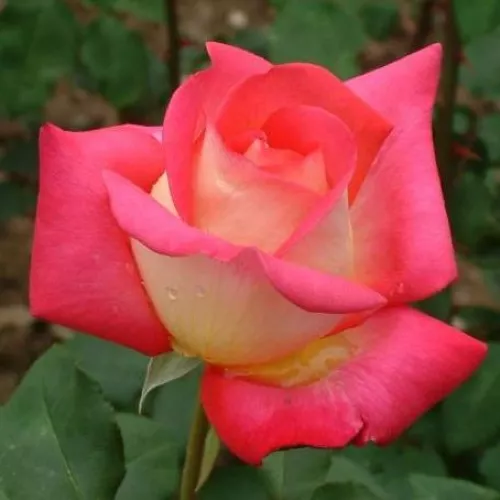
Step through your front gate and meet Renica, a hybrid tea rose that slips effortlessly into small urban spaces and traditional family plots alike. Its bicolour blooms bring a soft balance of lemon-yellow and rose-red, echoing late-afternoon light after rain. Bred for reliable health in typical UK conditions, it stands up well where wind, drizzle and heavy soil are part of everyday gardening, gently supporting gardens that manage rainfall and avoid paved-over front drives. This own-root plant develops steadily, rewarding patience with dependable longevity and a strong framework that shrugs off colder winters. With low day-to-day maintenance and a forgiving nature towards beginners, it fits busy lives while offering a subtly sustainable choice: long-lived, regenerative structure, less replacement planting, and compatibility with peat-free composts. Within a few seasons it settles into an easy rhythm of repeat flowering, giving you elegant, high-centred blooms for both garden and vase.
Usage options
| Target area | Reasoning |
|---|
| London terraced-house front garden |
The upright habit and modest spread make this rose ideal near a front path or bay window, where its bicolour flowers read clearly from the pavement, while strong disease resistance suits enclosed, humid street locations for the busy urban gardener. |
| Rainwater-friendly urban border |
Planted into improved clay or loam with good drainage, its reliable health and remontant flowering help anchor a permeable, planted front garden that copes gracefully with frequent showers and blustery weather for the sustainability-minded homeowner. |
| Feature rose in a small family garden |
Used as a single specimen, the high-centred, cut-flower-style blooms offer a classic focus point without dominating a modest lawn or play space, combining ornamental impact with low routine care for the time-pressed family gardener. |
| Cutting-and-display corner |
The long-stemmed, exhibition-type flowers are easy to harvest for vases, bringing the garden indoors; repeated flushes through the season mean a steady supply of buds and blooms for the home flower arranger. |
| Peat-free container on balcony or patio |
In a 40–50 litre pot with peat-free compost, its compact footprint and upright growth provide vertical colour without overwhelming tight spaces, while own-root resilience helps it recover well from minor watering lapses for the novice container gardener. |
| Low-maintenance rose bed composition |
Grouped at recommended spacing, this cultivar forms a neat, upright planting rhythm that needs only occasional deadheading and seasonal pruning, with strong disease resistance reducing sprays and fuss for the easy-care-focused beginner. |
| Informal flowering hedge |
Planted in a line at hedge spacing, its dense, dark foliage and repeated bicolour flushes create a soft visual screen; own-root plants knit into a durable, renewing structure that copes well with typical UK winters for the long-term garden planner. |
| Pollinator-friendly mixed border |
Although only moderately attractive to insects, its season-long flowering still offers regular pollen access when combined with nectar-rich companions, and its resistance supports greener, spray-free gardening even in damp, fungal-prone districts for the eco-conscious city gardener. |
Styling ideas
- Soft-Frontage – Pair with Alchemilla mollis and soft grasses by a low wall, using the rose as a vertical highlight that stays compact and tidy – ideal for style-conscious terraced-house owners.
- Cutting-Corner – Plant three in a triangle with lavender at the edges to mask thorns, creating a mini cutting patch that still looks ordered year-round – suited to beginners who love indoor bouquets.
- Urban-Hedge – Run a loose row along a front boundary, underplanted with Nepeta for colour at ground level and bicolour blooms above – perfect for families replacing a fence with planting.
- Balcony-Focus – Grow a single plant in a 50-litre container with trailing thyme and sedum to soften the rim, letting the rose supply height and structure – good for small-space gardeners wanting one strong feature.
- Rain-Garden – Position slightly above a shallow gravel swale with sage and dwarf dogwood, where its healthy foliage and repeat blooms give structure without constant care – recommended for eco-focused urban front gardens.
Technical cultivar profile
| Parameter | Data |
|---|
| Name and registration |
Hybrid tea rose group; registered as TANrekta, marketed as RENICA – yellow-red hybrid tea rose - Tantau, with ARS exhibition name ‘Rebecca’ for cut flower and show use. |
| Origin and breeding |
Bred by Mathias Tantau Jr. (Rosen Tantau) in Germany from ‘Konfetti’ × ‘Piccadilly’; introduced and registered in 1970 as a garden and exhibition hybrid tea cultivar. |
| Awards and recognition |
Holds ADR distinction from 1972, indicating proven garden performance, ornamental value and disease resistance under independent trial conditions without routine chemical protection. |
| Growth and structural characteristics |
Upright habit, 75–105 cm tall with 45–65 cm spread, densely foliated with slightly glossy dark green leaves; can be prickly, forming a well-branched, medium-sized bush in beds or containers. |
| Flower morphology |
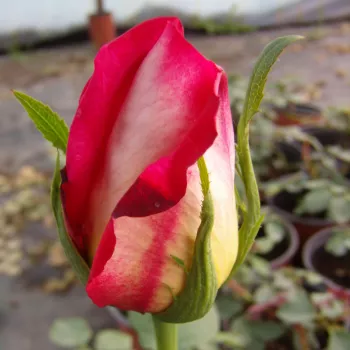
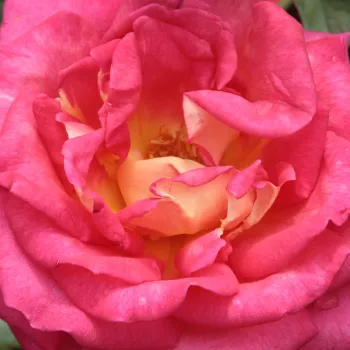
Hybrid tea, high-centred, pointed buds opening to large, double blooms with 17–26 petals, usually borne singly on stems; remontant with an especially abundant second flush in suitable conditions. |
| Colour data and phenology |
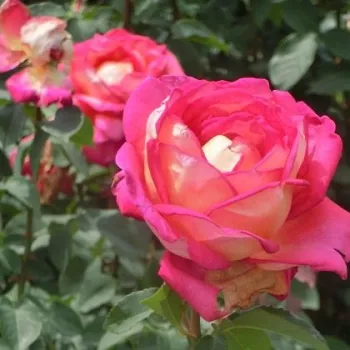
Bicolour yellow-red flowers: lemon-yellow ground with warm rose-red centre; tones soften toward cream and salmon with age, holding colour well, with cooler weather enhancing the red-pink component. |
| Fragrance and aroma |
Fragrance is very weak, with barely perceptible scent; chosen primarily for visual effect, formal flower form and garden performance rather than for strong perfume or aromatic qualities. |
| Hip characteristics |
Occasional small, spherical orange-red hips, around 10–14 mm, may form in autumn and add a light decorative note; deadheading can be prioritised instead if continuous flowering is preferred. |
| Resistance and winter hardiness |
Rated resistant to powdery mildew, black spot and rust; hardy to approximately −21 to −18 °C (RHS H7, USDA 6b, Swedish zone 3), though it dislikes prolonged heat or drought and needs regular watering. |
| Horticultural recommendations |
Best in sunny positions with free-draining soil; allow 35–60 cm spacing depending on use; suitable for beds, low hedges, containers and cutting, with generally low maintenance needs and modest deadheading. |
RENICA – yellow-red hybrid tea rose - Tantau offers compact, healthy growth, elegant repeat flowers and the long-term resilience of an own-root plant, making it a thoughtful, low-hassle choice for your next garden addition.