RÉMY MARTIN® – orange hybrid tea rose – Royon
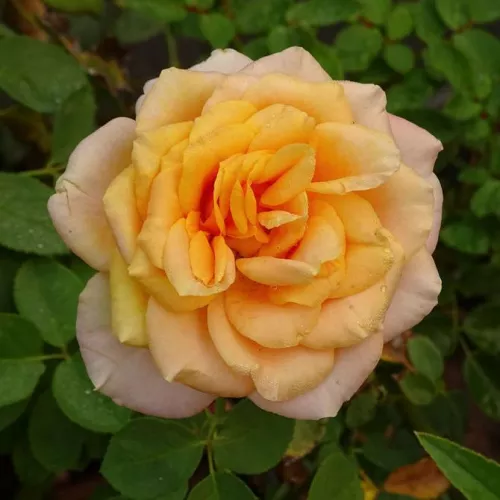
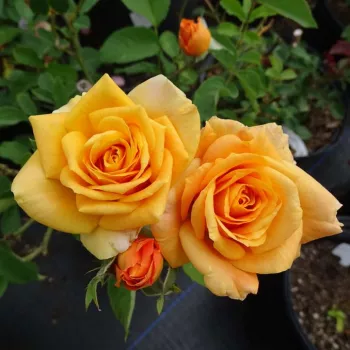
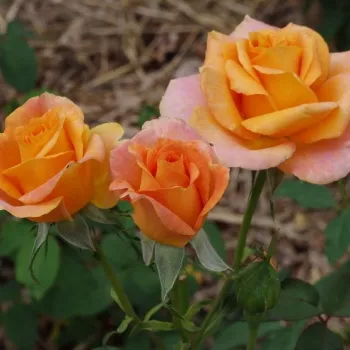
Imagine returning home along a narrow front path edged with tall, luminous blooms, their softly sweet fragrance lifted after rain and catching the evening light. RÉMY MARTIN® creates this quietly luxurious effect with long, upright stems ideal for cutting, while its dense, dark-green foliage gives a structured backdrop that stays handsome through the season. Bred from the renowned ‘Gold Medal’, it offers reliable, repeat flowering in typical British weather, even where front gardens face blustery showers and lingering humidity. As an own‑root plant, it builds strength year by year, giving a long‑lived, regenerating framework that copes well with family life and low‑input care. In a London terrace or small urban plot, one or two carefully placed plants in improved clay soil – or a generous 40–50 litre container – will give real vertical presence without complicated pruning, settling in as roots establish first, top growth follows, and by the third season you see its full impact.
Usage options
| Target area |
Reasoning |
| Front garden feature by the path |
The rose’s tall, upright habit and extra-large, high‑centred blooms create a clear focal point beside a narrow terrace pathway, giving that “walk through the roses” feeling with minimal plants – ideal for the busy urban homeowner who wants drama from a small footprint for the beginner. |
| Cutting and display rose for the home |
Long, straight stems and exhibition-style flower form make it a natural for vases, so a single bush can supply elegant arrangements over a long season, reducing the need to buy cut flowers and suiting those who like to bring their own garden indoors for the homeowner. |
| Statement rose in a large container |
Planted in a 40–50 litre pot with good drainage, it becomes a vertical accent for steps, balconies or paved front gardens, allowing those without much soil to grow a classic hybrid tea with structure and colour where space is limited for the city-dweller. |
| Low‑input, long‑term planting in family gardens |
As an own‑root plant it forms a durable framework that recovers well from accidental damage and hard pruning, providing stable shape and flowering over many years, even as the garden and family needs change for the planner. |
| Sun‑catching spot in mixed borders |
This rose thrives where it can bask in sun, and in typical British conditions it handles blustery showers and lingering humidity around the foliage, making it practical for exposed, open borders rather than only for sheltered corners for the pragmatist. |
| Structured backdrop for “girly” pastel schemes |
The dense, dark-green foliage and medium spread create a neat, architectural base that anchors softer companion plants, giving small urban borders a sense of order without heavy clipping or complex shaping for the stylist. |
| Season‑long colour focus in rain‑aware front gardens |
Reliable repeat flowering means colour returns steadily after each flush, helping paved or gravelled, rainwater‑friendly front gardens feel cared‑for with little intervention, while occasional deadheading easily keeps the show going for the time-poor. |
| Resilient own‑root choice for long service life |
Over the years, the own‑root system supports regeneration from low down if winter, children or pruning errors take their toll, ensuring the plant regrows true to type and maintains ornamental value without specialist skills for the novice. |
Styling ideas
- Terrace Classic – Train RÉMY MARTIN® as a tall, single accent by the front door, underplanted with lavender for scent and soft contrast – perfect for urban homeowners wanting a welcoming entrance.
- Soft Sunset – Combine its copper‑orange blooms with pale pink roses and airy nepeta for a romantic, “girly” palette – suited to small-city front gardens aiming for a gentle, feminine look.
- Modern Amber – Set it in a large charcoal container with silver sage and gravel mulch for a clean, contemporary feel – ideal for balconies and paved spaces with limited planting pockets.
- Warm Hedgerow – Plant a loose row with Crocosmia and Bupleurum for glowing late-summer tones and light movement – good for informal family gardens that still want structure.
- Evening Glow – Place near a seating area with low evergreen groundcover so the golden-orange flowers catch low light – made for busy gardeners who mainly enjoy the garden after work.
Technical cultivar profile
| Property |
Data |
| Name and registration |
Hybrid tea rose; registered as STARqueli, marketed as RÉMY MARTIN® hybrid tea rose STARqueli; ARS exhibition name ‘Magic Lantern’; hybrid tea / grandiflora type for garden and cutting use. |
| Origin and breeding |
Sport of ‘Gold Medal’, bred by René Royon in France (1993); introduced 1994 via Bear Creek Gardens, USA, with US Plant Patent 8861; exact breeding institution unrecorded in available sources. |
| Awards and recognition |
Princess of Show, East Bay Rose Society (1999), and multiple Court of Show or Court of Honor placements in American regional exhibitions around 2000–2001, confirming strong exhibition and cutting value. |
| Growth and structural characteristics |
Upright, grandiflora-like shrub 140–180 cm high and 80–120 cm wide, with dense, dark green, slightly glossy foliage and moderate prickles; self-cleaning is only moderate, so spent blooms often need removal. |
| Flower morphology |
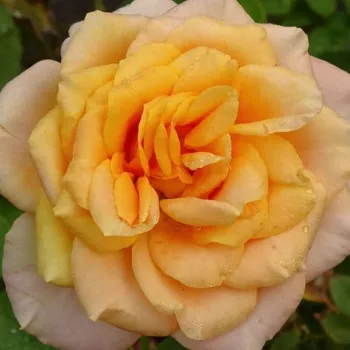
Very large, double, high-centred flowers on long stems, classic cut-rose form with 26–39 petals; borne singly or in small clusters of 1–5 blooms per stem; remontant with a notably strong second flush in season. |
| Colour data and phenology |
Warm copper‑to‑golden orange with peach undertones; ARS ob, RHS 23A outer and 24B inner; buds deep orange, opening vivid copper-orange, then softening to peach-pink; colour lightens in strong sun, richer in cool weather. |
| Fragrance and aroma |
Softly sweet, restrained scent typical of exhibition hybrid teas; noticeable at close range without being overpowering, so it suits front doors, paths and cutting where a gentle fragrance is preferred over strong perfume. |
| Hip characteristics |
Hip set is sparse because of the double blooms; when present, hips are small, 10–14 mm, ellipsoid, and orange-red (RHS 43B), adding occasional autumn interest without significantly affecting flowering performance. |
| Resistance and winter hardiness |
Hardy to about –21 to –18 °C (RHS H7, USDA 6b, Swedish zone 3); disease resistance is moderate to powdery mildew, black spot and rust, so basic monitoring and timely treatment may occasionally be needed. |
| Horticultural recommendations |
Best in full sun with fertile, well-drained soil; water regularly in dry spells. Plant 55–65 cm apart in beds, up to 100 cm as specimens; ideal for flower beds, specimen planting and as a productive cut-flower bush. |
RÉMY MARTIN® offers tall, luxurious blooms, long-season colour and a resilient own-root framework that matures into a reliable, low-fuss presence in family gardens, making it a thoughtful choice when planning a lasting rose feature.