REINE LUCIA – lemon-yellow climbing rose – Kordes
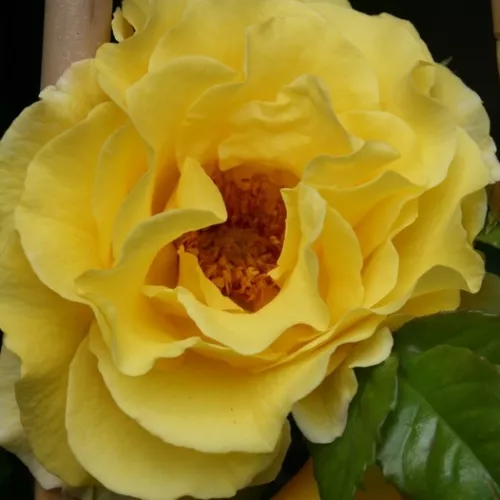
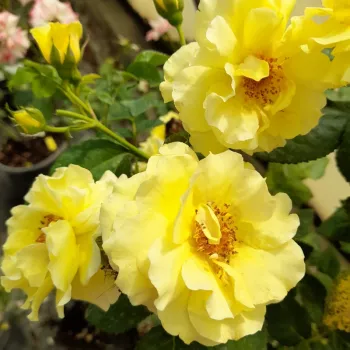
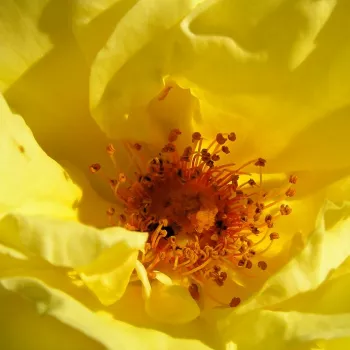
Step out after rain to a path of balance, framed by the luminous, lemon-yellow clusters of REINE LUCIA climbing gently up a terrace wall or railings, while its medium, clearly noticeable fragrance lends a sense of harmony to even the smallest London front garden. Bred by Kordes in 1966, this classic climber brings longevity and structure to family gardens, thriving where cool, damp seasons mean you need planting that copes well with frequent showers and wind. Semi-double, cupped blooms expose golden stamens that subtly support bees, adding a touch of sustainability to your planting choices. As an own-root rose, it offers reassuring stability over time, able to regenerate from its base and keep its ornamental value season after season. You can expect a gentle arc of development as roots establish in the first year, top growth builds in the second, and full garden impact appears by the third, making REINE LUCIA a quietly confident choice for urban gardeners who value understated elegance.
Usage options
| Target area |
Reasoning |
| Narrow London front garden wall or railing |
Its upright, medium-height climbing habit (around 1.5–2.4 m) fits typical terrace front boundaries without overwhelming them, creating a soft screen of lemon-yellow blooms and glossy foliage for beginners seeking an easy vertical accent, especially suitable for busy urban garden owners. |
| Rainwater-conscious, permeable driveway edge |
Trained along a low trellis or wires above permeable gravel or planting strips, it adds long-season colour while leaving the ground surface free for rain to soak away, a practical way to dress boundaries where frequent showers and brisk coastal-style winds can quickly expose weaker plants, ideal for sustainability-focused homeowners. |
| “Girly” pastel planting with herbs and perennials |
The lemon-yellow, cup-shaped flowers pair beautifully with soft mauves and pinks, working well alongside lavender, nepeta or Calamintha and airy grasses, creating a romantic but not overdone front-garden scheme that still feels grown-up for style-conscious terrace dwellers. |
| Climbing accent in a small family back garden |
Used on a pergola post or against a sunny fence, this climber offers repeat flushes of flowers and dense, dark green leaves that build a long-lived framework, so once trained, it quietly does its job year after year with modest intervention for time-poor hobby gardeners. |
| Large container on balcony or paved courtyard (min. 50 L) |
In a substantial 50–60 litre pot with peat-free compost and good drainage, REINE LUCIA can be fan-trained up a trellis, giving height and fragrance where borders are impossible, while the own-root form provides reassuring long-term regeneration and recovery for container-focused city gardeners. |
| Pollinator-friendly entrance or side path |
Semi-double blooms with exposed stamens provide accessible pollen for visiting bees, so a repeated line of plants along a path offers both structure and subtle ecological value through the season, particularly appreciated by beginners seeking pollinator-friendly choices. |
| Long-term feature in heavy clay or chalky soil |
Once established in improved, well-drained planting holes, this own-root climber forms a deep, resilient root system that copes with typical British clay or chalky conditions, rewarding a little initial preparation with many years of dependable performance for long-term-minded homeowners. |
| Specimen arch or porch frame for fragrance |
Arched lightly over a doorway or simple metal arch, its medium-strength, pleasant fragrance and repeat-flowering habit greet you through much of summer, while glossy foliage and moderate thorns make for a structured, traditional welcome that suits romantic front-garden enthusiasts. |
Styling ideas
- Lemon-Cloud Arch – Train REINE LUCIA over a slim metal arch, underplanting with lavender and nepeta to echo the yellow–mauve palette – ideal for terrace entrances needing height without bulk.
- Balcony Showcase – Use a 50–60 L container with a narrow obelisk, combining sedges and trailing thyme at the base – suited to city-dwellers wanting vertical colour on paving.
- Pastel Promenade – Plant along a front path with Calamintha ‘Elfin Purple’ and soft pink salvias – attractive for those craving a gentle, “girly” walkway with pollinator interest.
- Courtyard Screen – Fix discreet wires on a sunny wall and let REINE LUCIA form a semi-formal screen above gravel that aids rainwater soakaway – practical for sustainable, low-lawn front gardens.
- Family Focal Fence – Position behind a small seating area, with globe thistles and ornamental grasses in front – perfect for families wanting a long-lived, fragrant backdrop to everyday life.
Technical cultivar profile
| Characteristic |
Data |
| Name and registration |
Reine Lucia Climbing rose KORlilub; ARS exhibition name ‘Lichtkönigin Lucia’; registered large-flowered climbing rose from the Kordes climbing collection, commercial type climber for garden and landscape use. |
| Origin and breeding |
Bred by Reimer Kordes (W. Kordes’ Söhne, Germany) from ‘Zitronenfalter’ × ‘Cläre Grammerstorf’; introduced and registered in 1966, representing a classic, time-tested lemon-yellow climbing cultivar. |
| Awards and recognition |
Holder of the ADR (Allgemeine Deutsche Rosenneuheitenprüfung) distinction from 1968, indicating proven garden performance under independent German trial conditions at the time of its introduction. |
| Growth and structural characteristics |
Vigorous, upright climber to about 150–240 cm high, spreading 80–140 cm, with dense, dark green, glossy foliage and moderate prickles; suitable for walls, arches, fences and structural garden accents. |
| Flower morphology |
Semi-double, cupped blooms with around 13–25 petals, produced in clusters on the current season’s growth; large-flowered (approx. 7–10 cm), remontant with a generous second flush in suitable conditions. |
| Colour data and phenology |
Vivid lemon-yellow, RHS 13A outer and 14B inner; buds open deep yellow, then soften to creamy lemon with a warmer centre; colour holds moderately before fading, maintaining a cheerful, light-reflecting effect. |
| Fragrance and aroma |
Medium-strength, clearly noticeable scent of pleasant character, evident around head height when trained on supports; fragrance combines with bright colour to provide sensory interest near paths and seating. |
| Hip characteristics |
Produces moderate quantities of spherical, orange-red hips about 12–17 mm in diameter, adding discreet late-season interest and a light wildlife resource once flowering is past. |
| Resistance and winter hardiness |
Fully hardy in UK conditions, equivalent to USDA zone 4b and RHS H7 (around −32 to −29 °C); disease sensitivity moderate to high, particularly to rust, so benefits from good air flow and regular monitoring. |
| Horticultural recommendations |
Best in full sun with fertile, well-drained soil; allow space for training. Maintenance needs are higher than modern disease-resistant types, with routine pruning and plant protection advisable in humid seasons. |
REINE LUCIA Climbing rose KORlilub offers lemon-yellow repeat flowering, an upright space-saving habit and resilient own-root longevity; a thoughtful choice if you would like a quietly enduring climbing feature.