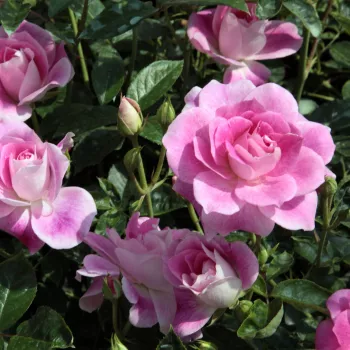
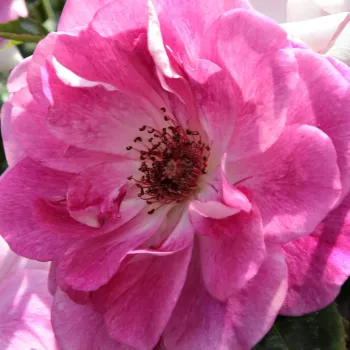
REGENSBERG™ – pink-white bedding floribunda rose - McGredy
Imagine your London front garden after rain, when paving stones glisten and a compact bush of Regensberg roses lifts the whole scene with painterly pink-and-white blooms that seem lit from within. This own-root floribunda is bred for balance between showy colour and practical ease, settling in reliably even where paving, downpipes and flowerbeds meet and rainfall needs gentle guiding away through planting that copes well with wet, heavy soil and brisk winds near the coast. Its bushy habit and medium height fit small urban plots, while dense mid-green foliage frames flowers that repeat generously from early summer well into autumn. Once planted in peat-free compost and mulched, maintenance remains simple, with just basic feeding and the occasional tidy-up. Own-root growth underpins a long lifespan, naturally regenerating from the base so the plant keeps shape and colour year after year. In the first seasons it focuses on roots, then builds confident new shoots, and by the third summer offers its full ornamental impact with rounded clusters of colour. Well-suited to 40–50 litre containers or narrow beds, it partners beautifully with low, silver-leaved herbs to give a fresh, subtly fruity scented welcome at the garden gate and a feeling of calm, sustainable greenery you can enjoy on busy days.
Usage options
| Target area | Reasoning |
|---|
| London terraced-house front border |
Compact, 50–70 cm bushes fit narrow soil strips between path and bay window, giving strong colour without overwhelming the space and needing only light seasonal care for busy urban gardeners |
| Rainwater-friendly urban flowerbed |
Responds well to moist yet free-draining, improved clay beds that help slow and absorb runoff from roofs and paving, working neatly where rainfall and wind can otherwise stress fussier plants for sustainability-focused households |
| Low front-garden hedge or edging |
Bushy habit and repeat flowering create a soft, low hedge that hides utilities and hard edges, staying manageable with one annual prune rather than constant clipping for time-pressed homeowners |
| 40–50 litre container on steps or small patio |
Performs well in a generous pot with peat-free compost, giving long-season colour at eye level; the own-root system fills the container steadily, supporting long-term structure for balcony and courtyard owners |
| Mixed “girly” pastel bed with herbs |
Painterly pink-and-white flowers pair effortlessly with lavender, sage and calamint, creating a soft, feminine look that stays coherent rather than fussy, even when maintenance is deliberately kept light for beginner gardeners |
| Family garden focal clump |
Three to five plants grouped at recommended spacing quickly form a rounded, colourful mound visible from house and seating areas, remaining attractive with straightforward feeding and pruning for family-centred gardens |
| Heat-exposed front garden with reflective paving |
Tolerates heat well when watered regularly in dry spells, holding its display beside south-facing brickwork or light paving that can tire less resilient roses, easing worries during summer holidays for frequent travellers |
| Long-term, low-fuss rose feature |
Own-root plants age gracefully, with new shoots renewing the framework so colour and form stay stable over many years, reducing the need for replacement and complex renovation pruning for practical-minded gardeners |
Styling ideas
- Doorstep-Statement – Plant one in a 50 litre charcoal container by the front door, underplanted with trailing ivy, to give a soft yet structured welcome – ideal for image-conscious city homeowners
- Pastel-Ribbon – Edge a short path with a ribbon of these roses and alternating clumps of lavender cotton for a low, gently scented, easy-care border – suited to busy professionals
- Painter’s-Bed – Combine with Calamintha ‘Elfin Purple’ and common sage in a sunny strip, echoing its hand-painted colour effect with contrasting textures – perfect for artistic gardening beginners
- Courtyard-Halo – Group three plants in a wide gravel mulched bed around a small seating area, using permeable surfaces to work with rainwater and reduce weeding – practical for low-maintenance courtyards
- Family-Front – Mix with low ornamental grasses and pale perennials to create a soft, touchable front-garden scene children can enjoy without dense thorny barriers – great for young families
Technical cultivar profile
| Property | Data |
|---|
| Name and registration |
Regensberg™ (MACyoumis) is a floribunda bedding rose from the Hand Painted Roses collection, registered with ARS exhibition name ‘Regensberg’ and classified for floribunda and spray displays. |
| Origin and breeding |
Bred by Samuel Darragh McGredy IV from the cross ‘Geoff Boycott’ × ‘Old Master’, introduced and registered in 1979 by McGredy Roses International, with breeding work completed in the early 1970s. |
| Awards and recognition |
Awarded a Certificate of Merit at the 1979 Belfast rose trials, recognising its distinctive bicolour effect and reliable garden performance among contemporary floribunda introductions of its period. |
| Growth and structural characteristics |
Forms a bushy, well-branched shrub 50–70 cm tall and wide, with dense, glossy mid-green foliage and moderate prickliness, suitable for bedding, edging and low hedging in family gardens. |
| Flower morphology |
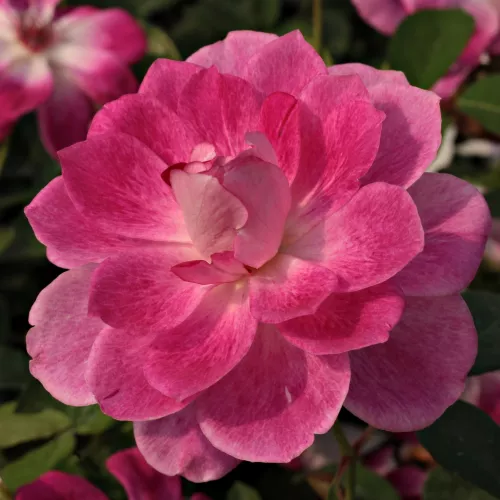
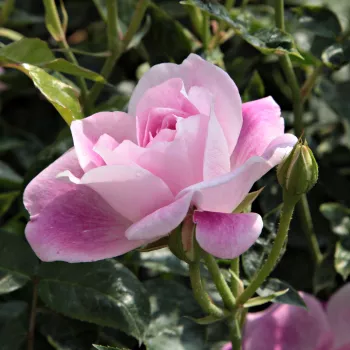
Semi-double, cup-shaped blooms with 17–25 petals appear in clusters on branching stems, repeating strongly through the season, with medium-large flowers around 7–10 cm across in typical conditions. |
| Colour data and phenology |
Displays vibrant mid-pink petals with white shading; colour shifts from raspberry-pink centres to blush-ivory as flowers age, with cooler weather preserving contrast better than hot, bright conditions. |
| Fragrance and aroma |
Offers a clear, medium-strength fruity fragrance, noticeable at close range along paths or seating, providing an attractive scent without being overpowering in smaller urban or courtyard gardens. |
| Hip characteristics |
Occasionally sets small, spherical orange-red hips 6–10 mm across; these are produced only sparsely due to the semi-double flower form and are usually a minor element in the autumn display. |
| Resistance and winter hardiness |
Hardy to approximately –21 to –18 °C (RHS H7), with moderate resistance to black spot, powdery mildew and rust; benefits from regular watering in heat and simple spring frost protection in colder spots. |
| Horticultural recommendations |
Best in sunny sites with improved drainage; plant 35–65 cm apart depending on use, in beds or 40–50 litre containers, and provide routine feeding plus occasional pest and disease checks as required. |
REGENSBERG™ offers compact, colourful flowering, heat-tolerant reliability and long-lived own-root growth that stays attractive with modest care, making it a thoughtful choice for understated, enduring front-garden planting.