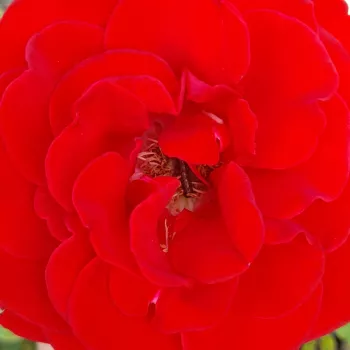
RED NOSTALGIE – red hybrid tea rose - Evers
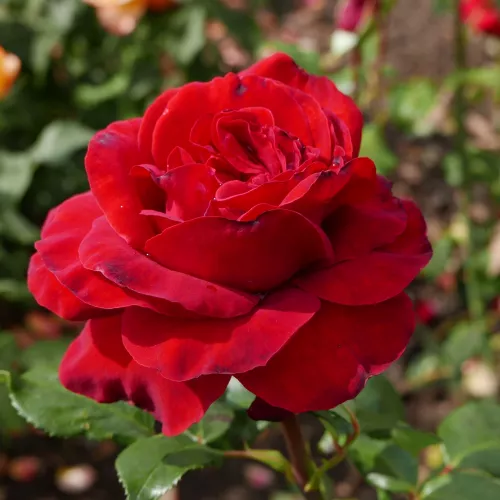
Imagine entering your front garden after steady rain, the air clear and cool, and being greeted by the deep, velvety red blooms of Red Nostalgie as they catch the light; this upright hybrid tea brings a classically refined presence to London terraces and small urban plots, with dark, glossy foliage that complements its large, cup‑shaped flowers. Grown on its own roots in a compact 2‑litre container, it settles in reliably and offers a long working life with stable shape and colour, even where wind and showers are frequent and soils can be heavy, slowly improving drainage and structure. You gain a generously remontant rose whose second flush is also abundant, all from a plant that remains manageable in height and spread for the average family garden and can be accommodated in a 40–50 litre pot if border space is tight. Maintenance is straightforward once you establish a regular care routine, allowing you to enjoy its gentle, mild fragrance and consistently rich colour without complex pruning regimes, while the own‑root form supports recovery if winter or disease cause top growth loss. Over time, you can expect roots to establish in the first year, strong shoot development in the second, and by the third year a full, dependable display that feels both sustainable and settled within your outdoor space, offering a sense of long‑term balance as it matures alongside the rest of your planting.
Usage options
| Target area | Reasoning |
|---|
| Front garden focal point |
Used as a solitary specimen near the entrance, its upright habit and dense, glossy foliage give a structured, elegant focus that works well in small urban front gardens, suiting those who like a clearly defined feature homeowners |
| Cutting patch for home bouquets |
The large, double blooms on long, straight stems make it ideal for cutting, providing classic hybrid tea flowers for vases while the colour holds well indoors, appealing to those who enjoy arranging their own flowers hobby‑gardeners |
| Rain‑resilient terrace or balcony pot |
In a 40–50 litre container with good drainage, it copes with frequent showers and breezy conditions, offering reliable flowering where borders are limited, ideal for city dwellers wanting impact from a single pot urban‑gardeners |
| Compact border in family gardens |
Its moderate height and 60–80 cm spread suit narrow borders along paths or drives, giving a refined look without overwhelming space, useful for families balancing play areas with ornamental planting busy‑families |
| Small, formal rose bed |
Planted at recommended distances in a group, it creates a neat, traditional rose bed with uniform, velvety red flowers and dense foliage, attractive to those seeking a classic rose garden feel in a modest space traditionalists |
| Mixed perennial border accent |
Combined with perennials such as geraniums or yarrow, its saturated red blooms and dark foliage add depth and contrast, fitting gardeners who prefer layered plantings rather than pure rose collections design‑focused‑owners |
| Part‑shade side passage |
Its tolerance of partial shade allows planting in side paths or between houses, where it still flowers well, offering colour in areas that seldom receive full sun, valuable for those with enclosed plots space‑limited‑owners |
| Resilient long‑term planting |
As an own‑root rose with H7 hardiness, it is bred to persist over many years, regenerating from the base if stems are damaged, reassuring gardeners in wetter, wind‑exposed districts who value durability sustainability‑minded‑buyers |
Styling ideas
- Terrace‑classic – Place in a 50 litre clay pot by a townhouse door, underplanted with creeping bugle for a soft, rain‑tolerant carpet – ideal for style‑conscious urban homeowners
- Crimson‑border – Line a narrow front path with a short row, edging with Geranium sanguineum to break up the red with pink and foliage texture – suited to small family gardens
- Velvet‑contrast – Combine with silver foliage and soft mauves such as Nepeta or sage to contrast the dark red blooms and draw the eye – perfect for beginner designers
- Cutting‑corner – Dedicate a sunny border end to three plants at specimen spacing, giving a steady supply of stems for indoor vases – good for hobby florists at home
- Formal‑accent – Use as corner markers in a low hedge of evergreen shrubs, where their upright form and saturated colour punctuate the structure – appealing to lovers of classic layouts
Technical cultivar profile
| Feature | Data |
|---|
| Name and registration |
Hybrid tea rose registered as TANtumleh, marketed as Red Nostalgie Hybrid tea rose TANtumleh; also exhibited under the American Rose Society name Helmut Kohl Rose in cut flower classes. |
| Origin and breeding |
Bred by Hans Jürgen Evers for Rosen Tantau in Germany and introduced in 1996; hybrid tea type with unknown parentage, selected primarily for refined flower form and stable, rich red colouring. |
| Growth and structural characteristics |
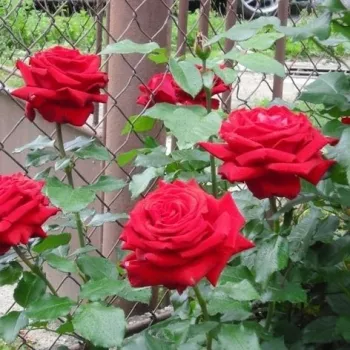
Upright, densely foliated shrub reaching about 85–115 cm in height and 60–80 cm spread; dark glossy green leaves and densely thorned stems give a solid, traditional hybrid tea presence in beds or containers. |
| Flower morphology |
Double, cup‑shaped blooms with a slight, medium‑high centre and 26–39 petals; large flower size on mostly solitary stems, repeating well with a particularly abundant second flush in suitable conditions. |
| Colour data and phenology |
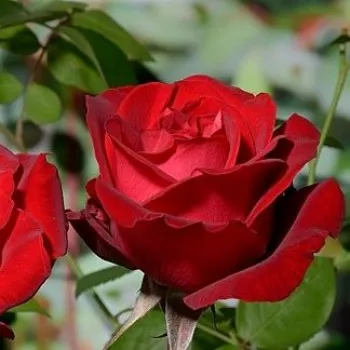
Velvety, saturated deep red flowers with ARS code dr and RHS 53A/53B tones; blooms open from glossy crimson buds and retain colour well in sun, with minimal observable fading during their display period. |
| Fragrance and aroma |
Mild, discreet fragrance that does not dominate nearby seating areas; scent details are limited in formal descriptions, but it offers a gentle classic rose note rather than an intense perfume indoors or outdoors. |
| Hip characteristics |
Due to strongly double flowers, hips are generally few; when present they are ovoid, red, about 15–21 mm in diameter, adding a modest seasonal accent rather than a major ornamental feature in autumn. |
| Resistance and winter hardiness |
Hardy to approximately −21 to −18 °C (RHS H7, Swedish Zone 3, USDA 6b); tolerates normal summer warmth but needs watering in prolonged drought and regular disease protection, especially against rust and black spot. |
| Horticultural recommendations |
Best in well‑drained but moisture‑retentive soil with full sun or light shade; plant 40–80 cm apart depending on use, allow good air circulation, and follow a regular feeding and plant‑protection programme for optimal performance. |
RED NOSTALGIE offers velvety red, repeat‑flowering hybrid tea blooms on a long‑lived, own‑root framework, making it a thoughtful choice for those seeking enduring structure and refined colour in a compact garden space.