RAUBRITTER® – pink park rose - Kordes
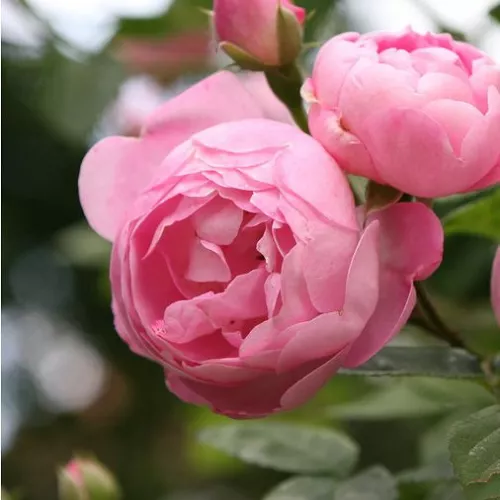
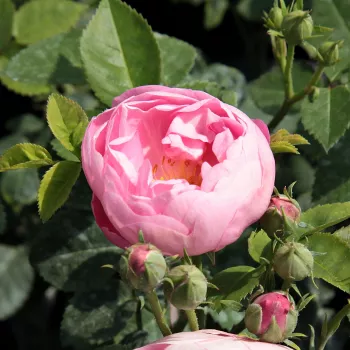
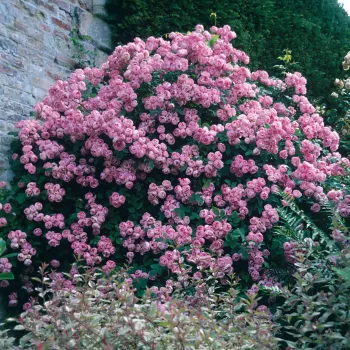
Step through your front gate and imagine a low, arching wave of petals spilling in soft pink across railings or a sunny wall, thriving even where rainfall lingers on heavy soil and wind can ruffle an exposed London street. As an own-root shrub, RAUBRITTER® builds long-term character in your garden, forming a broad, gently cascading shape that sits beautifully with gravel, permeable paths and rainwater-conscious front gardens. Its once-per-season mass of ball-shaped blooms creates a nostalgic cottage ambience, while the matte, dark foliage gives calm, structured greenery for the rest of the year. Choose this variety when you want low-intervention durability rather than constant fuss: a rose that settles slowly but surely, with roots in the first year, stronger shoots in the second and full ornamental presence by the third, offering reassuring stability for busy households.
Usage options
| Target area |
Reasoning |
| London terraced-house front garden |
The bushy, arching habit softens railings, bin stores and low fences without demanding constant pruning, bringing a single, showy wave of blossom each summer that feels romantic yet manageable for beginners. |
| Rainwater-friendly urban planting strip |
Works well with gravel, permeable paving and simple underplanting on heavier soils, coping with periods of wet followed by dryness, suiting front gardens planned around sustainable drainage for city-dwellers. |
| Low, informal hedge along a path |
Plant in a loose row at hedge spacing for a billowing pink border that needs only light shaping, creating a relaxed boundary that feels safe and tactile for families with children and pets. |
| Groundcover on a gentle slope |
The wide spread and arching stems help cloak bare ground, reducing weeding and visually stabilising awkward banks, especially on heavier soils where many shrubs struggle, supporting low-effort gardens for homeowners. |
| Against a fence, wall or low pergola |
Can be guided lightly along wires or over a low structure, giving a curtain of small, pompon flowers without complex training, ideal where you want height and romance but limited upkeep for busy-owners. |
| Mixed border with perennials and grasses |
The dark, matte foliage and soft pink balls of bloom contrast beautifully with airy grasses and aromatic perennials, giving a vintage focal point that anchors the planting scheme for style-conscious gardeners. |
| Coastal or wind-exposed family garden |
Robust shrub structure and reliable disease resistance keep it looking tidy even in breezy, damp conditions near the coast, making it a reassuring choice where roses are often challenged for practical families. |
| Large container on balcony or patio (40–60 L) |
In a generously sized, well-drained pot it offers a long-lived feature that can move with you, its own-root vigour and cold hardiness supporting steady regrowth after pruning for flexible urban renters. |
Styling ideas
- Cottage-Front Charm – Underplant RAUBRITTER® with lavender and catmint along a path for a soft, “girly” frontage with gentle scent – ideal for small terraced-house gardens.
- Romantic Railings – Let its arching stems spill through metal railings, teamed with low sage and thyme to keep the look tidy yet lush – suited to time-poor urban homeowners.
- Rain-Garden Ribbon – Combine with ornamental grasses and moisture-tolerant perennials in a gravel strip that channels roof run-off – for sustainability-minded front-garden designers.
- Pastel Slope – On a gentle bank, mix RAUBRITTER® with creeping thyme and low geraniums to knit soil and create a soft pink-and-green carpet – perfect for family gardens with awkward levels.
- Balcony Feature – In a 50–60 litre pot, pair with trailing nepeta and seasonal bulbs for a romantic, low-fuss statement – great for renters wanting a movable rose investment.
Technical cultivar profile
| Property |
Data |
| Name and registration |
RAUBRITTER® park shrub rose from the Park – shrub rose group; ARS exhibition name ‘Raubritter’; unregistered cultivar used under a long-established Kordes commercial trade name. |
| Origin and breeding |
Bred by Wilhelm J. H. Kordes II in Germany from ‘Daisy Hill’ × ‘Solarium’; introduced by W. Kordes’ Söhne in 1936 and now propagated on its own roots for garden reliability. |
| Growth and structural characteristics |
Low, bushy, strongly arching shrub about 80–130 cm high and 160–260 cm wide, with matte, dark grey-green foliage and dense prickles, forming a broad, cascading, ground-hugging outline. |
| Flower morphology |
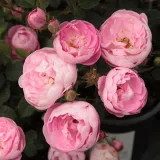
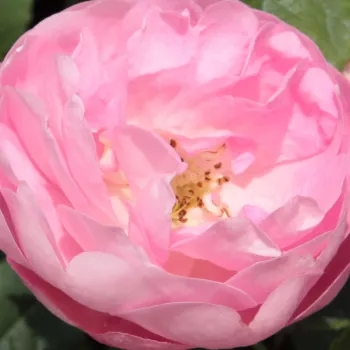
Very full, ball-shaped pompon flowers, typically 40+ petals, small (around 0.5–1.5 inches), carried in large clusters; blooms once per season in a striking, concentrated flush rather than repeating. |
| Colour data and phenology |
Deep pink with a slight purplish tone; RHS 68B outer, 68C inner; buds open with lighter centres and deeper edges, then fade evenly to pastel pink, with cooler weather deepening the overall colour. |
| Fragrance and aroma |
Mild, soft rosy scent that adds gentle atmosphere without overwhelming nearby seating areas; primarily grown for its visual impact and nostalgic flower form rather than intense perfume. |
| Hip characteristics |
Produces moderate numbers of small, spherical red hips, roughly 6–10 mm across, giving a subtle decorative effect in late season and light wildlife interest without becoming dominant. |
| Resistance and winter hardiness |
Highly winter-hardy (approx. USDA 4a, RHS H7, down to about −34 °C) with good heat and moderate drought tolerance and strong resistance to black spot, powdery mildew and rust. |
| Horticultural recommendations |
Low-maintenance shrub rose for hedging, slopes, fences, walls and park-style planting; tolerates partial shade, benefits from decent drainage, and suits mass planting at wider spacings. |
RAUBRITTER® offers a broad, arching pink display with strong disease resistance and cold hardiness, while its own-root form supports long-term regrowth, making it a thoughtful choice for a lasting family garden feature.