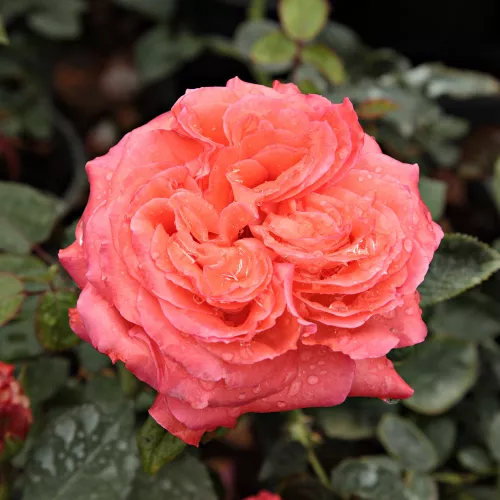
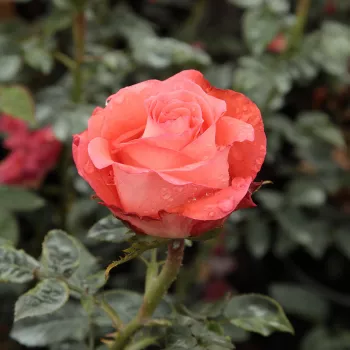
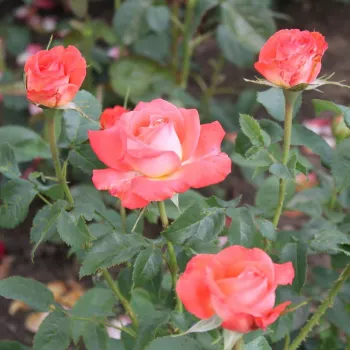
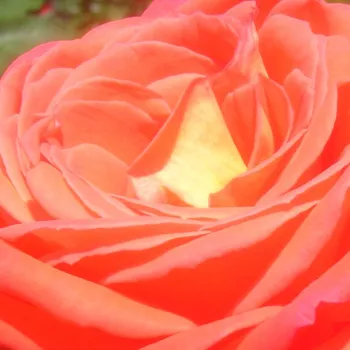
QUEEN OF ROSES® – salmon‑orange hybrid tea rose – KORbico
Step outside after rain and discover a rose that makes your small front garden feel like a private gallery: QUEEN OF ROSES® brings balance to busy urban plots with its upright, compact structure and large, exhibition-quality blooms. Bred by Kordes and ADR‑listed, it offers reassuringly strong health in Britain’s changeable humidity and frequent showers, so you can rely on durable colour and clean foliage even where wind and rain are regular visitors. Its moderate-height, hybrid-tea shape suits London terraces, narrow borders and generous containers, while the own‑root form promises quiet longevity, steady regeneration after pruning and a stable display year after year. Plant once in good, peat‑free compost, water with saved rainwater, and expect a calm rhythm of maintenance: first year rooting in, second year stronger shoots, third year a fully settled, confident presence. Enjoy the fresh, fruity‑tea fragrance, long-stemmed cuttings for the house, and a composed sense of ease in your front‑garden planting.
Usage options
| Target area | Reasoning |
|---|
| Feature rose in a small London terrace front garden |
The upright, compact habit and moderate height allow QUEEN OF ROSES® to sit elegantly beside a path or bay window without overwhelming the space, giving a clear focal point that stays in proportion to a narrow, city frontage – ideal for the busy urban garden owner |
| Low‑maintenance family border near the front door |
This ADR‑listed hybrid tea offers strong disease resistance, meaning less time spent on spraying or remedial pruning and more time simply enjoying clean, dark green foliage and flowers that stay presentable on everyday routes to and from home – reassuring for the beginner gardener |
| Long‑lived, own‑root specimen for long-term structure |
As an own‑root rose, it ages steadily and reliably, regrowing well from the base after pruning and avoiding graft‑related decline, helping you plant once and enjoy consistent structure and bloom over many years in a stable, sustainable way – perfect for the long‑term planner |
| Rain‑tolerant front garden exposed to wind and showers |
Bred in northern Europe and recognised with ADR status, this cultivar combines robust health with firm, well‑built flowers that cope well where frequent wind and rain would challenge less resilient roses, keeping the front garden smart with little intervention – ideal for the coastal homeowner |
| Cut‑flower and exhibition-style planting close to the house |
Large, high‑centred, very full blooms on straight stems make this rose particularly suitable for cutting, allowing you to bring classic hybrid‑tea form into vases indoors while still maintaining a refined show outdoors in a modest bed – attractive to the home flower arranger |
| Own‑root rose for reliable recovery after pruning or mishaps |
The plant’s own‑root construction means that if stems are cut back hard or damaged, regrowth emerges true to type from below soil level, supporting long‑term ornamental value with less worry about mistakes or severe pruning cuts for the learning hobby gardener |
| Structured, upright accent in a rainwater‑managed planting |
The tidy, vertical growth slots neatly amongst grasses and perennials used in sustainable, rain‑aware front gardens, giving a clear architectural accent while you focus on permeable surfaces and drainage that can cope with heavy, wind‑driven downpours – suited to the eco‑conscious urban owner |
| Large container (40–50 litres+) on a paved front area |
Planted in a substantial, at least 40–50 litre pot with peat‑free compost, this compact hybrid tea builds a strong root system, then fuller top growth and finally a generous, stable display over three seasons, adding structure where soil is limited – reassuring for the balcony or patio gardener |
Styling ideas
- Terrace‑Welcome – flank a narrow front path with QUEEN OF ROSES® and low lavender, creating a scented, structured approach that stays tidy for passers‑by – for style‑conscious city homeowners
- Cutting‑Corner – dedicate a sunny corner bed to QUEEN OF ROSES® with nepeta and sage, giving reliable stems for vases and soft, pollinator‑friendly edging – for home florists and beginner arrangers
- Rain‑Garden – pair this upright rose with ornamental grasses and permeable gravel to handle runoff from a townhouse roof while keeping a refined, formal focal point – for sustainability‑minded front‑garden designers
- Solo‑Statement – place a single plant in a large clay pot by the doorstep, underplanted with thyme to soften the rim and highlight the salmon‑orange blooms – for busy professionals wanting impact with minimal upkeep
- Family‑Border – weave QUEEN OF ROSES® through a mixed border of hardy perennials, using its repeated flushes to anchor the display across summer with steady colour – for growing families building a long‑term garden
Technical cultivar profile
| Characteristic | Data |
|---|
| Name and registration |
QUEEN OF ROSES® – salmon‑orange hybrid tea rose – KORbico; Hybrid Tea group; registered name KORbico; also known in exhibitions as ‘Colour Wonder’; commercial hybrid tea rose for garden and cutting use. |
| Origin and breeding |
Bred by Reimer Kordes, W. Kordes’ Söhne, Germany, from ‘Kordes Perfecta’ × ‘Super Star’; bred and registered in 1964, introduced 1965; combines classic hybrid‑tea form with robust garden performance. |
| Awards and recognition |
ADR rose 1964, reflecting proven garden performance and health in independent trials; awarded Belfast Gold Medal 1966, confirming its ornamental value and suitability for both display and domestic planting. |
| Growth and structural characteristics |
Upright, bushy shrub reaching about 85–115 cm high and 60–85 cm wide; moderately dense, glossy dark green foliage (RHS 137A); densely thorned stems; suited to borders, low hedging and specimen planting. |
| Flower morphology |
Large hybrid‑tea blooms, typically 2.75–3.95 inches across, very full with 40+ petals; classic high‑centred cup form, usually borne singly on stems; repeats well, with particularly abundant second flush in suitable conditions. |
| Colour data and phenology |
Warm salmon‑orange with silky sheen; buds bright orange‑salmon, opening to intense tones inside, softer yellow‑tinged outer petals; colour gradually fades to peachy pink; ARS ob, RHS 14B and 33B reference shades. |
| Fragrance and aroma |
Moderate, clearly perceptible scent with a fresh, fruity tea character; noticeable along paths and in cut stems indoors; not overpowering, allowing it to sit comfortably near seating areas and front doors without cloying. |
| Hip characteristics |
Produces few hips; where present, small 10–14 mm ellipsoidal hips, orange‑red (RHS 40A); hips have limited ornamental effect and are usually unnoticed within the overall habit and flowering of the shrub. |
| Resistance and winter hardiness |
Good resistance to black spot, powdery mildew and rust; hardy in USDA Zone 6a, RHS H7, to approximately −23 to −21 °C; reliable in most UK regions with normal garden care and drainage appropriate to soil type. |
| Horticultural recommendations |
Best in full sun with fertile, well‑drained soil; plant 40–75 cm apart depending on use; ideal for borders, low hedging, cutting and specimen roles; own‑root, 2‑litre plants establish steadily in peat‑free media. |
QUEEN OF ROSES® offers large, exhibition-style blooms, dependable health and a long-lived own-root structure that settles in for years of reliable colour, making it a thoughtful choice for a modest yet enduring garden feature.