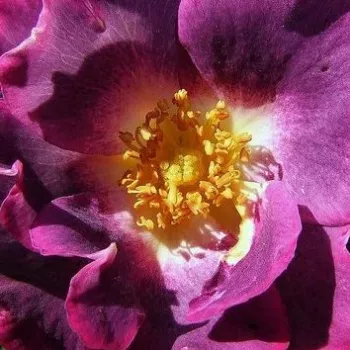
P. S. DE LUXEMBOURG™ – purple climbing rose – Orard
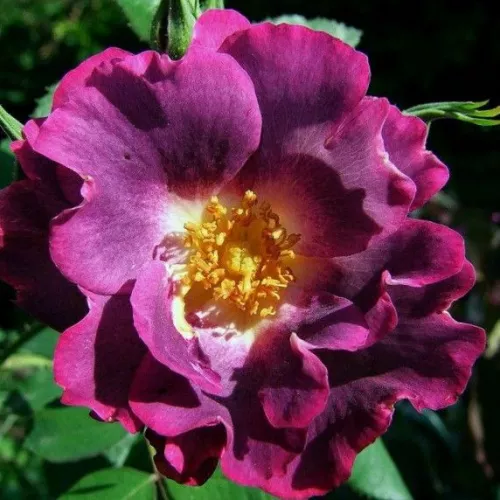
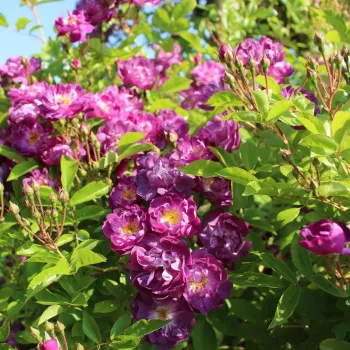
Step out after rain and let P. S. DE LUXEMBOURG™ draw your eye upwards in a column of colour, balance and soft movement, its velvety violet-purple blooms lightening to lavender as they open and releasing a strong, spicy-sweet fragrance along your path. This award-winning Orard climber is bred for reliable performance on typical UK brick walls and fences, coping well with exposed, breezy sites and heavier soils where good drainage is ensured despite persistent rain and wind. Its own-root form supports long-term resilience and easy regeneration, ideal for small front gardens and sustainable, rainwater-fed spaces where you prefer low-input beauty to constant fussing. In the first year it concentrates on roots, the second on framework growth, and by the third it settles into a full, richly flowering feature that frames doors, windows and balconies with a calm, contemporary presence.
Usage options
| Target area |
Reasoning |
| Front garden climber for London terraces |
Trains neatly on trellis or railings without overwhelming a narrow frontage, bringing vertical interest, scent and colour right at eye level; ideal when you want impact from a single, long-lived feature for the busy urban gardener |
| Rainwater-friendly wall or fence planting |
Its deep, own-root system copes well with downpipes and soakaways, using stored moisture between showers while responding well if you water with collected rain in prolonged dry spells, supporting the sustainability-minded homeowner |
| Low-maintenance family seating area backdrop |
Moderate self-cleaning and remontant flowering mean less deadheading work yet a steady display across the season, creating a relaxed, scented backdrop for play and evening meals that suits the time-poor family gardener |
| Training over arches and pergolas |
Its 2.6–3.8 m height range and flexible canes lend themselves to gentle training over arches, where you can enjoy the spicy sweet scent overhead without complicated pruning, a good fit for the style-conscious beginner |
| Small-space specimen in a large container |
In a 40–50 litre or larger peat-free pot with good drainage, it becomes a vertical focal point on patios or balconies, allowing you to grow a substantial climber even where soil is limited, particularly suiting the balcony and courtyard owner |
| Mixed border with perennials and grasses |
The violet-purple clusters combine beautifully with soft greens and golds, while its shrub-like base fills vertical gaps in clay or chalk borders where drainage has been improved, giving structure and colour for the creative hobby gardener |
| Part-shade side return or alleyway |
Tolerates partial shade, maintaining flower and fragrance where many roses underperform, making it practical for the light-limited side of terraced homes and overlooked spaces, which helps the space-maximising city dweller |
| Long-term, own-root investment planting |
With the first year spent rooting, the second building shoots and the third delivering full ornamental value, its own-root habit supports long lifespan, stable growth and easier recovery after setbacks, reassuring the cautious first-time planter |
Styling ideas
- Terrace Welcome – Train P. S. DE LUXEMBOURG™ over a slim arch with lavender and nepeta at the base for a cool, fragrant entrance – ideal for front-garden-focused city households
- Rain-Softened Brick – Fan against a London stock-brick wall with underplanting of Alchemilla mollis to catch raindrops and soften hard lines – perfect for urban sustainability enthusiasts
- Evening Retreat – Grow along a pergola above a dining set, pairing with sage and ornamental grasses for movement and twilight scent – suited to relaxed family entertainers
- Balcony Vertical – Use a 50-litre container with a slim obelisk, adding trailing thyme and compact nepeta for a lush, layered look – great for balcony gardeners with limited footprint
- Modern Hedging – Plant a loose, low climber row with Rudbeckia fulgida in front to contrast gold daisies against purple clusters – appealing to design-aware beginners
Technical cultivar profile
| Characteristic |
Data |
| Name and registration |
Climbing rose group; registered as ORAfantanov, marketed as P. S. de Luxembourg™ Climbing rose ORAfantanov; ARS exhibition name ‘Stormy Weather’, large-flowered climber and cut rose. |
| Origin and breeding |
Bred by Pierre Orard, Roseraies Orard, Feyzin, France, from ‘Heart ’n’ Soul’ × ‘Rhapsody in Blue’; bred 2006, introduced and registered 2010 via Roseraies Orard and SAS R.O.S.E. in France. |
| Awards and recognition |
Widely trialled; Gold medals at Baden-Baden, Rome and Nagaoka (2007), Silver at Adelaide and Monza, plus Best landscape rose Barcelona and Best climbing rose Mesa, Arizona, confirming ornamental performance. |
| Growth and structural characteristics |
Vigorous climbing habit reaching about 2.6–3.8 m high and 1.2–2 m spread; moderately thorny canes with dense, matte, dark green foliage, forming a well-clothed framework when trained on supports. |
| Flower morphology |
Semi-double, cupped blooms with 13–25 petals, large-flowered clusters on the stems; remontant, with a generous second flush following the main flowering and moderate self-cleaning that benefits from light deadheading. |
| Colour data and phenology |
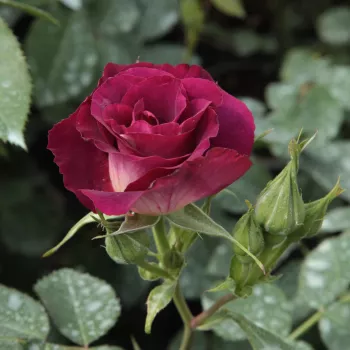
Deep violet-purple inner petals (RHS 79A) with paler 76D reverses; buds dark purple with silvery sheen, fading through lavender with silvery edges in sun, revealing a yellow stamen ring that enriches colour depth. |
| Fragrance and aroma |
Strong, long-lasting perfume with a spicy-sweet character, noticeable at close quarters and along paths; suitable where scented climbers are desired near doors, terraces or windows for everyday enjoyment. |
| Hip characteristics |
Rosehip production generally low; occasional small, spherical hips 8–12 mm in diameter may form, maturing to an orange-red colour and adding a modest late-season accent without dominating the display. |
| Resistance and winter hardiness |
Hardy to about −26 to −23 °C (RHS H7, USDA 5b, Sweden Zone 4); heat-tolerant, but needs watering in long dry spells; disease resistance moderate, so basic monitoring and timely care are recommended. |
| Horticultural recommendations |
Best on well-drained clay or chalk soils with added organic matter; suitable for partial shade; space 1.4–2.4 m depending on use, and train on supports; own-root form favours long-term garden resilience. |
P. S. DE LUXEMBOURG™ offers scented vertical colour, award-backed reliability and long-lived own-root strength, making it a thoughtful choice if you would like a climber that quietly matures with your garden.