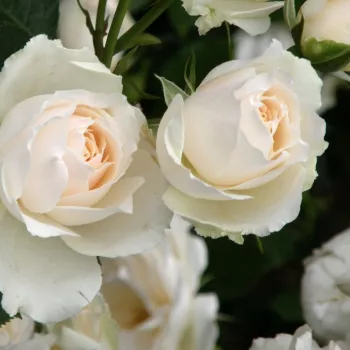
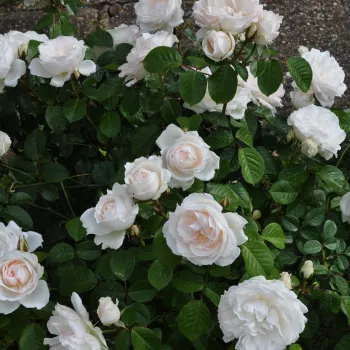
PRINCESS OF WALES – white bedding floribunda rose
Step off the pavement into a small, rainwise front garden where princess blooms glow against glossy foliage and clean lines of paving help manage heavy, wet soil and frequent showers; white cups of flower after flower bring a long season of colour from a compact, bushy shrub that suits modest London terraces and shared family spaces. Semi-double, nectar-rich blooms support visiting bees, while the own-root habit gives quiet longevity, helping the plant recover from knocks and pruning slips and settle into a low-input, sustainable rhythm. In its first year it focuses on root strength, in the second on framework and flowering shoots, and by the third it offers full, reliable impact that feels established yet never overbearing in a small urban plot.
Usage options
| Target area |
Reasoning |
| Front garden flower bed in a London terrace |
Compact height and spread keep paths clear while providing a generous run of white flowering through the season, ideal for neat, low-maintenance beds that still feel romantic for busy urban gardeners. |
| Low hedge along a path or driveway |
Bushy growth and dense foliage create a soft, green and white edging that is easy to trim once or twice a year, giving subtle structure without the commitment of a clipped evergreen for time‑pressed homeowners. |
| Pollinator‑supporting mixed border |
Semi-double flowers expose stamens for bees while repeat flushes keep nectar available; combining with lavender or nepeta extends the feeding season in a small family garden for wildlife‑minded beginners. |
| Rainwater‑friendly front garden redesign |
This rose works well in permeable, gravel‑edged planting where you channel roof or patio run‑off into planting pockets, coping steadily with typical British downpours and damp spells for sustainability‑focused owners. |
| Feature rose in a large container (40–50 litres+) |
Planted into a peat‑free mix in a generous, heavy pot, it forms a stable, long‑lived own‑root shrub whose roots regenerate well after minor neglect or re‑potting for balcony and patio gardeners. |
| Family seating area or courtyard |
Medium, softly sweet fragrance and tidy habit suit close seating, offering scent without overwhelming small paved areas and keeping thorny growth at a manageable height for families with children. |
| Long‑season colour in small gardens |
Remontant flowering with a good second flush delivers months of interest from early summer onwards, filling gaps between perennials and keeping the garden “alive” even when other plants pause for casual hobby gardeners. |
| Low‑intervention, long‑term planting scheme |
Medium disease resistance and own‑root stamina support years of service with basic pruning and occasional checks, giving stable ornamental value as the shrub matures and thickens for low‑effort rose lovers. |
Styling ideas
- TerraceElegance – Line a narrow town‑house path with Princess of Wales and soft grey pavers, underplanting with low thyme to keep things airy yet refined – ideal for style‑conscious city homeowners.
- WhiteRibbon – Create a low hedge of this rose along a front boundary, weaving in lavender and dwarf sage for scent and pollinators – suited to beginners wanting structure without fuss.
- RainGlow – Use a gravel strip that channels downpipe water into a bed of Princess of Wales, nepeta and ornamental grasses – perfect for sustainability‑minded urban gardeners.
- BalconyCalm – Plant a single shrub in a 50‑litre clay pot with trailing ivy and violas for year‑round softness and summer fragrance – great for small‑space dwellers seeking one standout rose.
- FamilyCorner – Place a trio near a seating area, with low catmint and sage at the base, to frame a bench in long‑flowering white and gentle scent – appealing to families who relax outdoors.
Technical cultivar profile
| Parameter |
Data |
| Name and registration |
Floribunda bed rose, registered as HARdinkum, marketed as Princess of Wales Masterpiece Collection® HARdinkum; ARS exhibition name Princess of Wales, shrub and floribunda show categories. |
| Origin and breeding |
Bred by Robert B. Harkness, United Kingdom, from ‘Sexy Rexy’ × (‘Pearl Drift’ × ‘Autumn Fire’); introduced and first distributed by R. Harkness & Co. Ltd. in 1997. |
| Awards and recognition |
Holds the Royal Horticultural Society Award of Garden Merit (2002), recognising dependable garden performance, ornamental value and sound health under typical United Kingdom growing conditions. |
| Growth and structural characteristics |
Bushy shrub reaching about 65–95 cm in height and 50–70 cm spread, with dense, dark green glossy foliage and moderate prickliness, forming a compact, rounded shape suited to beds and edging. |
| Flower morphology |
Semi-double, cup-shaped blooms with around 13–25 petals, medium sized and borne in clusters; remontant with a reliable repeat and notably generous second flowering wave under normal care. |
| Colour data and phenology |
Pure white overall, with subtle pale ivory or buttery tints in the throat; ARS W, RHS 155D outer and 11D inner; opens creamy to white with slight lightening only in hotter weather. |
| Fragrance and aroma |
Medium strength, softly sweet fragrance noticeable at close quarters, combining classic rose notes with a light, fresh character well suited to seating areas and smaller enclosed gardens. |
| Hip characteristics |
Forms moderate quantities of small, spherical hips about 10–14 mm across, maturing to orange‑red and adding discreet autumn ornamental interest among the remaining dark green foliage. |
| Resistance and winter hardiness |
Medium resistance to black spot, powdery mildew and rust; hardy to around −21 to −18 °C, classed as RHS H7, broadly comparable to USDA zone 6b and Swedish zone 3 performance. |
| Horticultural recommendations |
Best in full sun with well‑drained soil; plant 35–40 cm apart in groups or low hedges, or singly at 65 cm; suitable for beds, edging and large containers, with medium maintenance needs. |
Princess of Wales offers compact, long-season white flowering, gentle fragrance and durable own-root growth, making it a thoughtful, low-effort choice for today’s sustainable family garden.