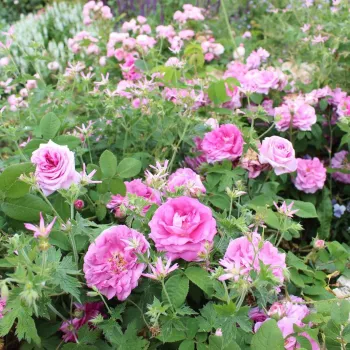
PRÉSIDENT DE SÈZE – lilac-pink historic Gallica rose - Hébert
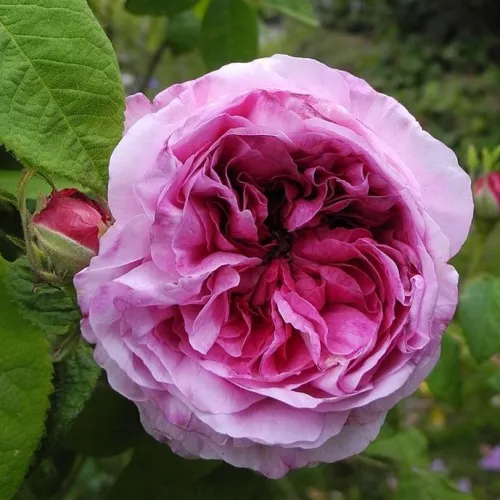
Step off the pavement into a tiny London front garden and meet heritage romance in living form: PRÉSIDENT DE SÈZE, a Gallica shrub rose whose richly fragrant, lilac-pink rosettes open in generous clusters along a bushy, upright framework. Once established on its own roots, this long-lived shrub forms a substantial, balanced structure that responds well to simple, occasional pruning and offers reliable ornamental presence for decades rather than seasons. Ideal for rainwater-conscious planting in heavier soils, it fits gardens where you manage natural drainage, capture downpipes into barrels and value sturdy plants that shrug off typical British winters. Its flowering is concentrated into one abundant summer season, rewarding a year of anticipation with weeks of strongly perfumed bloom that transform even a narrow terrace plot. The shrub’s matt, grey-green foliage and dense branching create a classical backdrop for perennials, while the moderate production of red rose hips adds later interest. As an own-root rose, it regenerates reliably from the base and keeps its original character over time, supporting a gentle arc of development from root-building in the first year, through vigorous new shoots in the second, to full garden presence by the third, when its historic charm truly settles into your green, sustainable city sanctuary.
Usage options
| Target area | Reasoning |
|---|
| Front garden focal shrub |
Its bushy, upright habit and 110–170 cm height make a striking yet manageable focal point for small urban front gardens, giving classic structure with minimal shaping for the busy yet style-conscious homeowner. |
| Fragrant summer walkway |
Strong, long-lasting perfume and clustered, very double rosettes create an immersive scented experience along a path or near a doorway during its main summer flush, ideal for those who savour seasonal ritual and sensory moments outdoors. |
| Low-input heritage hedge |
Planted at around 100 cm spacing, its dense thorny growth knits into a traditional, moderately protective hedge that needs only occasional trimming once established, appealing to gardeners wanting characterful boundaries with modest upkeep requirements. |
| Climate-resilient clay border |
Suited to typical UK conditions, it copes well where improved heavy clay needs careful watering and mulching to manage persistent wet spells and fast-draining dry periods, reassuring those gardening on challenging urban plots nationwide. |
| Historic-style mixed border |
The matt grey-green foliage and lilac-pink blooms pair beautifully with nepeta, sage or lavender for a soft, romantic look that remains tidy with light deadheading, suiting cottage-style planting lovers with limited maintenance time. |
| Solitary specimen in lawn |
Left as a single specimen at around 170 cm spacing, its rounded outline and concentrated once-a-year flowering create a clear seasonal highlight that punctuates simple lawn or gravel, perfect for gardeners preferring one strong feature planting. |
| Rainwater-conscious side return |
In a prepared border beside a terraced-house wall, it works well with downpipe-fed watering and mulch to handle wetter winters and short dry spells, fitting those who want to make practical, sustainable use of captured rainwater resources. |
| Large patio container display |
In a 40–50 litre peat-free container, its upright form and concentrated early-summer flowering give a period-drama focal point on balconies or paved courtyards, a good option for renters or small-space gardeners seeking movable beauty. |
Styling ideas
- Terrace-Elegance – Underplant with nepeta and soft grasses along a narrow front path for a perfumed summer corridor – for urban homeowners wanting maximum charm from minimal frontage.
- Heritage-Hedge – Line a boundary with evenly spaced shrubs and interplant with spring bulbs for layered seasonal interest – for families seeking a characterful, wildlife-aware screen.
- Patio-Centrepiece – Grow in a 50 litre clay pot with trailing thyme at the base to soften edges – for balcony and courtyard gardeners needing a moveable historic statement.
- Romantic-Border – Combine with lavender, sage and old-fashioned perennials to echo period gardens in compact plots – for beginners inspired by traditional rose borders.
- Side-Return-Refuge – Position by a rainwater butt with hydrangea and shade-tolerant perennials for a cool, scented side-garden – for sustainability-minded city dwellers making use of every metre.
Technical cultivar profile
| Parameter | Data |
|---|
| Name and registration |
PRÉSIDENT DE SÈZE is a historic Gallica shrub rose, also traded as Hébert; an unregistered heritage cultivar with ARS exhibition name President de Seze within the historical rose group. |
| Origin and breeding |
Bred in France and introduced in 1828 by Madame Hébert, with unknown parentage; a classic heritage rose representing early nineteenth-century Gallica breeding traditions and period garden character. |
| Growth and structural characteristics |
Bushy, upright shrub reaching about 110–170 cm in height and 90–140 cm spread, with moderately dense, matt grey-green foliage and dense prickling, forming a substantial, traditional-looking garden presence. |
| Flower morphology |
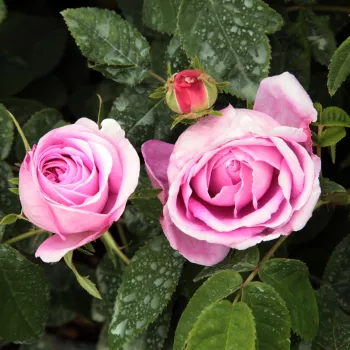
Large, very double, rosette-shaped blooms (approx. 2.75–3.95 in) borne in clusters; non-remontant, giving one main flowering period, with over 40 petals creating lush, full, historic-style blossoms. |
| Colour data and phenology |
Lilac-pink flowers with deeper crimson-purple centre tones; colour lightens in strong sun, remains richer in cool weather; ARS code M, RHS 65C outer and 71A inner, giving nuanced old-rose hues. |
| Fragrance and aroma |
Strong, long-lasting perfume with a classic old-rose character, best appreciated near seating or paths; abundant clustered blooms in the main season create a concentrated, immersive scent experience. |
| Hip characteristics |
Produces moderate numbers of spherical red hips, around 12–18 mm in diameter, extending the plant’s visual interest into late season and providing subtle textural detail after flowering finishes. |
| Resistance and winter hardiness |
Hardy to approximately −32 to −29 °C (USDA 4b, RHS H7, Swedish Zon 5); disease tolerance moderate overall, with good black spot resistance and moderate susceptibility to powdery mildew and rust. |
| Horticultural recommendations |
Best at 100–170 cm spacing depending on use; prefers improved, well-drained but moisture-retentive soil; suitable for borders, specimen planting and traditional park use, with medium maintenance needs. |
PRÉSIDENT DE SÈZE offers strongly scented lilac-pink summer flowering, durable shrub structure and long-lived own-root reliability for gardeners seeking a quietly enduring historic rose to anchor their space.