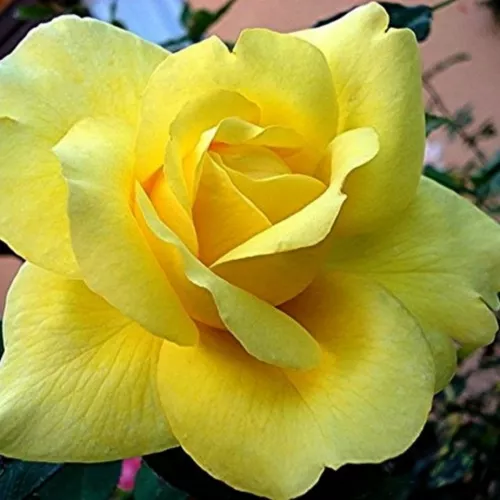
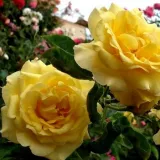
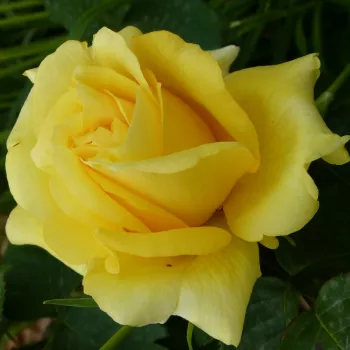
PRESIDENT ARMAND ZINSCH™ – yellow hybrid tea rose – Delbard
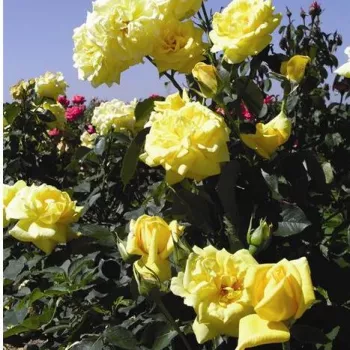
Step out after rain to a drift of fragrance and clear yellow blooms from PRESIDENT ARMAND ZINSCH™, a Delbard hybrid tea created for those who want show-bench elegance without high-effort routines in a compact London front garden. Large, high‑centred flowers on upright stems give classic cutting‑rose impact, while own‑root resilience supports a long garden lifespan with reliable regrowth after pruning or weather knocks. In typical UK conditions it copes steadily with wind and heavy rain on small family plots, helping you manage wetter spells and heavier soils with simple mulching and drainage rather than complex intervention. Good repeat‑flowering keeps the border in colour from early summer well into autumn, while medium disease resistance and dense, dark foliage keep the plant looking composed between flushes. Peat‑free compost, collected rainwater and a sunny position are usually all you need for this medium‑maintenance, high‑reward rose, which in its first year concentrates on root establishment, the second on structural growth, and by the third settles into full ornamental value with generous, long‑stemmed flowers for cutting and front‑garden display.
Usage options
| Target area | Reasoning |
|---|
| Small front‑garden specimen by the path |
The upright, moderately tall habit and luminous yellow blooms create a clear focal point beside a narrow path, giving structure without overwhelming a compact London terrace frontage, ideal for a low‑effort but high‑impact welcome for beginners. |
| Cutting patch or dedicated cut‑flower row |
High‑centred, long‑stemmed flowers and strong necks make this variety particularly rewarding for vases, providing repeat flushes of classic hybrid tea stems so you can cut regularly without losing the overall garden display, attractive to the home florist. |
| Mixed sunny border with perennials |
Medium height and dense foliage slot neatly among perennials like lavender, sage or nepeta, where repeat‑flowering yellow blooms bring rhythm and contrast through summer while remaining manageable for time‑pressed urban gardeners. |
| Rain‑aware urban front garden |
An upright, relatively narrow footprint works well with gravel, permeable paving and planting pockets that help guide excess rain away from the house, supporting simple, sustainable water management for busy city‑based homeowners. |
| Own‑root long‑term feature planting |
Supplied on its own roots, this rose ages steadily with the garden, regenerating well from the base after pruning or winter damage, so ornamental value remains stable over the years with straightforward care for long‑view planners. |
| Clay or chalky suburban family garden |
Performs reliably in typical suburban soils when planted into improved, well‑drained holes, giving robust structure and repeat colour in everyday gardens where conditions can be heavy or alkaline, reassuring for cautious new gardeners. |
| Large container on a sunny balcony or patio |
In a 40–50 litre peat‑free container with regular watering, the compact spread and vertical habit give a strong presence in limited spaces, with showy flowers at eye level appealing to space‑conscious urban residents. |
| Structured border or low formal line |
Even growth, moderate height and repeat large blooms lend themselves to short runs or gentle hedging at recommended spacing, creating a quietly formal outline that stays readable with only seasonal pruning for busy family‑garden owners. |
Styling ideas
- Front‑door focus – Position one or three bushes by the entrance with gravel mulch and underplanting of low evergreen candytuft for a bright, tidy welcome – suited to terrace‑house owners wanting instant formality.
- Cutting‑corner – Arrange a short row behind a low hedge with gypsophila as airy edging, creating a private source of long‑stemmed yellow blooms – ideal for home florists who love arranging.
- Sunny‑patio pot – Grow a single plant in a 50‑litre clay container with trailing thyme for groundcover to soften the rim – perfect for balcony or courtyard gardeners short on bed space.
- Warm‑border glow – Combine with purple sage, nepeta and dusky ornamental grasses to set off the clear yellow flowers against richer tones – good for design‑minded beginners seeking simple contrast.
- Soft‑formal line – Plant a gentle curve along a path at hedging distance, with bark mulch between plants to keep maintenance low – appealing to families wanting order without intensive clipping.
Technical cultivar profile
| Characteristic | Data |
|---|
| Name and registration |
Hybrid tea rose, registered as DELzinsch, marketed as President Armand Zinsch™ in the Great Fragrances collection; approved exhibition name President Armand Zinsch for show use. |
| Origin and breeding |
Bred by Georges Delbard in France from ‘Épidor’ × ‘O Sole Mio’; registered in 1998 and introduced in 2001 by Delbard Pépinières et Roseraies through Georges Delbard SA. |
| Awards and recognition |
Recipient of a Gold Medal at the 2001 Belfast International Rose Trials, reflecting strong ornamental and fragrance performance under independent garden trial conditions. |
| Growth and structural characteristics |
Upright, medium‑tall hybrid tea reaching about 85–120 cm high and 50–70 cm wide, with moderately thorny stems and dense, slightly glossy dark green foliage providing good visual coverage. |
| Flower morphology |
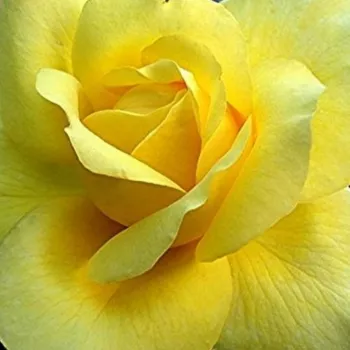
Large, double, high‑centred blooms with 26–39 petals, classic cut‑rose form and solitary presentation on stems; good repeat‑flowering with particularly abundant second flush in suitable conditions. |
| Colour data and phenology |
Radiant yellow flowers: deep golden buds open to bright yellow, then lighten to lemon‑cream at the petal edges before fading, maintaining a clean, sunlit effect through most of the bloom phase. |
| Fragrance and aroma |
Very strong, garden‑filling perfume with a fresh, lemony‑raspberry, rosy character; bred within the Great Fragrances collection for pronounced scent suitable for both garden enjoyment and cut stems. |
| Hip characteristics |
Fruit set generally low because of double flowers; when formed, hips are small, egg‑shaped, around 10–14 mm across, with an orange‑red colour that adds modest late‑season interest. |
| Resistance and winter hardiness |
Rated medium for black spot, powdery mildew and rust; benefits from basic hygiene and occasional treatment. Hardy approximately to −21 to −18 °C, aligning with RHS H7 and USDA Zone 6b, Swedish Zone 3. |
| Horticultural recommendations |
Best in full sun with well‑drained soil; allow 55 cm for masses, 45 cm for hedging or 90 cm for specimens. Medium maintenance, including deadheading and periodic pest and disease monitoring. |
PRESIDENT ARMAND ZINSCH™ offers fragrant, repeat yellow flowers on an own-root plant that matures into a long-lived feature with reliable structure and cutting stems, a thoughtful choice if you favour enduring beauty with manageable care.