POUSTINIA™ – cream-white bedding floribunda rose - Orye
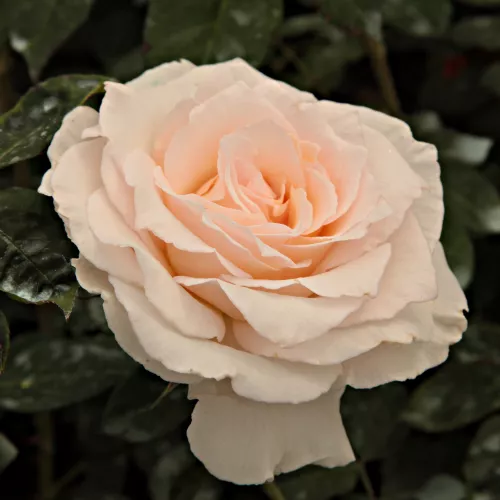
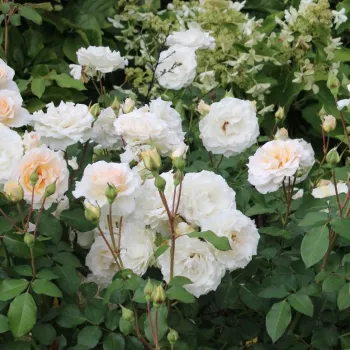
With its calm cream-and-peach blooms and strong fruity scent, POUSTINIA™ brings a sense of wilderness retreat to small London front gardens while coping well with typical rain and breeze in exposed urban settings. This compact floribunda forms a bushy, evenly rounded shrub that flowers generously from early summer onwards, producing clusters of cup-shaped double blooms that age gracefully to soft cream. Bred for resilience, it shows excellent resistance to common fungal problems, keeping its mid-green foliage attractive in damper, built-up areas. Own-root plants offer reassuring longevity, quietly rebuilding from the base if stems are damaged and maintaining a stable look over time. You simply plant once and enjoy, with only light trimming and deadheading needed to keep the shrub in balance. Give it a compost-rich, well-drained bed or a large 40–50 litre container, water with collected rain where possible, and let it settle in as roots, then shoots, and by the third year full ornamental value unfold into a reliably soothing display.
Usage options
| Target area |
Reasoning |
| Rainwater-friendly front garden bed |
Ideal for small town or terraced-house fronts where you want lasting structure with minimal fuss: compact, bushy growth and strong disease resistance keep it neat above permeable, well-drained soil that helps manage heavy rain for the eco-conscious homeowner. |
| Low-maintenance family flowerbed |
Its reliable repeat flowering and robust health mean less spraying, less worry and more time simply enjoying the garden, making it a practical choice for mixed borders where busy households need tough, good-looking plants that thrive with modest care for the relaxed gardener. |
| Statement rose in a large container |
Performs well as a specimen in a 40–50 litre pot, where the compact, upright habit and scented clusters create height and focus on patios or paved front gardens, particularly where soil is poor or space limited for the style-conscious balcony-owner. |
| Structure in sustainable urban planting |
Its dense foliage and rounded outline anchor looser companions such as grasses and perennials, creating a stable backbone that still feels soft and romantic, well suited to greener front gardens replacing hardstanding for the environmentally-aware city-dweller. |
| Long-term, own-root planting scheme |
As an own-root rose it establishes steadily and can regenerate from the base if stems are damaged, avoiding the issues of graft failure and helping a bed to keep its shape and flowering pattern over many years for the forward-planning planner. |
| Heat-tolerant, sunny border section |
Good heat and moderate drought tolerance allow it to cope with hotter, reflective sites near walls or pavements, while its petals retain colour well, so the creamy flowers stay fresh-looking through warm spells for the weather-conscious gardener. |
| Part-shade side return or narrow path |
Suited to partial shade, it still flowers generously along side paths or between houses, where many roses struggle, bringing fragrance close to everyday routes without demanding complex maintenance for the time-pressed beginner. |
| Cutting patch or scented corner |
Large, double, fruity-scented blooms on clusters lend themselves to short-stem cutting for the house; strong repeat flushes mean you can harvest some stems without spoiling the display outdoors, rewarding the creative arranger. |
Styling ideas
- Soft-Frontage – Line a small front garden bed with POUSTINIA™, underplanting with low lavender or nepeta to echo its rounded form and long flowering – ideal for busy homeowners wanting a welcoming but easy-care entrance.
- Container-Retreat – Place a single shrub in a 50 litre pot with gravel mulch and sage at the base to frame its scented clusters – suited to balcony or patio gardeners who lack borders but want a long-lived focal point.
- Clay-Border – Improve heavy clay with compost, then mix POUSTINIA™ among herbaceous perennials for structure and reliable bloom – perfect for suburban plots seeking dependable roses despite challenging soil.
- Light-Path – Plant along a narrow side path with airy companions like gypsophila and lobelia to soften edges while keeping space clear – good for families needing fragrance and charm on everyday routes.
- Calm-Hedge – Use at 35–40 cm spacing to form a low, scented hedge that screens bins or parking areas while staying compact and healthy – tailored to urban gardeners replacing hard surfaces with greener boundaries.
Technical cultivar profile
| Parameter |
Data |
| Name and registration |
Floribunda bedding rose, shrub type; registered as ORYbie, marketed as Poustinia™ Bedding rose ORYbie; American Rose Society exhibition name Poustinia; collection classification bedding rose. |
| Origin and breeding |
Bred by Jozef Orye in Belgium from Sweet Love × Pascali; breeding year 1994, registration 1995, introduced after 1995, initially distributed by Lens Roses, with full parentage details recorded. |
| Awards and recognition |
Highly decorated: silver medal Bagatelle, Paris (1994); first prize Lyon (1994); gold medals Kortrijk and Le Roeulx (both 1998); bronze medal Monza (2000); certificate Hradec Králové (2001). |
| Growth and structural characteristics |
Compact, bushy shrub 80–100 cm high and 50–70 cm wide, slightly thorny with dense, mid-green, lightly glossy foliage; forms a rounded outline suited to beds, edging, hedging and container use. |
| Flower morphology |
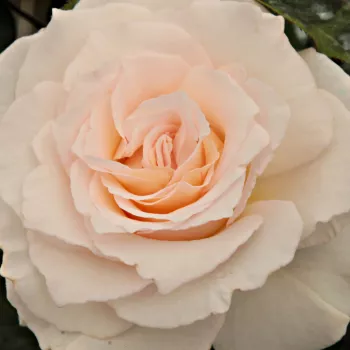
Floribunda clusters of large, double, cup-shaped flowers, typically 26–39 petals; strong remontant habit with generous repeat, including a notable second flush; flower size around 7–10 cm across on well-branched stems. |
| Colour data and phenology |
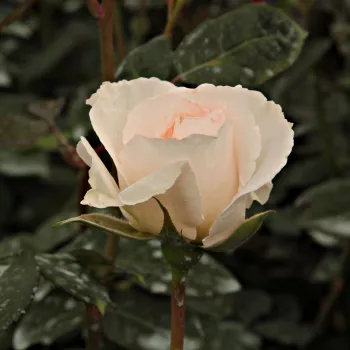
Cream-white to off-white outer petals with soft peach centre tones; ARS ab, RHS 155B outer and 23B inner; buds pastel with apricot tips, opening to cream-peach then fading to creamy white with a delicate central glow. |
| Fragrance and aroma |
Rich, fruity perfume of strong intensity, clearly perceptible at close quarters and along paths; fragrance maintained well through the main flowering flushes, adding sensory value for cutting and seating areas. |
| Hip characteristics |
Rose hips form only sparingly due to strongly double flowers; where present, they are spherical, bright red, around 8–12 mm in diameter, offering small decorative accents without significant self-seeding. |
| Resistance and winter hardiness |
Excellent overall disease resistance, rated resistant to powdery mildew, black spot and rust; hardy approximately to −21 to −18 °C (RHS H7, Swedish zone 3, USDA 6b), with good tolerance of heat and moderate drought. |
| Horticultural recommendations |
Suited to beds, specimens, hedging and large containers; spacing 35–65 cm depending on use and 5.7–6.5 plants/m² in mass plantings; partial shade tolerant, low maintenance, with minimal intervention typically required. |
POUSTINIA™ offers compact elegance, strong disease resistance and rich fragrance in a long-lived own-root rose that rewards patient establishment, making it a thoughtful choice for sustainable family gardens and refined urban spaces.