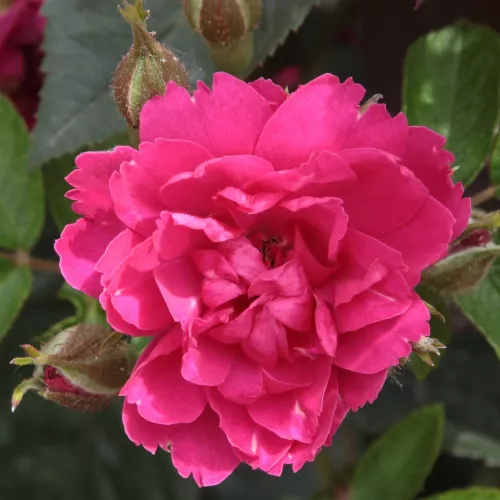
Mid-toned, saturated pink with a uniform appearance. - park rose - very weak, barely perceptible scented rose - scent description not available
– Pompon-like clusters of neat pink blooms.
– Reliable repeat-flowering through the season.
– Bushy, dense shrub ideal for hedges.
– Good heat and moderate drought tolerance.
– Very hardy shrub rose for cold climates.
– Special feature: Historic 1923 Rugosa sport with RHS Award of Garden Merit for dependable garden performance.
Environmental harmony – Continuous availability
eleanorROSE® ORIGINAL 2-litre own-root potted rose
19,10 £
Unfortunately, we are currently unable to ship to the United Kingdom; we only deliver to countries within the European Union. For more information, please contact us!
5(7779)
PINK GROOTENDORST – pink park rose - Grootendorst
Step outside after rain and this classic rugosa brings a sense of balance to even the smallest London front garden, its bushy structure and frilled pompon blooms thriving where clay soil and frequent showers meet brisk winds. The finely cut petals create a soft, “girly” texture that looks intricate without asking for complicated care, while sturdy shrub longevity means an investment that matures gracefully over many years. Own-root planting supports quiet resilience, with roots establishing in the first year, strong new shoots following in the second, and full ornamental presence by the third. Steady repeat flowering keeps the hedge line alive with colour through summer, and naturally moderate hip set adds seasonal interest for wildlife and winter structure in sustainable, rainwater-friendly urban spaces.
Freshly opened flower of Pink Grootendorst
Pink Grootendorst in full bloom, showing its double, pompon-shaped pink flowers.
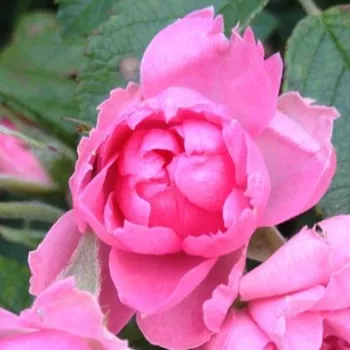
Pink Grootendorst in different opening stages
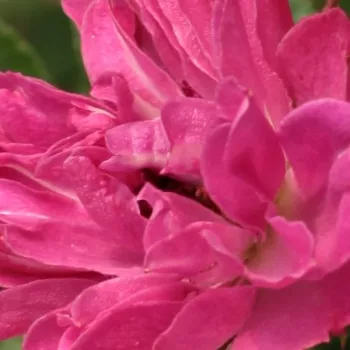
Pink Grootendorst showing its pre-fading stage.
Usage options
Target area
Reasoning
Informal front-garden hedge
The tall, bushy shrub form builds a dense, reliable screen that copes well with on-street conditions yet stays ornamental, giving privacy and soft colour along boundaries without intricate pruning – ideal for the sustainability-minded homeowner.
Low-maintenance park-style border
Steady repeat flowering and medium-sized clusters create long seasonal colour in mixed shrub beds, with only occasional deadheading needed to tidy spent clusters and keep displays going – well suited to the busy urban gardener.
Clay and chalk city gardens
Rugosa heritage provides toughness where typical family plots offer heavier or slightly alkaline soils, and it copes calmly with cool, wet spells and brisk coastal-style breezes – reassuring for the weather-exposed beginner.
Own-root long-term planting
Delivered as an own-root shrub, it forms a stable framework that regrows well from the base if cut back, maintaining its character over years without graft worries – attractive for the long-horizon planner.
Rainwater-conscious front garden
Once established, the shrub tolerates periods of moderate drought between showers yet appreciates stored rainwater, fitting well with water-but irrigation and permeable driveways – practical for the eco-aware city-dweller.
“Girly” cottage-style entrance
Frilled pompon flowers and mid-pink tones soften brick and railings, giving a romantic, welcoming look that works beautifully with simple perennials and groundcovers – perfect for the style-focused newcomer.
Wildlife-friendly structure planting
Moderate quantities of orange-red hips follow summer flowers, adding colour and gentle interest in autumn while offering seasonal resources in a naturalistic, unfussy form – appreciated by the wildlife-aware family.
Large container on balcony or terrace
In a 40–50 litre pot with good drainage, its upright, bushy growth delivers height, colour and screening where soil is limited, extending rose planting to paved spaces – a flexible option for the space-conscious urbanite.
Styling ideas
Girly-Entrance – Line a short path with shrubs underplanted with soft pink nepeta to echo the pompon blooms – for homeowners wanting a romantic front-door welcome.
Rainwise-Hedge – Combine with low ornamental grasses and a permeable gravel strip so runoff drains to the roots – for urban gardeners designing rainwater-friendly boundaries.
Classic-Cottage – Mix with lavender and sage in a sunny bed for scent, bees and a timeless look – for beginners seeking easy, traditional planting with structure.
Brick-Softener – Plant against warm brick or terraced-house railings, adding Vinca minor at the base to spill onto paving – for city-dwellers aiming to soften hard, narrow spaces.
Balcony-Screen – Grow one plant in a 50-litre container with trailing thyme and seasonal bulbs – for flat owners needing vertical colour and light privacy on terraces.
Technical cultivar profile
Parameter
Data
Name and registration
Pink Grootendorst, Hybrid Rugosa shrub rose, park rose type; ARS exhibition name Pink Grootendorst, unregistered cultivar used widely under this trade designation.
Origin and breeding
Sport of ‘F.J. Grootendorst’ (R. rugosa rubra × ‘Madame Norbert Levavasseur’); bred by F. J. Grootendorst, Boskoop, Netherlands, introduced 1923 via Hazlewood Bros., Australia.
Awards and recognition
Holds the Royal Horticultural Society Award of Garden Merit (1993), indicating dependable garden performance, sound constitution and good ornamental value under typical UK conditions.
Growth and structural characteristics
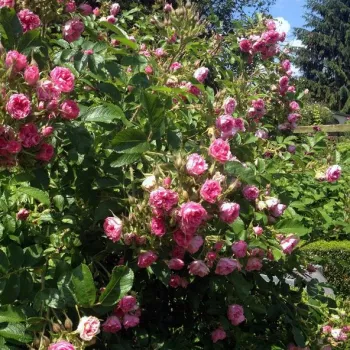
Bushy shrub 120–180 cm high and 100–150 cm wide, densely thorned with mid-green, slightly glossy foliage, forming a full, screening structure suitable for hedging and specimen use.
Flower morphology
Medium clusters of double, pompon-like, spherical blooms, 26–30 petals, medium-sized flowers with a remontant habit providing a notable second flush after the main early summer display.
Colour data and phenology
Mid-toned, saturated pink (RHS 62C outer, 62D inner); centres vivid when newly opened, edges lightening to pastel pink, with slight fading in strong sun yet overall colour effect remains uniform.
Fragrance and aroma
Fragrance is very weak and barely perceptible; primarily grown for its flower form, colour and structural contribution rather than for scent, suiting sites where strong perfume is not required.
Hip characteristics
Produces moderate numbers of spherical orange-red hips, around 14–23 mm in diameter, adding subtle autumn interest and seasonal wildlife value without excessive self-seeding problems.
Resistance and winter hardiness
Exceptionally hardy (USDA 3b, RHS H7, approx. –37 to –34 °C); tolerates heat and moderate drought once established; disease resistance medium to powdery mildew, black spot and rust.
Horticultural recommendations
Use for hedges, park planting, beds and urban green spaces; suitable for partial shade; plant 110–180 cm apart; maintains best display with occasional deadheading and routine health checks.
PINK GROOTENDORST offers long-lived shrub structure, steady flowering and seasonal hips in a resilient own-root form that will quietly reward patient gardeners over many years, and is well worth considering for a sustainable family garden.
Detailed product attributes
Product Identification Data
Product Name:
PINK GROOTENDORST – pink park rose - Grootendorst
Product Type:
eleanorROSE® ORIGINAL - 2-litre own-root potted rose
Pollinator Attraction:
Flowers moderately attract pollinators, with single or semi-double forms and exposed stamens offering greater access for insects, whereas fully double blooms with concealed stamens reduce attractiveness.
Pollinator-Friendly Rating:
A variety moderately attractive to pollinators; pollinator-friendliness limited and primarily ornamental.
Our product is a rose grown with pharmaROSA®’s unique cultivation technology!
2-litre, own-root, potted rose.
With a shoot system appropriate to the season.
With a root system that thoroughly permeates the growing medium.
Quality compliant with the requirements of the E.N.A. (European Nurserystock Association).
Supplied in unique packaging that prevents damage.
Can be planted during frost-free periods.
True-to-variety rose bush with a unique identifier.
The pharmaROSA® own-root potted rose is a well-rooted plant that supports reliable establishment when planted and cared for properly, so it can be planted whenever the soil is not frozen.
Crop overview: several varieties and growth stages in a short crop section.Shoot system: intensive growth of fresh basal shoots on a young plant.Root system: demonstration of a vigorous root system permeating the growing medium, by removing the pot.Balance: mature plant with root system and shoots in harmony with each other.
Information about the videos
The video series is not a “seasonal showcase”; it illustrates the essence of pharmaROSA® own-root cultivation in a tangible way: how the plant is built up, what the root system is like and how the shoot system regenerates. The recordings were therefore made at different times and with plants at various stages of development, so mixed foliage levels and differing stages of growth may appear in the videos. They are not a ‘sample’ of the batch dispatched, but a visual explanation of how the technology works. The current condition of the rose available to order — typical for the given period and similar to what you can expect to receive in the parcel — is shown in the upper part of the product page.
Pages for private customers Garden roses for the family garden, with minimal care → ORIGINAL® Premium garden roses – instant impact, a truly showpiece garden → EXTRA® Pages for professionals and private customers Roses for public spaces – large areas, sustainable maintenance → NATURAL® Roses for projects – hedge and row planting, fast implementation → RAPID® For professional partners only Production – propagation material for garden roses, wholesale → NEONATAL®
Company details
PharmaRosa Ltd. Company registration number: 01-09-717479 VAT number: 13075314-2-43 Plant health registration no.: HU130721 Bank account (IBAN): HU85117631891388688400000000 BIC (SWIFT): OTPVHUHB Bank name: OTP Bank Nyrt.