PINK BABYFLOR® – pink dwarf-mini rose - Evers
Step into a front garden that feels effortlessly balanced, where low, neat mounds of soft pink blossom lend a gentle rhythm to your path and frame your doorway in quiet charm. PINK BABYFLOR® is a compact, own-root miniature rose that settles reliably into small urban spaces, coping well with exposed, breezy sites and wetter spells that often challenge city plots and coastal gardens through improved resilience to wind and rain. Its dense foliage and rounded habit make it easy to place in narrow beds, gravel strips or large containers, keeping maintenance pleasantly minimal. As an own-root rose, it is bred for longevity, rebuilding naturally from its base after harsh winters and preserving an even silhouette over the years. Flower clusters repeat from early summer to autumn with barely any deadheading thanks to good self-cleaning, so you can focus on enjoying the evolving texture of your planting rather than constant pruning. In its first year it concentrates on roots, in the second on stronger shoots, and by the third year it delivers its full, lasting impact in your garden.
Usage options
| Target area |
Reasoning |
| London terraced-house front garden border |
The compact 50–70 cm habit forms a tidy, low edging that will not overwhelm a narrow front border, yet fills it with repeat-flowering pink clusters from summer into autumn with minimal pruning for busy urban gardeners |
| Rainwater-conscious gravel strip or soakaway edge |
Planted into free-draining soil beside a drive or path, the dense, shallow-rooted mound slots neatly between permeable surfaces, allowing rainwater to soak away while still giving structured colour for sustainability-minded homeowners |
| Large container on balcony or patio (40–50L+) |
In a 40–50 litre or larger pot, this dwarf rose keeps a rounded shape, flowers repeatedly and drops most spent blooms by itself, so sweeping petals is usually the only task for low-maintenance container gardeners |
| Child-friendly family garden bed |
The modest height and neat outline make it easy to place near play areas without obstructing views, while the unscented blooms simply provide colour without overwhelming fragrance for families with young children |
| Pollinator-supporting mixed planting |
Although very double, the frequent flushes of bloom offer ongoing interest among pollinator plants such as nepeta and lady’s mantle, helping to create a lively, insect-friendly corner for nature-aware beginners |
| Low-maintenance urban front hedge or edge |
Planted 30–35 cm apart, the compact shrubs knit into a soft, pink edging that needs only light trimming, maintaining an ordered look along paths or boundaries with little intervention for time-pressed city dwellers |
| Exposed or wind-prone small garden |
The sturdy, low framework and dense foliage cope well with blustery conditions and passing showers, maintaining shape and flower quality where taller roses might rock or snap for coastal and open-site gardeners |
| Long-term, low-fuss rose feature |
As an own-root plant, it originates from its own variety rather than a graft, so it can regenerate from the base after hard pruning or winter damage, giving a stable display year after year for long-horizon garden planners |
Styling ideas
- Soft-Edge Border – combine PINK BABYFLOR® with Alchemilla mollis and low grasses to create an airy, pastel drift that gently blurs the line between path and planting – ideal for subtly romantic front-garden owners
- Urban Cottage – repeat small groups along a brick path, interplanted with catmint and lamb’s ear, to echo cottage-garden charm in a compact London terrace setting – suited to city gardeners seeking nostalgic detail
- Container Focus – plant one or three roses in a 50L pot with trailing thyme to form a neat, long-flowering focal point by the front door – perfect for balcony and doorstep gardeners
- Green-Carpet Edge – use a low row along a gravel drive or permeable path, underplanted with creeping groundcovers, to soften hard surfaces while keeping shapes crisp – good for design-conscious, practical homeowners
- Play-Space Frame – edge a lawn or play area with evenly spaced plants and simple perennials, giving structure and colour without tall thorns at children’s height – helpful for families planning safe, legible layouts
Technical cultivar profile
| Characteristic |
Data |
| Name and registration |
Miniature rose from the Babyflor® collection; registered as TANyrolf, marketed as PINK BABYFLOR® / Babyflor®; classified as a dwarf miniature exhibition rose suitable for garden use. |
| Origin and breeding |
Bred by Hans Jürgen Evers at Rosen Tantau, Germany, with parentage unknown; introduced and registered in 1993, reflecting modern selection for compact habit and reliable garden performance. |
| Growth and structural characteristics |
Compact, dense shrub reaching about 50–70 cm high and 40–60 cm wide, with moderately thorny stems and fresh green, slightly glossy foliage forming a rounded, well-branched, bedding-friendly outline. |
| Flower morphology |
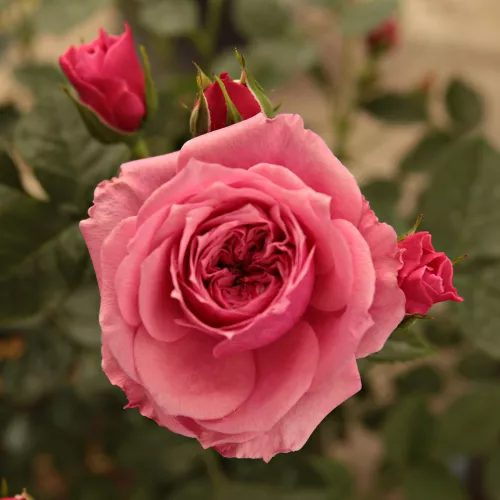
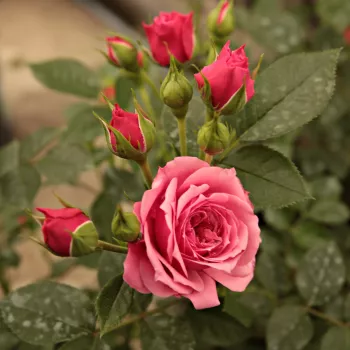
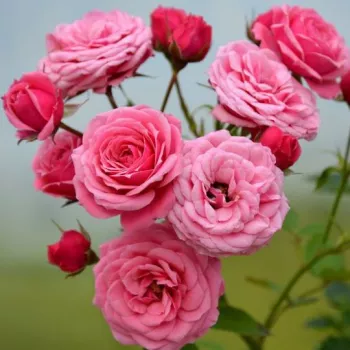
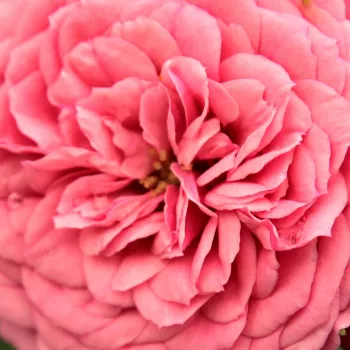
Very double, rosette-shaped blooms of 0.5–1.5 inches carried in clusters of 6–15 per stem; repeat-flowering with a notably abundant second flush and generally good self-cleaning of spent flowers. |
| Colour data and phenology |
Medium, pure pink (RHS 65C outer, 63B inner) buds open to uniform mid-pink blooms that fade gently to pastel; colour holds well, though strong sun speeds lightening towards softer, pale-pink tones. |
| Fragrance and aroma |
Classified as unscented, with no noticeable fragrance in normal garden conditions; selected primarily for visual effect, colour stability and flowering continuity rather than aromatic qualities. |
| Hip characteristics |
Produces small quantities of spherical red hips about 5–7 mm across; hips are decorative at close range but not a dominant ornamental feature, as flowering repeats strongly through the season. |
| Resistance and winter hardiness |
Rated to around –21 to –18 °C (RHS H7, USDA 6b, Swedish Zone 3); disease resistance medium, with typical susceptibility to black spot, mildew and rust requiring occasional monitoring and care. |
| Horticultural recommendations |
Best in sunny sites for flower density; suitable for beds, borders, groundcover, urban plantings and containers; plant 30–55 cm apart, using 8–9.5 plants/m² for massed effects in well-drained garden soils. |
PINK BABYFLOR® offers compact, long-season colour with good self-cleaning and resilient own-root growth, making it a thoughtful choice for low-maintenance, small-space gardens you plan to enjoy for years.