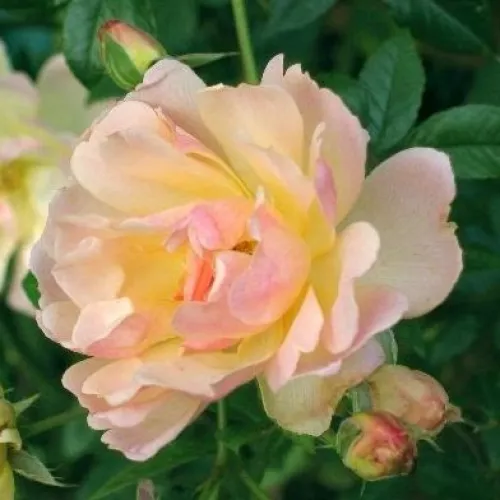
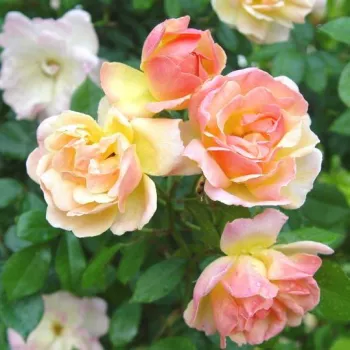
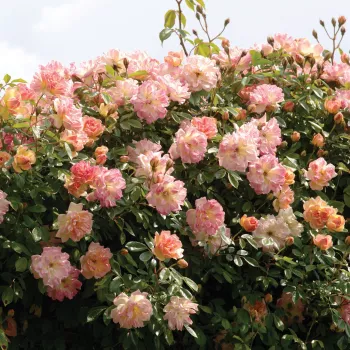
PHYLLIS BIDE – apricot-pink climbing rose
Step out after rain into a front garden softened by pastel blooms: PHYLLIS BIDE brings airy clusters of peach‑pink flowers that sit lightly against mid‑green foliage, ideal for small London terraces where space is tight yet charm matters. This classic 1920s climber is remarkably reliable, coping well with British showers and breezes while still flowering for an extended season. Own‑root plants give reassuring longevity and gentle regrowth, so your rose ages gracefully without complex pruning. Its compact climbing habit suits modest pergolas, railings or house walls, creating a soft, romantic veil rather than a heavy screen. Maintenance stays manageable, with only occasional health checks needed in typical UK humidity. In containers, a minimum 40–50‑litre pot allows roots to develop steady structure for long‑term performance. Expect a calm, gradual development: strong roots in the first year, fuller shoots by the second, and a mature, well‑flowered presence by the third, settling your garden into lasting balance.
Usage options
| Target area | Reasoning |
|---|
| London terraced front garden facade |
Trains easily on railings or a short trellis, giving soft, pastel colour without overwhelming a narrow frontage; the moderate height and airy habit keep light reaching windows, ideal for style‑conscious city homeowners who value reliability. |
| Small pergola or arch by the front gate |
Climbs steadily to 2,4–3,8 m, clothing arches in loose, peach‑pink clusters that welcome you home without demanding intricate pruning, well suited to busy families seeking long‑term longevity. |
| Wall or fence with changeable sun |
Performs well on east or west‑facing boundaries, tolerating partial shade while still offering repeat flowering, a good answer where typical British rain and wind meet limited space for hobby gardeners wanting manageability. |
| Large container on a paved front garden |
In a 40–50 litre or larger pot with a simple support, this climber gives vertical interest where soil is scarce, making rainwater‑fed, sustainable hard‑standing gardens feel softer for urban residents preferring straightforward structure. |
| Family side path or service area |
Can be trained flat along wires to green up a narrow passage, with relatively sparse thorns and moderate vigour helping to keep access practical, attractive for families who want romance without sacrificing everyday balance. |
| Mixed cottage-style border backdrop |
Clusters of small, semi‑double blooms create a gentle haze of colour behind perennials, combining particularly well with lavender or nepeta for a long‑season display, appreciated by home gardeners favouring soft pastel effects. |
| Rainwater‑managed front garden with tough planting |
Good heat and temporary drought tolerance make it a strong candidate for gravel or soakaway beds that alternate between wet and dry spells, suiting environmentally minded owners looking for consistent, low‑input performance. |
| Feature specimen on a shared boundary |
With moderate growth, remontant flowering and tidy, glossy foliage, it offers dependable structure and repeat colour along a fence line while remaining neighbour‑friendly in size, ideal for beginners keen on gentle, forgiving regrowth. |
Styling ideas
- Pastel Arch – Train PHYLLIS BIDE over a narrow metal arch with lavender and nepeta at the base for a light, airy entrance – perfect for urban couples wanting low‑fuss romantic charm.
- Terrace Veil – Fan‑train it on discreet wires against London brick, underplanted with evergreen herbs to soften hard paving – ideal for busy professionals seeking manageable, long‑lived structure.
- Rainwise Rail – Use a large container by the front railings, irrigated with stored rainwater, to lift colour vertically without occupying ground space – suited to sustainability‑minded balcony and front‑yard owners.
- Cottage Screen – Let it scramble along a short fence behind perennials and grasses, where its remontant clusters provide a gentle pastel backdrop – good for families wanting easy, season‑spanning interest.
- Side‑Path Frame – Guide stems along a narrow side passage on simple wires, keeping height and thorns controlled while greening an otherwise plain route – attractive for beginners prioritising order and balance.
Technical cultivar profile
| Property | Data |
|---|
| Name and registration |
PHYLLIS BIDE – apricot‑pink climbing rose, exhibition category climber/polyantha; current trade name PHYLLIS BIDE Climbing rose Bide; unregistered variety in formal registration terms. |
| Origin and breeding |
Bred by S. Bide & Sons, Surrey, United Kingdom, in 1923 from ‘Perle d’Or’ × ‘Gloire de Dijon’; introduced in 1924 by Grandes Roseraies du Val de Loire in France as a garden climber. |
| Awards and recognition |
Holds the Royal Horticultural Society Award of Garden Merit, indicating dependable garden performance, ornamental value and general ease of cultivation under typical UK conditions when appropriately sited. |
| Growth and structural characteristics |
Climbing habit, typically 2,4–3,8 m high with a 1,4–2,4 m spread; moderately dense, glossy mid‑green foliage with reddish young shoots; sparsely thorned canes suit training on arches, fences or walls. |
| Flower morphology |
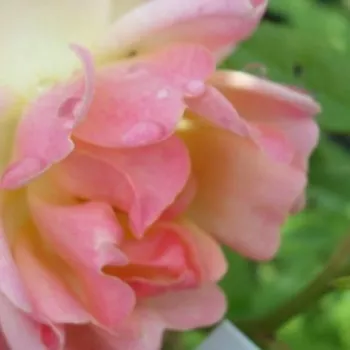
Semi‑double, flat flowers with 13–25 petals and small 1,3–3,8 cm blooms carried in clusters; remontant with a strong second flush, offering light, graceful coverage rather than heavy, fully double blooms. |
| Colour data and phenology |
Pastel peach‑pink with a creamy yellow centre and pink haze; buds deep salmon‑pink; flowers fade to creamy white with a slight blush, especially in strong sun, creating a softly changing colour palette. |
| Fragrance and aroma |
Very weak, soft fragrance, often barely noticeable in typical garden settings; chosen more for its visual pastel effect and light, airy clusters than for strong scent in small urban or family gardens. |
| Hip characteristics |
Occasional small, spherical rose hips, about 8–12 mm, orange‑red when ripe; produced sporadically and adding a discreet seasonal accent rather than a dominant autumn feature on the plant. |
| Resistance and winter hardiness |
RHS H7, USDA Zone 6b, Swedish Zone 3; tolerates down to about −21 °C with moderate disease resistance, so routine monitoring is advised in humid sites to manage black spot, mildew and rust. |
| Horticultural recommendations |
Best on arches, pergolas, fences or walls at 1,65–3,00 m spacing; medium maintenance with occasional pest and disease control; tolerates partial shade and short dry spells, but appreciates watering in prolonged drought. |
PHYLLIS BIDE offers a compact, reliable climbing rose with pastel charm and own-root staying power, a thoughtful choice if you prefer easy structure and long-lived planting that quietly earns its place.