PHOENIX® – orange bedding floribunda rose – Kordes
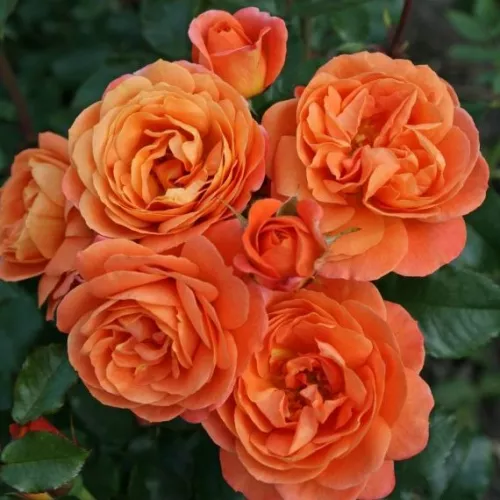
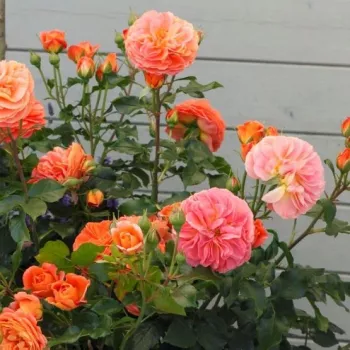
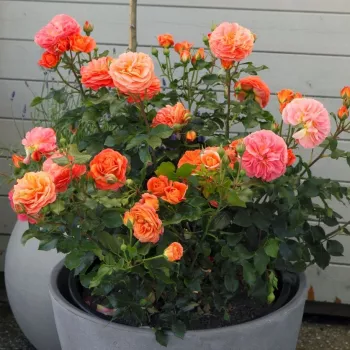
Phoenix brings an easy, uplifting glow to compact front gardens and balconies, with upright, compact growth that suits narrow beds and small urban spaces where you want reliable colour more than fuss. Its very double, cluster-flowering blooms appear in generous flushes from early summer well into autumn, giving a long, remontant display that softens hard paving and railings. Bred by Kordes for robust garden performance, it copes well with breezy, showery weather and the kind of coastal conditions where rain and wind can test less sturdy roses. On its own roots it settles steadily, building a durable framework and dependable flowering habit over time. You can expect roots to establish in year one, strong new shoots in year two and full ornamental value by year three, making this an easy-going choice if you prefer to plant once and enjoy for years with minimal intervention. Dark green, glossy foliage provides a neat backdrop to the bright orange-red flowers, which soften to lighter pastel tones as they age, keeping beds and containers looking fresh rather than messy. Medium maintenance needs mean basic watering and the occasional tidy-up are usually enough, while the partially self-cleaning clusters spare you from constant deadheading and keep your beds looking presentable between weekend gardening sessions. In a rainwater-wise, plant-filled front garden or balcony planter of at least 40–50 litres, PHOENIX® offers a reassuringly modern balance of visual impact and practical ease, ideal for busy families who want beauty without complexity.
Usage options
| Target area |
Reasoning |
| Small front garden flower bed |
The upright, compact habit and 55–85 cm height fit neatly into narrow London-style front beds without overwhelming paths or windows, giving a structured orange accent that stays in proportion for beginners |
| Continuous flowering edging |
Regular clusters of medium-sized, very double flowers repeat all season, creating a low, colourful edging that covers soil, reduces bare patches and keeps borders lively from early summer to autumn for busy-owners |
| Large container or balcony planter (40–50 L+) |
Dense foliage and steady flowering make this rose ideal for a generous pot, where own-root strength supports long-term container life and easy reshaping after pruning for urban-gardeners |
| Family-friendly front hedge line |
At 35 cm spacing, plants knit into a low, tidy hedge with glossy dark leaves, giving a clear boundary that stays manageable for light pruning and simple shaping each year for homeowners |
| Rainwater-wise, paved front garden |
In gravel strips or permeable planting pockets, PHOENIX® copes well with UK showers and breezy, rainier spells that often challenge bedding, offering dependable colour with straightforward care for sustainability-minded |
| Mixed border with perennials |
The warm orange-red flowers, fading to softer tones, combine easily with cool lavenders, sages or nepeta, giving a gentle colour transition and extended seasonal interest in limited planting space for style-conscious |
| Low-maintenance urban planting strip |
Moderate self-cleaning and medium maintenance needs mean only periodic deadheading and basic feeding are required, keeping communal or kerbside beds presentable without intensive weekly jobs for time-poor |
| Long-term structural planting in small gardens |
As an own-root floribunda that establishes steadily, the plant develops a durable framework that can be rejuvenated if cut back, supporting a long functional life and consistent display for long-term-planners |
Styling ideas
- Terraced-Front Glow – Line a short front path with PHOENIX® and low lavender, using gravel mulch to soak up rainwater and bounce light onto the orange blooms – ideal for compact terraced-house entrances.
- Balcony-Sun Box – Plant a single rose in a 50-litre container with trailing thyme and nepeta to soften edges, creating a long-flowering focal point – suited to sunny balconies with limited floor space.
- Soft-Edge Ribbon – Repeat-plant along a driveway edge and underplant with silver-leaved sage for contrast, giving a tidy yet soft boundary – good for family homes needing easy kerb appeal.
- Pastel-Afterglow – Combine PHOENIX® with pale pink salvia and soft grasses so the fading orange-pink tones blend into a relaxed, romantic palette – perfect for “girly” cottage-style city gardens.
- Urban-Pocket Hedge – In a narrow soil strip between paving and fence, create a low hedge of PHOENIX® with a pea-shingle surface to aid drainage – designed for rainwater-conscious, low-maintenance front gardens.
Technical cultivar profile
| Attribute |
Data |
| Name and registration |
Floribunda bed rose from the Kordes collection; registered as KORrosobi, marketed as Phoenix® Kordes KORrosobi, with ARS exhibition name Phoenix for garden and park use. |
| Origin and breeding |
Bred by Wilhelm-Alexander Kordes from ‘KORamflusa’ × ‘NOA75800’; introduced by W. Kordes in Germany in 2017, with EU registration application filed in 2017 under number 2017/2305. |
| Awards and recognition |
Highly decorated floribunda: Gold medal Baden-Baden 2016, Golden Rose and first-class rating The Hague, audience award Glasgow 2021, plus certificates of merit and recognition in The Hague and Warsaw. |
| Growth and structural characteristics |
Compact, upright shrub reaching about 55–85 cm high and 40–60 cm wide, with dense, glossy dark green foliage and moderate prickles; maintains a neat outline suitable for beds, edging and low hedges. |
| Flower morphology |
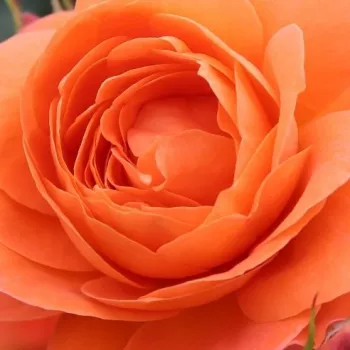
Medium-sized, very double, cup-shaped blooms with over 40 petals, borne in clusters; remontant flowering with abundant second flush, partially self-cleaning so occasional deadheading improves appearance. |
| Colour data and phenology |
Bright orange-red ground colour (RHS 26C outer, 31B inner) with yellowish base; buds open vivid, then fade to pale orange-pink while the basal glow remains, giving shifting tones through the bloom’s life. |
| Fragrance and aroma |
Primarily ornamental rather than scented; available descriptions note only a very faint, barely perceptible fragrance, so it is chosen mainly for colour impact and reliable bedding performance, not perfume. |
| Hip characteristics |
Occasional small spherical hips, around 6–10 mm in diameter, mature to red (RHS 43A); production is light but can add a subtle decorative note in late season if spent flowers are not removed. |
| Resistance and winter hardiness |
Hardy to approximately –21 to –18 °C (RHS H7, USDA zone 6b, Swedish zone 3); good heat tolerance with watering in prolonged drought; resistant to powdery mildew, with medium tolerance to black spot and rust. |
| Horticultural recommendations |
Suited to beds, edging, containers, hedges, parks and urban plantings; prefers sunny to lightly shaded sites, with about 45 cm spacing in mass plantings and 35 cm for hedges to form an even, colourful line. |
PHOENIX® KORrosobi offers compact, long-season orange flowering and award-backed reliability in a durable own-root form that will steadily reward patient gardeners for many years; consider it where you want lasting colour with modest effort.