PERSIAN SUN™ – orange flower-bed shrub rose - Vissers
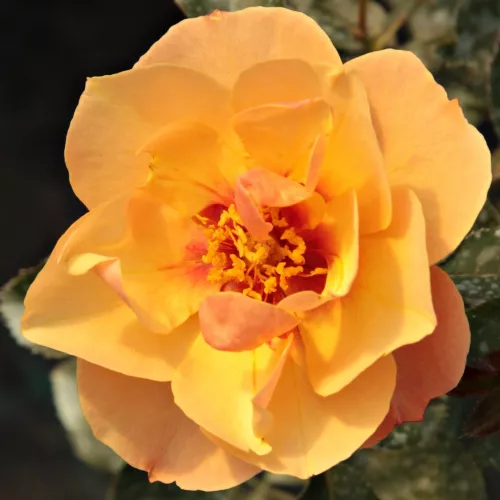
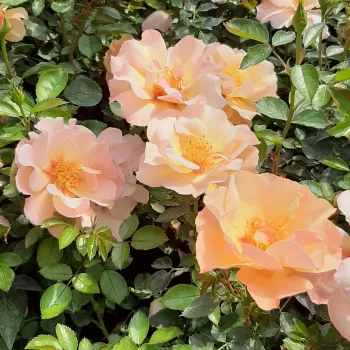
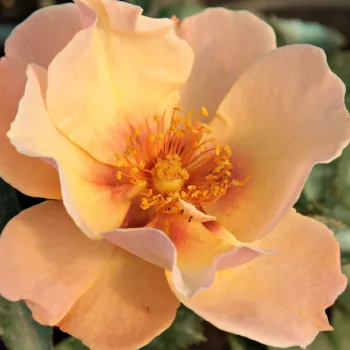
Step into a London front garden after rain and PERSIAN SUN™ greets you with sunlit clusters of vivid orange blooms that keep the space feeling balanced and uplifting. This compact, bushy floribunda stays neatly in proportion, making it ideal for tighter urban plots where resilient structure matters as much as colour. Its dense, glossy, grey‑green foliage helps it hold its shape in blustery weather and typical British showers, offering reassuring performance even where gardens face prevailing winds and coastal exposure. Container‑grown on its own roots, it settles in reliably and builds a strong base for a long life in your garden, with a natural rhythm of roots in the first year, shoots in the second, and full display by the third. The medium‑sized, flat, single flowers appear in generous clusters, repeat freely through summer, and largely tidy themselves, trimming your to‑do list. Choose it for long‑term structure, easy seasonal colour, and a contemporary, low‑fuss feature that suits peat‑free compost, rainwater‑wise planting schemes, and family‑friendly gardens.
Usage options
| Target area |
Reasoning |
| Small front garden flowerbed |
The compact, bushy habit and 75–105 cm height give a well‑proportioned, upright shrub that fits narrow front borders without overwhelming windows or paths, ideal where tidy structure matters for beginners |
| Urban rain‑aware planting strip |
Performs reliably in open, breezy sites that often receive channelled rainfall and wind, with dense foliage and a stable framework that cope well where gardens may experience frequent wet, blustery conditions for urbanites |
| Low hedge or edging row |
Uniform growth and recommended 50–55 cm spacing create a continuous, level band of orange colour that repeats through summer, forming a clear yet friendly boundary along paths or front fences for homeowners |
| Statement container (40–50 L+) |
Own‑root, compact growth makes it suited to a substantial 40–50 litre container, where it can develop a durable root system and provide long‑term colour on patios or balconies with modest ongoing care for balcony‑owners |
| Family garden focal point |
The vivid orange blooms with a distinctive central eye spot create a cheerful, modern focal point that draws the eye from indoor living spaces, anchoring play lawns or seating areas with clear, upbeat colour for families |
| Season‑long colour anchor |
Remontant flowering with a strong second flush ensures the bed never feels bare for long, giving months of interest with modest deadheading and routine care, supporting gardens where time for detailed tending is limited for busy‑owners |
| Low‑maintenance mixed border |
Medium self‑cleaning and a naturally compact habit reduce pruning and tidying, so it sits happily among perennials without constant shaping, suiting gardeners who prefer straightforward seasonal tasks over intricate rose work for casual‑gardeners |
| Long‑term structural planting |
As an own‑root plant it can regenerate from the base and maintain ornamental value over many years, building a robust framework that responds well to renewal pruning when needed, ideal for those planning permanent schemes for planners |
Styling ideas
- Terrace-Glow – Underplant PERSIAN SUN™ with soft Nepeta and low sage in a raised bed, letting orange blooms float above blue haze – for design‑conscious city gardeners.
- Sunset-Edge – Line a short front path with a low row, backed by lavender cotton for silver contrast – for homeowners seeking easy kerb appeal.
- Balcony-Focus – Grow one shrub in a 50 L pot with trailing thyme and sedums, creating a long‑season focal point – for balcony and patio dwellers.
- Play-Plot – Combine with Verbena hastata ‘Pink Spires’ and ornamental grasses to give movement and colour near children’s lawns – for young families.
- Calm-Stripe – Use a staggered row in a narrow gravel strip with Bupleurum for soft green texture and repeat colour – for low‑maintenance urban front gardens.
Technical cultivar profile
| Trait |
Data |
| Name and registration |
Floribunda (Hybrid Hulthemia persica) bed rose; registered as VISpersun, marketed as Persian Sun™ Bedding rose VISpersun; ARS exhibition name Persian Sun; shrub rose exhibition category. |
| Origin and breeding |
Bred by Martin Vissers in Belgium from ‘Alissar, Princess of Phoenicia’ × ‘Julia Child’; introduced and registered in 2015 via Jan Spek Rozen BV in the Netherlands. |
| Growth and structural characteristics |
Compact, bushy shrub 75–105 cm high, 65–95 cm spread; dense, glossy grey‑green foliage, moderately thorny stems; some spent blooms drop, others remain, giving medium self‑cleaning. |
| Flower morphology |
Medium, flat, single flowers with 5–12 petals, carried in clusters; remontant with abundant second flush; individual blooms typically 1.5–2.75 inches across on neat, well‑held trusses. |
| Colour data and phenology |
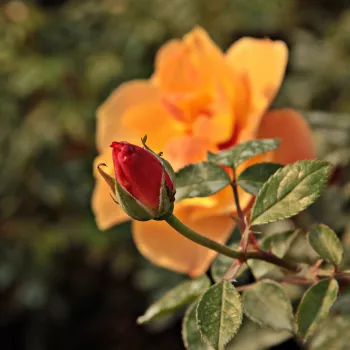
Vivid orange base colour with a reddish‑orange central blotch; ARS OB, RHS 23A outer and 40A inner; colour lightens in strong sun and contrasts sharpen in cooler weather as blooms mature. |
| Fragrance and aroma |
Very weak fragrance with a delicate, rose‑like character only lightly perceptible on close inspection; primarily selected and grown for its striking colour effect rather than scent impact. |
| Hip characteristics |
Rose hip formation generally slight; when present, produces small spherical hips 6–10 mm across, coloured orange‑red, adding occasional autumn detail without significant ornamental emphasis. |
| Resistance and winter hardiness |
Hardy to around −26 to −23 °C (RHS H7, Swedish zone 4, USDA 5b); average heat and drought tolerance needing water in prolonged dry spells; moderate disease resistance, with black spot susceptibility. |
| Horticultural recommendations |
Best in sunny positions for flower quality; medium maintenance with occasional plant protection; suggested spacing 50–55 cm for rows, 90 cm as specimen; around 3.3–3.8 plants per m² in mass plantings. |
PERSIAN SUN™ offers compact structure, long-season orange colour and durable own-root performance in family gardens and containers, making it a thoughtful choice for those planning a resilient, low-fuss planting scheme.