PENELOPE HOBHOUSE – white park rose - Scarman
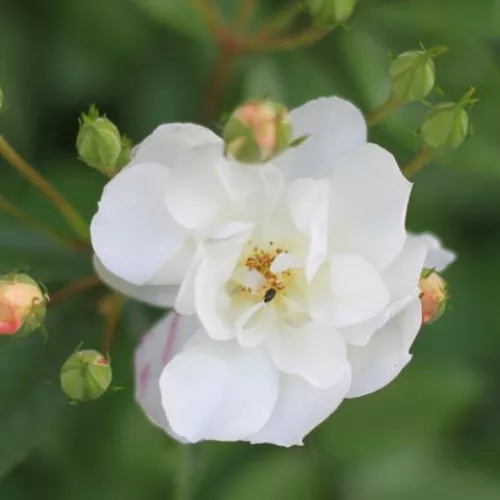
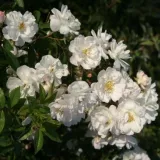
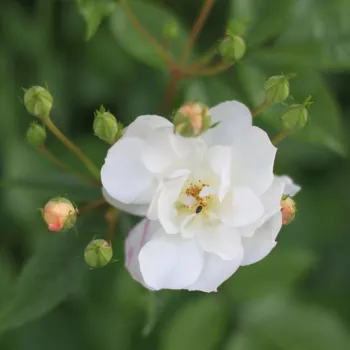
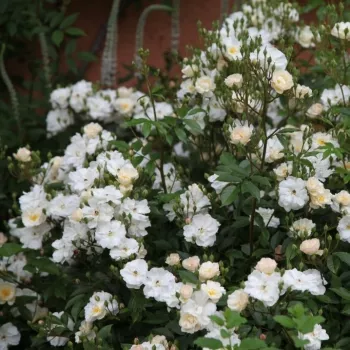
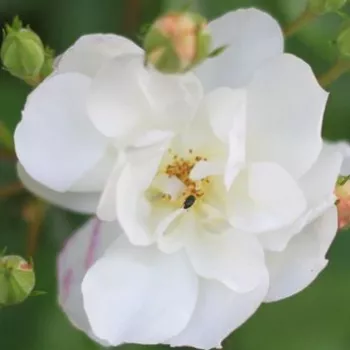
Step out after rainfall and this graceful rose offers a sense of balance, its milky-white clusters catching the light while a fresh, musky fragrance drifts along your path. Bred from Hybrid Moschata heritage, it shrugs off common fungal problems and copes reliably with blustery, damp British weather and heavier soils, supporting sustainability in compact front gardens. Semi-double flowers reveal golden stamens, inviting bees to visit from early summer into autumn for long, relaxed flowering. On its own roots it settles in quietly, building a framework for decades of calm longevity. In the first year it concentrates on roots, the second on strong new shoots, and by the third year it reaches full ornamental value with confident structure. Its tall, bushy, sparsely thorned habit makes it ideal for soft screening in small London terraces or as a welcoming entrance feature, while moderate self-cleaning and low maintenance needs keep everyday care refreshingly simple.
Usage options
| Target area | Reasoning |
|---|
| London terraced-house front garden |
The tall, bushy habit creates a soft, upright presence without overwhelming a narrow plot, and the semi-double, white clusters read beautifully against brickwork for an elegant, low-effort welcome for busy urban gardeners. |
| Rainwater-friendly urban border |
Deep own-root growth and good disease resistance suit wetter spells and heavier soils, working well with simple mulching and rainwater capture to manage runoff in small city borders for sustainability-minded homeowners. |
| Informal bee-friendly mixed bed |
Semi-double blooms with exposed stamens offer accessible pollen over a long season, while the soft white and creamy shades blend effortlessly with herbs like lavender and nepeta for wildlife-conscious beginners. |
| Lightly shaded side return or passage |
Partial shade tolerance and a clear, musky scent let it flower and perfume narrow side gardens where sun is limited, giving vertical interest along fences without complex pruning for time-poor city dwellers. |
| Small boundary hedge or screen |
The strong, bushy structure and dense foliage form a gentle, semi-transparent screen, ideal for marking boundaries while keeping a friendly feel, with low pruning needs over many years for family-garden owners. |
| Large container on balcony or patio |
In a 40–50 litre peat-free container it makes a refined focal point, combining height, fragrance and repeat flower without daily fuss, ideal where planting into the ground is impossible for flat and balcony residents. |
| Against walls, obelisks or small structures |
Flexible shoots can be loosely tied to supports, letting you use it as a small climber to frame doors or windows; remontant flowering ensures a long season of white clusters for decor-focused homeowners. |
| Low-intervention family garden border |
Low maintenance needs, strong disease resistance and reliable repetition suit average UK gardens where time is limited, and its resilience in cool, humid spells with wind and rain keeps displays steady for practical novice gardeners. |
Styling ideas
- Soft-Frontage – Plant a pair flanking a front gate with nepeta and low sage at their feet for a calm, fragrant entrance – ideal for style-conscious terraced-house owners.
- Green-Curtain – Train onto a slim obelisk to form a light vertical screen, underplant with trailing bellflower to spill over gravel – suited to small, overlooked gardens.
- Musk-Meadow – Combine with soft pink daylilies and airy baby’s-breath for a pastel, bee-friendly summer border – perfect for romantic, low-maintenance schemes.
- Courtyard-Classic – Grow a single specimen in a 50 litre clay pot with lavender around the base for a timeless courtyard focal point – great for busy professionals.
- Rain-Garden – Position near a downpipe in improved soil and mix with moisture-tolerant grasses to soften runoff – appealing to sustainability-first urban gardeners.
Technical cultivar profile
| Property | Data |
|---|
| Name and registration |
Penelope Hobhouse is marketed as a park-shrub rose within the Hybrid Moschata group, offered in the eleanorROSE ORIGINAL 2-litre own-root format for flexible, long-term garden use. |
| Origin and breeding |
Bred by John Scarman in Germany from Rosa moschata × Rosa soulieana lines, introduced in 2003 by Scarman Roses and now available as a reliable shrub for private gardens. |
| Growth and structural characteristics |
Forms a tall, bushy shrub about 130–200 cm high and 120–180 cm wide, with lightly glossy, pale green foliage and relatively sparse prickles, lending itself to hedging or loose training. |
| Flower morphology |
Semi-double, cup-shaped clusters of small, 0.5–1.5 inch blooms, typically 13–25 petals per flower, repeat freely through the season, with moderate self-cleaning that allows decorative hips to form. |
| Colour data and phenology |
Buds are softly pink, opening milky-white with a creamy tint (RHS 155C–155D); colour holds well, with a gentle, non-brash presence that suits subtle schemes and evening views. |
| Fragrance and aroma |
Offers a clearly perceptible, medium-strength scent with a fresh, musky character typical of Hybrid Moschata roses, carrying pleasantly in still, humid air without becoming overpowering. |
| Hip characteristics |
Produces moderately abundant, ellipsoidal hips about 10–16 mm in diameter, colouring orange-red and extending seasonal interest into autumn while providing a light wildlife resource. |
| Resistance and winter hardiness |
Rated to approximately −21 to −18 °C (RHS H7, USDA 6b), with good resistance to powdery mildew, black spot and rust, giving dependable performance in cool, damp UK conditions. |
| Horticultural recommendations |
Suited to borders, hedges, specimens, containers and small-climber use; plant 90–165 cm apart, in improved, well-drained soil, watering in dry spells and pruning lightly to maintain shape. |
Penelope Hobhouse offers long-season white clusters, a fresh musky scent and durable own-root growth for relaxed, low-maintenance structure; an excellent choice if you favour enduring beauty over constant gardening work.