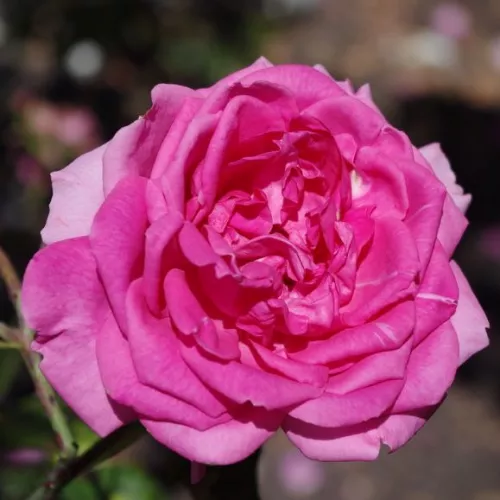
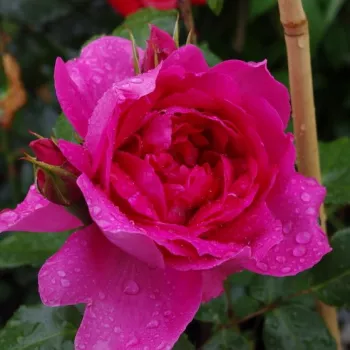
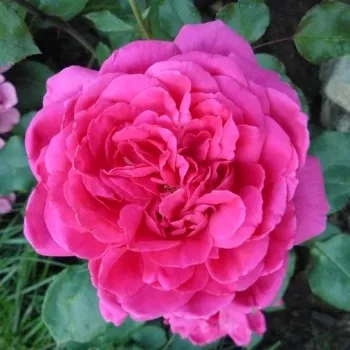
PARADE – deep pink climbing rose - Boerner
Step out to your front garden after rain and follow the Parade of deep pink blooms along a fence or terrace wall, where reliable flowering meets practical planting for sustainability in wet, windy, clay‑heavy British plots. This classic large‑flowered climber offers a strong, traditional rose fragrance, repeating in generous waves from early summer onwards with clusters of full, cupped flowers. Its glossy mid‑green foliage and proven disease resistance keep the plant looking fresh with minimal work, while own‑root vigor gives long‑term stability and easy regeneration if stems are damaged. In its first year it quietly builds roots, in the second it pushes stronger shoots, and by the third it reaches full ornamental impact as a dependable feature in a small, rainwater‑wise urban garden.
Usage options
| Target area | Reasoning |
|---|
| London terrace front fence |
Ideal where space is narrow but height is available, this climber dresses railings or low front fences with deep pink colour while keeping the ground free for paving or planting, suiting time‑pressed urban gardeners |
| Wall or house facade |
Trains easily onto trellis or wires, creating a vertical curtain of strong, classic blooms that soften brick and render, with minimal pruning needs once framework stems are in place, reassuring for busy homeowners |
| Pergola or arbour |
The long, flexible canes and repeated flushes of large, scented flowers are perfect for overhead structures, turning simple timber into a romantic walkway with modest upkeep for relaxed family gardeners |
| Rainwater‑fed gravel strip |
Performs well where downpipes or run‑off bring extra moisture, provided you offer basic drainage around the roots, making good use of rainfall in front gardens for environmentally aware sustainability seekers |
| Clay soil family garden |
Once established on improved but heavy ground, its vigorous roots and robust top growth provide a long‑lived structure that copes with typical suburban clay, suiting practical beginner gardeners |
| Low‑maintenance boundary screen |
With dense, glossy foliage and good resistance to common rose diseases, it creates an attractive, flower‑laden boundary that needs only occasional tying‑in and deadheading, appreciated by low‑effort garden planners |
| Cottage‑style mixed border backdrop |
The tall framework and clusters of deep pink flowers provide a romantic vertical accent behind perennials, while dependable repeat flowering supports a stable design for aesthetically minded home stylists |
| Large container by front door (50L+) |
Suited to a generous, well‑drained container of at least 50 litres with regular watering, it offers height and perfume for porches and doorways where in‑ground planting is limited, ideal for balcony and doorstep container gardeners |
Styling ideas
- Romantic Entrance – Train ‘Parade’ over an arched trellis at a terrace gate, underplant with lavender and nepeta for soft fragrance and movement – perfect for period‑house lovers
- Urban Vertical – Clothe a slim wall with ‘Parade’ on discreet wires, pairing with potted grasses below to keep floorspace clear – ideal for compact front gardens
- Gentle Privacy – Use along a fence with Alchemilla mollis and Knautia macedonica at the base to blur boundaries in a naturalistic way – suited to family play spaces
- Evening Pergola – Let ‘Parade’ scramble along a pergola beam with low LED lighting, adding pale underplanting to catch the dusk glow – appealing to after‑work relaxers
- Container Welcome – Grow in a 50–60 litre pot by the front door, combining with trailing thyme and heuchera for year‑round interest – convenient for renters and balcony owners
Technical cultivar profile
| Parameter | Data |
|---|
| Name and registration |
Large‑flowered climbing rose registered and traded as ‘Parade’, an exhibition‑grade climber also suitable for cutting, sold here as PARADE – deep pink climbing rose - Boerner. |
| Origin and breeding |
Bred by Eugene S. Boerner for Jackson & Perkins Co. in the United States; introduced in 1953 from a ‘New Dawn’ seedling × ‘World's Fair’ cross, continuing the classic American climbing rose line. |
| Awards and recognition |
Holder of the RHS Award of Garden Merit, signalling reliable garden performance in UK conditions; also first prize in the Climber category at the Kansas City Rose Society Show in 2001. |
| Growth and structural characteristics |
Strong climbing habit with dense, glossy mid‑green foliage; typical height 300–450 cm and spread 200–310 cm, moderately thorny stems, best grown with support on walls, pergolas, arches or sturdy fences. |
| Flower morphology |
Large, fully double, cupped blooms in clusters, with 26–39 petals and a long flowering season; remontant character gives a particularly abundant second flush when lightly deadheaded and fed. |
| Colour data and phenology |
Rich deep pink flowers with subtle purplish‑violet tones inside; colour holds moderately, paling slightly in strong sun, with lighter petal edges as blooms mature, especially vivid in cooler weather. |
| Fragrance and aroma |
Classic rose scent with strong, clearly perceptible fragrance, noticeable on still, humid evenings and around entranceways; well suited where perfume is a priority in vertical garden features. |
| Hip characteristics |
Double flowers set hips only occasionally; small spherical hips 10–15 mm across may form, coloured orange‑red, but overall fruit display is sparse and not a major ornamental feature. |
| Resistance and winter hardiness |
Rated resistant to powdery mildew, black spot and rust; hardy to about −21 to −18 °C (RHS H7, USDA 6b), coping well with typical UK winters given normal drainage and shelter from extreme exposure. |
| Horticultural recommendations |
Best in full sun with improved, well‑drained soil; plant 145–270 cm apart depending on use; tie young shoots to supports, water in dry spells, and prune lightly to maintain framework and flowering. |
PARADE offers richly scented deep pink walls of bloom with good disease resistance and long, own‑root resilience, making it a thoughtful choice for those planning a lasting vertical feature.