PAPA FRANCESCO – pale pink climbing rose – Ranchon
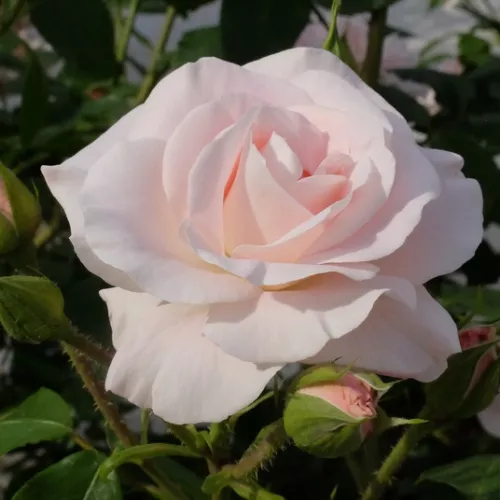
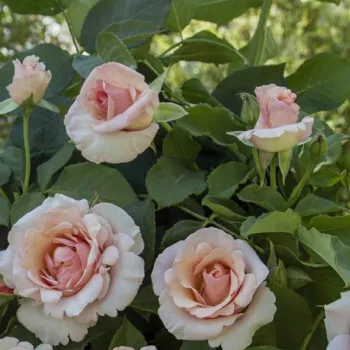
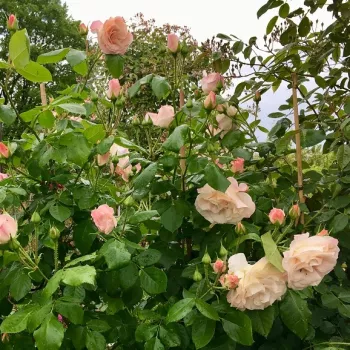
Step out after rain into a front garden that feels instantly balanced, as PAPA FRANCESCO climbs with soft, pastel blooms and quietly ordered growth along walls, arches or railings, even where wind and showers test a typical British plot near the coast or in exposed streets. Its semi-double flowers open freely for visiting insects, bringing a gentle, pollinator-friendly presence without demanding complicated care routines. As an own-root rose it offers dependable longevity, regenerating steadily from the base so that, with minimal pruning and sensible watering, it matures into a stable, long-lived feature. This climber suits a compact, rainwater-aware front garden, a shared side passage or a sunny balcony in a large 40–50 litre container, creating a soft, pastel backdrop for informal plantings and “girly” London terraces. Over time, its light green, glossy foliage fills trellis and wires with structure, while the pale pink cups repeat flower through the season, keeping ornamental value high from early summer well into autumn. In your first year it quietly builds roots, in the second it pushes stronger shoots, and by the third it offers its full climbing presence as an established, reassuring part of your everyday garden view.
Usage options
| Target area | Reasoning |
|---|
| Small London front garden façade |
This climber’s moderate height and controllable spread make it ideal for softening a typical two-storey terraced frontage without overwhelming windows or gutters, creating a calm vertical focus for beginners. |
| Rainwater-aware urban boundary fence |
Planted into improved, free-draining soil beside a front fence, it uses natural rainfall efficiently and copes well with showery, breezy British weather, working neatly for sustainability‑minded owners. |
| Family seating corner trellis |
Its neutral, very light fragrance and pastel blooms give a gentle backdrop near a bench or small patio, offering visual restfulness without overpowering scent for young‑family households. |
| Balcony or roof terrace planter (40–50 litres) |
In a generously sized container with good drainage, this own-root climber builds a reliable framework of stems that can be lightly tied in and refreshed over many years for busy urban gardeners. |
| Side return arch or pergola |
The steady, climbing habit and repeat flowering lend a sense of continuity along narrow side paths, where its semi-double flowers bring subtle movement and light for space‑conscious homeowners. |
| Mixed pastel “girly” front border |
Its soft pale pink clusters blend effortlessly with lavender, nepeta or soft blue brunnera, helping to create a romantic, coordinated scheme that stays tasteful for style‑focused garden makers. |
| Low‑input, near‑natural planting scheme |
Once established, its own-root resilience and medium disease tolerance support relaxed maintenance, with light annual pruning and minimal spraying suiting low‑intervention gardeners. |
| Long-term structural climber on wires |
With a potential lifespan of decades when cared for, its own-root habit supports renewal from the base, so gaps can be pruned out and refilled naturally by long‑view planners. |
Styling ideas
- Soft-Frontage – Train PAPA FRANCESCO along understated black railings with lavender and nepeta at the base for a powdery, pastel street view – ideal for image-conscious terrace owners.
- Balcony-Bower – Grow it in a 50-litre pot with a slim obelisk, underplanting with trailing thyme or ivy-leaved toadflax – suited to renters wanting reversible, gentle vertical greening.
- Romantic-Arch – Pair this pale pink climber with Clematis ‘Amber’ on a narrow arch to create a soft, layered entrance – perfect for couples shaping a welcoming front path.
- Calm-Corner – Let it clothe a corner trellis behind a small bistro set, with potted sage and scented annuals in front – good for those seeking a quiet, evening relaxation spot.
- Pastel-Hedge – Space several plants along horizontal wires with brunnera and spring bulbs beneath for a loose, near-natural screen – suited to gardeners aiming for gentle structure, not formality.
Technical cultivar profile
| Parameter | Data |
|---|
| Name and registration |
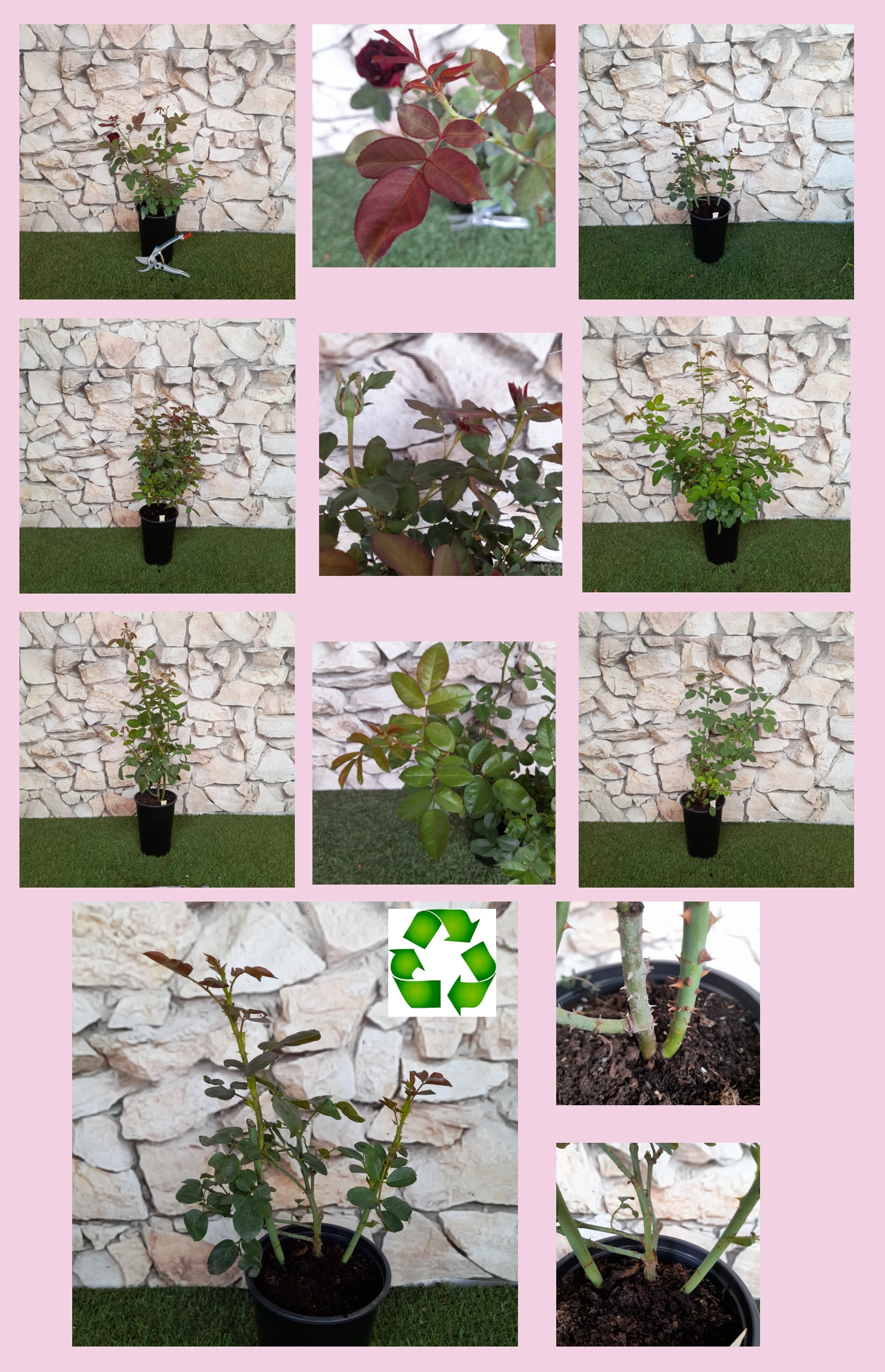
Collection: Climbing rose; trade name PAPA FRANCESCO – pale pink climbing rose – Ranchon; commercial climber group; own-root 2-litre container form for garden use. |
| Origin and breeding |
Bred by Jacques Ranchon, Pépinières Paul Croix, France; ‘Sourire d’Orchidée’ seedling; bred and introduced 2016, representing a modern, near-natural style climbing rose. |
| Growth and structural characteristics |
Climbing habit with 240–380 cm height and 150–260 cm spread; moderately dense, glossy light green foliage; moderately thorny, suited to walls, arches, fences and strong trellis. |
| Flower morphology |
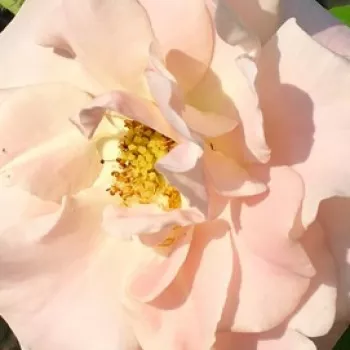
Semi-double, cup-shaped, medium-sized clusters with 13–25 petals; repeat-flowering with notably abundant second flush; cluster-forming on short laterals along trained main stems. |
| Colour data and phenology |
Pale, soft pastel pink (RHS 65C–65D), silky and even; buds almost white-pink, fading gradually to a delicate blush at petal edges, retaining refined colour under typical UK light. |
| Fragrance and aroma |
Very weak fragrance with a neutral, clean character; chosen more for visual calm and reliable display than for scent, comfortable near windows, doors and small sitting areas. |
| Hip characteristics |
Occasional small, spherical orange-red hips 8–13 mm in diameter; crop generally sparse because of semi-double form; mainly ornamental value rather than significant wildlife fruiting. |
| Resistance and winter hardiness |
Hardy to about −21 to −18 °C (RHS H7, USDA 6b, Swedish zone 3); medium resistance to black spot, powdery mildew and rust; benefits from airy training and good hygiene. |
| Horticultural recommendations |
Plant 190–300 cm apart depending on use; allow 0.3 plants/m² in mass plantings; moderate maintenance with occasional pruning, tying-in and disease monitoring, plus good drainage. |
PAPA FRANCESCO – pale pink climbing rose – Ranchon offers repeat pastel flowering, calm vertical structure and long own-root reliability; consider it if you would like a gentle, enduring climber for your garden.