ORLÉANS ROSE – pink polyantha bedding rose - Levavasseur
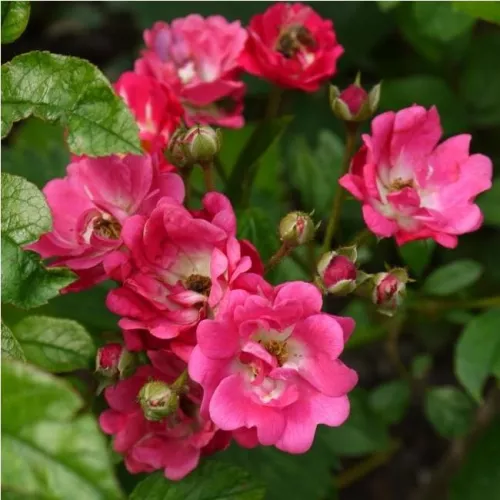
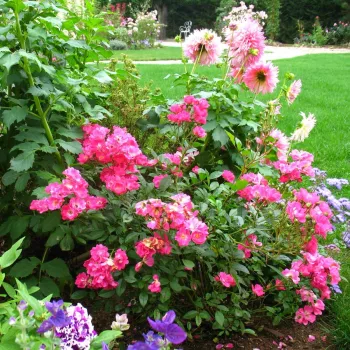
Bring an authentic, early 20th‑century French charm to your London front garden with this compact pink polyantha that thrives in small, real‑life spaces. ORLÉANS ROSE forms neat, low mounds studded with clusters of deep pink blooms that gently fade to powder‑pink and white, remaining visually fresh without deadheading thanks to its good self‑cleaning habit. Own‑root growing means a dependable, long‑lived plant that quietly regenerates after harsh winters and everyday knocks, protecting your investment and helping your borders feel settled over time. With medium maintenance needs, it fits busy, rainwater‑wise city gardening where gutters overflow and paving stays wet after showers, yet it still provides a strong structure at the front of a bed or along a path. Its compact, glossy foliage and rounded habit make it easy to combine with lavender or nepeta for a soft, “girly” look that feels balanced rather than fussy. In a 40–50 litre or larger container it offers long‑season colour on terraces or balconies, staying pleasingly orderly without dominating narrow spaces. Over three seasons you will see roots establish, then shoots build, and finally a full, reliable display that suits beginners and time‑poor gardeners. By choosing this enduring classic, you opt for effortless elegance with a light environmental footprint and minimal fuss.
Usage options
| Target area |
Reasoning |
| Rain‑aware London terraced front garden bed |
The compact, 60–85 cm habit and dense, glossy foliage make it ideal for slim front beds along paths, where splashing rain and run‑off from downpipes are common, coping steadily with wet spells in exposed town settings – perfect for the busy urban gardener |
| Low, “girly” edging for family garden borders |
Its rounded growth, repeat‑flowering clusters and soft deep‑to‑powder pink shades create a neat, romantic edging for lawns or mixed borders, giving long‑season colour at child’s‑eye level with only moderate routine care – reassuring for the family garden owner |
| Small, sustainable rose hedge |
Recommended hedge spacing of around 40 cm lets plants knit into a low, flowering hedge that marks boundaries without dominating, while own‑root resilience supports a long hedge life and easier gap‑filling if one plant is lost – attractive for the practical homeowner |
| Feature rose in a large container |
In a 40–50 litre or larger pot, its compact size and self‑cleaning blooms keep maintenance manageable, avoiding constant deadheading on balconies or patios, while the own‑root form re‑sprouts well if growth is checked by winter or missed watering – ideal for the container gardener |
| Mixed perennial and bedding scheme |
Clustered, small flowers sit well with fine‑textured perennials such as asters or dwarf coneflowers, providing a stable rose “anchor” that repeats through the season without smothering companions, even when borders are densely planted – helpful for the design‑conscious beginner |
| Urban parklet or community planting strip |
Medium maintenance needs and robust, compact structure suit public or shared spaces where care is periodic rather than intensive, while own‑root plants give longer service life and easier renewal after accidental damage – reassuring for the community garden organiser |
| Small front garden focal group |
Planted three to five together at around 50 cm intervals, the repeating pink domes create a clear focal point without overwhelming narrow plots, offering stable ornamental value from year to year with only occasional pest checks – appealing to the time‑pressed novice |
| Coastal or wind‑exposed suburban border |
The low, compact framework and moderate disease resistance allow it to cope with blustery, damp conditions where taller roses can rock or defoliate, supporting reliable colour despite wind‑driven rain in exposed gardens – suited to the weather‑exposed gardener |
Styling ideas
- Front‑step charm – Line the path to your front door with a short run of ORLÉANS ROSE underplanted with low thyme, for a soft, pink welcome – for style‑minded city homeowners.
- Balcony blush – Grow a single plant in a 50 litre tub with trailing nepeta to spill over the sides, balancing tidy rose structure with airy blue haze – for balcony and roof‑terrace gardeners.
- Pastel ribbon – Create a low “ribbon” border by alternating ORLÉANS ROSE with white hardy geraniums, giving season‑long pink‑and‑white froth – for romantic cottage‑style enthusiasts.
- Family‑proof hedge – Use closely spaced plants as a low hedge along a play lawn, combining them with tough catmint at the base for a forgiving, scuff‑tolerant edge – for families with active children.
- Parklet pocket – In curbside planters, pair ORLÉANS ROSE with dwarf asters and evergreen grasses to give repeating colour and year‑round structure – for community and guerrilla gardeners.
Technical cultivar profile
| Parameter |
Data |
| Name and registration |
Polyantha bed rose in the Garden rose collection; trade name ORLÉANS ROSE, also listed as Orléans Rose Garden rose Levavasseur; ARS exhibition name Orléans Rose; former names not recorded. |
| Origin and breeding |
Bred by Ernest Levavasseur in Orléans, France, from an open‑pollinated seedling of ‘Madame Norbert Levavasseur’; introduced 1909 in France and 1911 in Australia via Hazlewood Bros. Pty. Ltd. |
| Growth and structural characteristics |
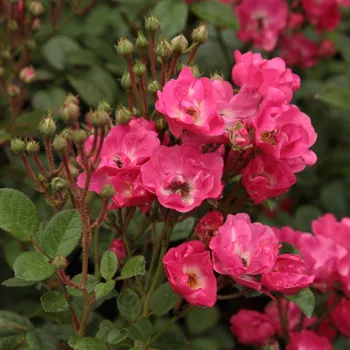
Compact, rounded shrub 60–85 cm high and wide with dense, light green glossy foliage and moderate prickles; forms neat mounds suited to edging, bedding and low hedging in small gardens. |
| Flower morphology |
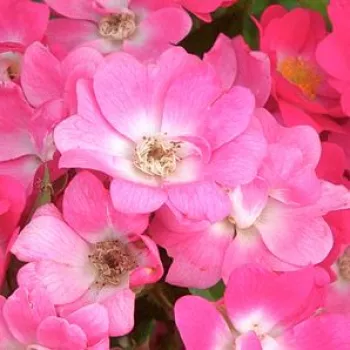
Semi‑double, cup‑shaped, small blooms (about 0.5–1.5 in) carried in clusters; around 13–25 petals; repeat‑flowering with an abundant second flush and good self‑cleaning of spent blooms. |
| Colour data and phenology |
Deep pink flowers (RHS 55C outer, 55B inner) with whitish base; open to reveal yellow stamens; colour gradually fades to powder‑pink and pink‑white mix, fading more slowly in cooler conditions. |
| Fragrance and aroma |
Fragrance is very weak and barely noticeable, with no defined scent notes recorded; chosen primarily for colour, habit and flowering performance rather than for perfume in the garden. |
| Hip characteristics |
Occasionally sets small spherical hips, about 7–10 mm, coloured orange‑red; decorative effect is modest, but hips may provide light seasonal interest towards the end of the season. |
| Resistance and winter hardiness |
Hardy to approximately −21 to −18 °C (RHS H7, Swedish Zone 3, USDA 6b); moderate tolerance of heat and drought when watered in dry spells; disease resistance to black spot, mildew and rust is moderate. |
| Horticultural recommendations |
Best in sunny sites for heavy flowering; ideal for beds, edging, parks and low hedges at 40–75 cm spacing; medium maintenance, with occasional pest and disease checks recommended in humid seasons. |
ORLÉANS ROSE offers compact long‑season colour, neat self‑cleaning clusters and resilient own‑root longevity, making it a thoughtful choice for understated, enduring structure in a small or urban garden.