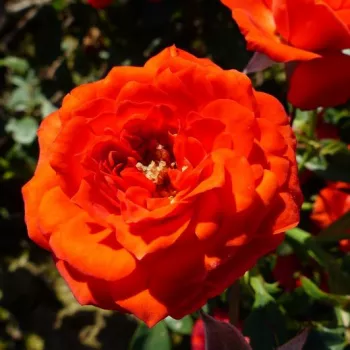
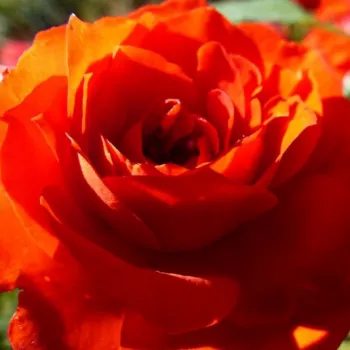
ORANGE SYMPHONIE – orange dwarf miniature rose – Meilland
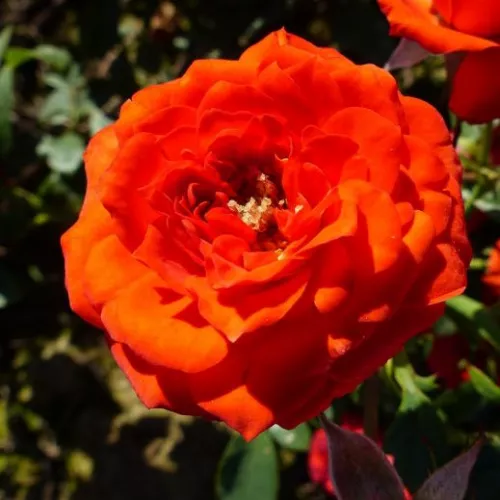
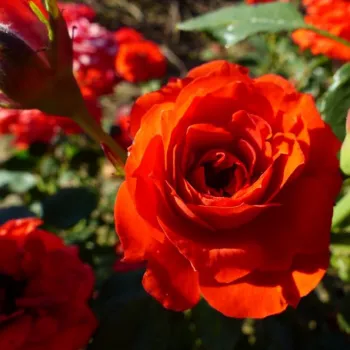
Step out after the rain to a front garden filled with colour, where compact clusters of vivid orange blooms line your path and the planting quietly supports better drainage in heavy soils and damp, breezy conditions, all with minimal fuss. ORANGE SYMPHONIE forms a naturally tidy, low-growing structure that suits narrow London front plots, balcony troughs and small urban beds, keeping everything looking deliberate rather than overgrown. Its repeat-flowering rhythm brings wave after wave of blossom from early summer onwards, with each cluster of mandarin-orange cups gradually softening to salmon and pinkish tones for a long visual season. Planted as an own-root rose, it builds a resilient underground network that supports steady regrowth and a long garden life, maturing through the quiet first year, stronger second year, and then reliable, full display by the third. In containers of at least 40–50 litres it keeps its neat scale, while the glossy dark foliage provides a lush green foil to gravel, brick and paving. Clusters of semi-double to double flowers still offer accessible centres for visiting pollinators, making this a small yet active part of a more sustainable, rain-friendly city planting. Even with modest maintenance, its balanced habit and clear orange tones bring a feeling of harmony to busy urban spaces.
Usage options
| Target area |
Reasoning |
| Narrow London terraced-house front garden border |
The compact, naturally low habit keeps front beds looking ordered along short paths and between bay windows, while the vivid orange clusters stand out against brickwork without overwhelming limited space, ideal for the busy urban gardener. |
| Rainwater-friendly gravel strip or driveway edge |
Its small root system fits well into gravel or permeable edging with improved drainage, allowing you to soften hard surfaces while supporting better water soak-away and keeping planting low enough not to obstruct views, suiting the sustainability-minded homeowner. |
| Large container or trough (40–50 L) on balcony or terrace |
The dwarf stature is perfect for sizeable pots, where own-root growth gives long-term stability and easy renewal if stems are damaged, providing season-long orange colour on balconies without needing demanding pruning, reassuring the container-focused beginner. |
| Low edging in a family garden flowerbed |
Its neat, dense foliage and repeat clusters create a defined edging line in mixed borders, keeping colour at child’s-eye level and separating lawn from planting while remaining easy to reach for light grooming, helpful for the family-garden planner. |
| Rock garden or raised bed with free-draining soil |
The dwarf, cluster-forming habit suits raised or stony sites where good drainage can be arranged, and the strong orange flowers show clearly above gravel and low perennials, bringing structure with limited height for the space-conscious gardener. |
| Mini rose hedge along a path or front boundary |
Planted at closer spacing, its compact, branching growth knits into a low informal hedge that outlines paths or front plots, adding long-season colour and definition without creating a visual barrier, appealing to the design-aware homeowner. |
| Mixed planting with herbs and pollinator-friendly perennials |
The bright orange cups combine well with lavender, nepeta or sage, and moderately accessible flower centres still offer some interest to insects, allowing you to build layered, wildlife-aware schemes in tight spaces valued by the eco-conscious gardener. |
| Small urban bed in exposed, breezy conditions |
Its low profile, dense foliage and own-root resilience help it cope with wind and rain on street-facing plots, offering dependable colour where taller roses might rock or break in coastal-style gusts and showers, supporting the weather-challenged gardener. |
Styling ideas
- Pathway-Glow – line a short front path with pairs of ORANGE SYMPHONIE backed by dwarf Euonymus, using gravel mulch to aid drainage – ideal for design-conscious owners of narrow London terraces
- Balcony-Brushstrokes – plant one rose per 40–50 L trough with trailing thyme and sedums, letting the orange blooms hover above a textured green cascade – for urban flat-dwellers seeking low-fuss colour
- Soft-Drama – mix with Stipa tenuissima and pale stones in a small bed so the fiery flowers flicker against moving grasses – perfect for gardeners wanting impact from a tiny footprint
- Herb-Companion – pair with lavender, sage or nepeta in a sunny strip, balancing aromatic foliage with bright blooms and supporting passing insects – suited to sustainability-focused front-garden projects
- Corner-Focus – group three plants in a triangle at a driveway corner, underplant with low groundcovers to create a compact, long-season focal point – for busy homeowners needing easy structure
Technical cultivar profile
| Parameter |
Data |
| Name and registration |
Miniature bush rose, Collection SYMPHONIE; registered as MEIninrut, marketed as Orange Symphonie SYMPHONIE MEIninrut; ARS exhibition name Orange Symphonie; miniature dwarf commercial group. |
| Origin and breeding |
Bred by Alain Meilland, Meilland International, France, from (Baby Bettina × Anytime) × Meteor; bred 1994, introduced and registered 1997, distributed initially by Meilland International. |
| Growth and structural characteristics |
Dwarf, compact bush 45–55 cm high and 40–50 cm wide, with dense, glossy dark green foliage and sparse prickles; forms low, tidy mounds suitable for edging, containers and small-scale planting schemes. |
| Flower morphology |
Medium-sized, cup-shaped, double blooms with 26–39 petals, borne in clusters; remontant with a good second flush, providing repeated flowering across the season rather than a single, concentrated show. |
| Colour data and phenology |
Deep orange-red buds open mandarin-orange, then soften to salmon-orange with slight pinkish edging; ARS ob, RHS 28A–28B; colour retention medium, with gradual, ornamental fading through the bloom’s life. |
| Fragrance and aroma |
No noticeable scent; an unscented miniature suited where fragrance is not essential or where visual impact, compact form, and compatibility with seating or doorways without strong perfume are preferred. |
| Hip characteristics |
Produces small, spherical hips 5–7 mm in diameter, orange-red when mature; typically modest in quantity, adding a light decorative effect in late season without significantly weighing down the compact plant. |
| Resistance and winter hardiness |
Hardy to around −21 to −18 °C (USDA 6b, RHS H7, Swedish Zone 3); moderate heat tolerance but needs watering in prolonged drought; disease susceptibility moderate, particularly to rust, so monitoring is advised. |
| Horticultural recommendations |
Best in sunny positions with well-drained soil; recommended for flowerbeds, edging, balcony and terrace containers, and rock gardens; plant 25–50 cm apart, 10–11 plants/m², and support with regular plant protection. |
ORANGE SYMPHONIE offers compact structure, repeat orange flowering and container-friendly versatility in a durable own-root form, making it a thoughtful choice if you want reliable colour in a small, sustainable garden.