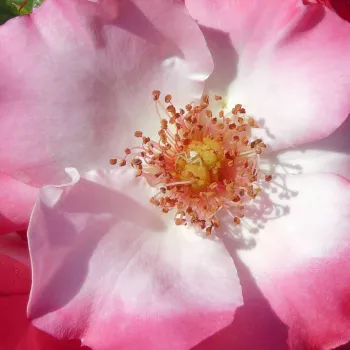
OCCHI DI FATA – white-pink bedding floribunda rose - Barni
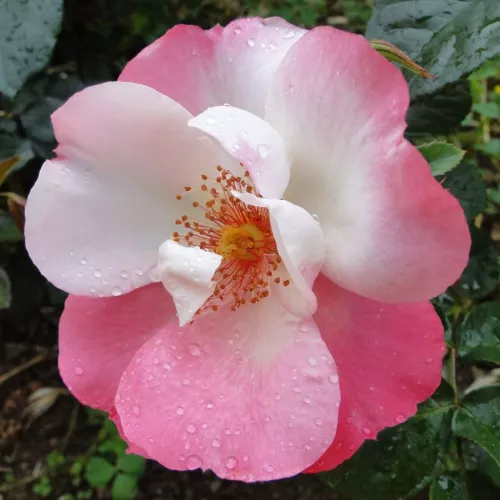
Imagine stepping out after rain into a small, city-front garden where petals catch the light and bees move quietly from bloom to bloom: that is the mood created by Occhi di Fata, a compact floribunda that thrives in modest urban spaces while handling typical British rainfall and mixed light levels with ease. Bred in Italy, this bush rose offers a long, repeat-flowering season on a neat, upright framework, giving reliable colour from early summer well into autumn with minimal intervention beyond basic feeding, watering and an annual trim. Its open, single blooms are genuinely pollinator-friendly and evolve from milky white to deeper pink-crimson tones, adding subtle theatre in a London terrace front bed or shared courtyard. Supplied as a pharmaROSA® ORIGINAL own-root rose, it is designed for a long, steady life in the ground or in a substantial 40–50 litre container, supporting a natural rhythm where roots establish in the first year, top growth strengthens in the second and full ornamental value emerges by the third, making it an accessible choice for beginners, time-poor families and design-aware urban gardeners seeking calm, sustainable colour.
Usage options
| Target area | Reasoning |
|---|
| Front garden bed in a London terrace |
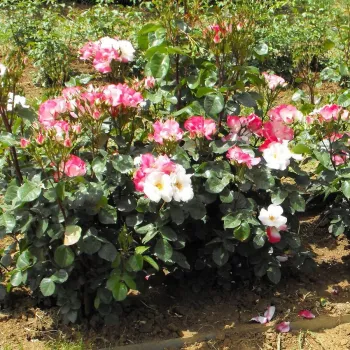
Compact, upright growth and dense foliage allow a smart, controlled look along short front boundaries without overwhelming narrow paths; repeated planting at 40 cm intervals creates a soft, welcoming line of colour for passing neighbours and visitors seeking balance in a small space, ideal for the urban gardener. |
| Pollinator-friendly mixed border |
The single, open flowers with clearly exposed stamens make nectar and pollen easily accessible to bees, while the remontant habit ensures a steady food source through the season; underplant with lavender, nepeta or salvia to extend forage and create a coherent, low-input scheme appreciated by the nature-conscious homeowner. |
| Rainwater-conscious city planting strip |
Incorporated into a permeable, mulched strip beside a drive or pavement, this variety works well with free-draining soil improvements, helping a simple planting plan cope gracefully with frequent showers and longer wet spells typical of British weather, supporting the needs of the sustainability-focused gardener. |
| Statement rose in a large patio container |
In a 40–50 litre pot with peat-free compost and regular watering, the compact habit and continuous flowering create a long-season focal point for balconies or paved patios, especially where ground planting is limited, suiting the lifestyle of the busy apartment-dweller. |
| Season-long colour ribbon along a path |
Planted as a low hedge at 35–40 cm spacing, the upright, bushy plants knit into a soft line that delivers repeating flushes of white-to-pink blooms, keeping family garden paths bright from early summer into autumn with straightforward pruning, ideal for the low-maintenance gardener. |
| Long-lived feature in a family garden bed |
As an own-root rose, the plant ages steadily without graft-union issues, recovering more reliably from winter damage or accidental knocks, so the clump can mature gracefully over many years with consistent shape and colour, a reassuring trait for the long-term planner. |
| Colour-shift focal point against evergreens |
The distinctive transition from milky white to mid-pink and deeper crimson-pink is especially striking against dark green shrubs or clipped box shapes, adding movement and visual interest without relying on complex planting combinations, appealing to the design-led gardener. |
| Small family border with simple care routine |
Once established in improved soil and a sunny spot, this floribunda provides reliable repeat flowering and manageable size; basic feeding, watering during dry spells and routine disease checks form a clear, achievable schedule for those learning rose care, encouraging the confident beginner. |
Styling ideas
- Soft-Edge Border – Mass-plant along a narrow front path, then weave through low mounds of lavender and nepeta for fragrance and bees – for design-conscious city homeowners.
- Rain-Garden Strip – Combine with ornamental grasses and moisture-tolerant perennials in a mulched, permeable strip to slow and use roof run-off – for sustainability-minded terrace dwellers.
- Balcony Focus – Grow a single plant in a 50-litre pot with trailing thyme and variegated ivy to soften the container sides – for time-poor apartment gardeners.
- Family-Friendly Mix – Thread through hardy geraniums and dwarf sage in a small back garden bed to give long colour and easy access for children spotting bees – for young families.
- Winter-Contrast Frame – Pair with Cornus sanguinea 'Midwinter Fire' and evergreen structure so summer’s white-pink blooms and autumn hips lead neatly into fiery winter stems – for year-round planners.
Technical cultivar profile
| Parameter | Data |
|---|
| Name and registration |
Floribunda bed rose marketed as Occhi di Fata from the Le Farfalle collection; registered as BARfata and classified as an exhibition floribunda bush rose for bedding and decorative garden use. |
| Origin and breeding |
Bred by Enrico Barni in Pistoia, Italy and introduced by Rose Barni in 2004; parentage is unrecorded, but selection focused on compact habit, exhibition-quality colour effects and abundant repeat flowering. |
| Awards and recognition |
Gold medal, first prize floribunda, at La Tacita International Trials for New Roses in 2009, recognising its ornamental performance, colour display and garden presence under trial conditions. |
| Growth and structural characteristics |
Compact, upright shrub reaching about 60–85 cm in height and 50–75 cm spread, with dense, dark green, semi-glossy foliage and moderate thorns; well suited to beds, low hedging and container culture in small gardens. |
| Flower morphology |
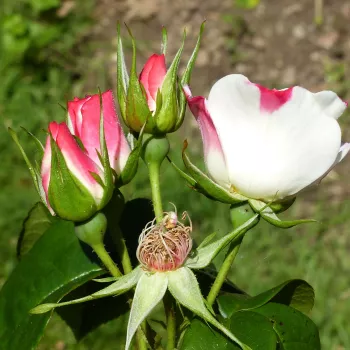
Bears medium-sized, single to semi-single flowers with 5–12 petals in clusters; cup-shaped blooms open fairly flat, repeating strongly through the season with a notably abundant second flush on established plants. |
| Colour data and phenology |
Milky-white base with pale pink edges when opening, developing to mid-pink then deep crimson-pink under sun; RHS 155C outer and 70A inner; colour gradient across the petal surface remains attractively visible in full bloom. |
| Fragrance and aroma |
Displays a mild, discreet rosy fragrance noticeable at close range rather than across the garden; scented enough to enjoy when passing or cutting a few stems, without overpowering nearby planting or seating areas. |
| Hip characteristics |
Produces moderately abundant, spherical hips around 8–12 mm in diameter, colouring orange-red in late season; hips can add a gentle decorative effect and additional wildlife interest if spent blooms are left uncut. |
| Resistance and winter hardiness |
Hardy to around -21 to -18 °C (RHS H7, USDA 6b, Swedish Zone 3); disease resistance is moderate to low, with medium susceptibility to black spot and mildew and high sensitivity to rust, requiring regular monitoring. |
| Horticultural recommendations |
Best in full sun with fertile, well-drained soil; improve heavy clay before planting and water reliably in dry spells; allow 35–65 cm spacing; apply regular preventative plant protection where fungal pressure is high. |
Occhi di Fata offers long-season colour, pollinator-friendly single blooms and a compact, container-suitable habit on a durable own-root framework, making it a thoughtful choice for small gardens when you wish to invest in lasting charm.