NUITS DE YOUNG – purple historical moss rose - Laffay
Step through your front gate and into a world of velvet shadow and deep perfume: Nuits de Young is a compact, upright moss rose that settles gracefully into small London front gardens and modest family plots, coping well where heavy soils meet brisk winds and rainfall. Its richly mossed buds and dark, romantic blooms bring a sense of heritage theatre to even the tiniest space, while naturally strong disease resistance keeps care pleasantly simple. Grafted stock is unnecessary – this own‑root shrub builds strength from the base, promising a long‑lived, reliably flowering presence that fits low‑input, urban and rainwater‑wise planting. Think in seasons, not weeks: roots in year one, structure in year two, then full ornamental value and fragrance from year three as your planting matures into a calm, balanced focal point for people, pollinators and family evenings in the garden’s softest light.
Usage options
| Target area | Reasoning |
|---|
| Front garden focal shrub |
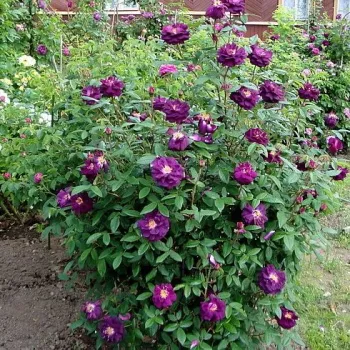
Nuits de Young forms a bushy, upright shrub around 100–160 cm, ideal as a single feature beside a front door or path where its mossed buds and dark flowers can be appreciated up close by passers‑by and visiting guests, especially for the busy urban gardener. |
| Low‑maintenance heritage border |
With strong resistance to powdery mildew, black spot and rust, this historical rose sits well in mixed borders where you prefer minimal spraying and simple pruning, retaining health and character over many years even in typical UK humidity for the time‑pressed homeowner. |
| Rainwater‑aware clay or chalk bed |
Once established in improved but heavier garden soils, its resilient rootstock copes with typical British wet spells and gusty conditions near streets, supporting sustainable, rain‑fed planting in exposed urban plots and coastal fringes for the eco‑minded city dweller. |
| Romantic evening seating area |
The very strong, moss‑rose fragrance is noticeable at a distance, making it perfect close to a bench or small terrace where you can enjoy its scent on still evenings, even when space only allows one or two shrubs for the scent‑loving beginner. |
| Pollinator‑supporting cottage corner |
Semi‑double, cup‑shaped blooms with accessible stamens offer reasonable nectar and pollen, providing partial support to bees and other insects within a classic cottage‑style planting that also celebrates historic cultivars for the pollinator‑conscious gardener. |
| Specimen in a large container |
In a 40–50 litre or larger pot with peat‑free compost and regular watering, this upright shrub makes a characterful container feature, its dark, changing flower tones adding drama to paved front gardens and balconies for the space‑limited resident. |
| Structure in heritage‑style park or lawn island |
Its 80–120 cm spread and upright habit create clear structure in small lawn islands or park‑style beds, where the rose’s form, hips and textured mossed buds extend interest beyond its main flowering period for the heritage rose enthusiast. |
| Long‑term, own‑root family planting |
As an own‑root shrub it regenerates well from the base, avoiding graft failure, gradually building a stable framework that gives reliable flowering and ornamental value over many seasons with modest care for the longevity‑minded family. |
Styling ideas
- Moody‑Victorian – Pair with dark heucheras and black‑stemmed grasses for a brooding, period feel around a tiled front path – for design‑aware city homeowners.
- Soft‑romantic – Underplant with lavender, nepeta and pale pink perennials to soften the deep blooms and attract more pollinators – for cottage‑style front gardens.
- Modern‑heritage – Combine with clipped Ilex crenata balls and simple gravel mulch to contrast formal structure with richly textured mossed buds – for contemporary terraces.
- Rain‑garden – Set slightly raised above a swale planted with moisture‑tolerant perennials, allowing roof water to percolate nearby without waterlogging roots – for sustainable urban plots.
- Collector’s‑corner – Group with other historical shrub roses and tall alliums to create a small, story‑rich area celebrating pre‑modern cultivars – for heritage‑focused enthusiasts.
Technical cultivar profile
| Characteristic | Data |
|---|
| Name and registration |
Nuits de Young is a historical moss shrub rose from the Heritage rose collection; unregistered as a modern cultivar but recognised under this trade and exhibition name. |
| Origin and breeding |
Bred by Jean Laffay in France and introduced around 1845, this moss rose of unknown parentage represents classic nineteenth‑century breeding for colour, perfume and ornamental mossed buds. |
| Awards and recognition |
Holds the RHS Award of Garden Merit (2001), indicating reliable performance, garden‑worthy character and sound health under typical UK growing conditions in independent trials. |
| Growth and structural characteristics |
Bushy, upright shrub reaching approximately 100–160 cm high and 80–120 cm wide, with moderately dense, matt dark green foliage and dense thorniness typical of moss roses. |
| Flower morphology |
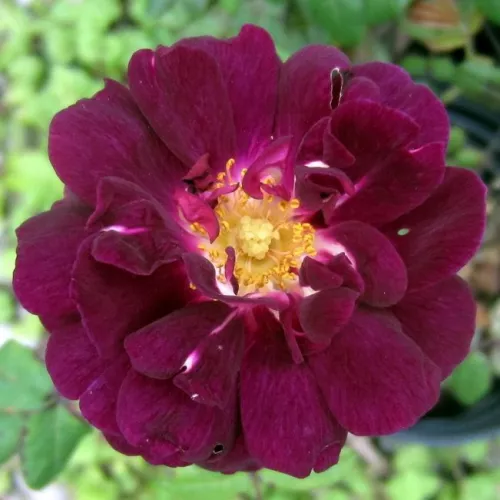
Semi‑double, cup‑shaped blooms with 17–25 petals, small in size, borne in clusters; once‑flowering in early summer, with weak self‑cleaning so deadheading may be desirable. |
| Colour data and phenology |
Buds open deep burgundy with almost black edges, then velvety dark burgundy with purple tones, later fading through deep purple to brownish‑lilac, with good overall colour retention. |
| Fragrance and aroma |
Very strong, distance‑carrying moss‑rose scent, combining rich old‑rose notes with the characteristic resinous fragrance of mossed buds, especially noticeable in still, humid evening air. |
| Hip characteristics |
Produces moderately abundant, spherical orange‑red hips around 10–15 mm across, extending ornamental interest into autumn and potentially supporting wildlife where hips are left unpruned. |
| Resistance and winter hardiness |
Rated H7, hardy to about −32 to −29 °C, and USDA zone 4b; shows good resistance to powdery mildew, black spot and rust under normal garden conditions when reasonably sited. |
| Horticultural recommendations |
Best in full sun with well‑drained soil; allow around 1 m spacing in borders, more for specimen use, and water during prolonged dry spells to support flowering and overall vigour. |
Nuits de Young offers powerful fragrance, naturally healthy growth and enduring, own‑root reliability in compact spaces, making it a thoughtful choice if you value characterful roses that reward patient, low‑effort care.