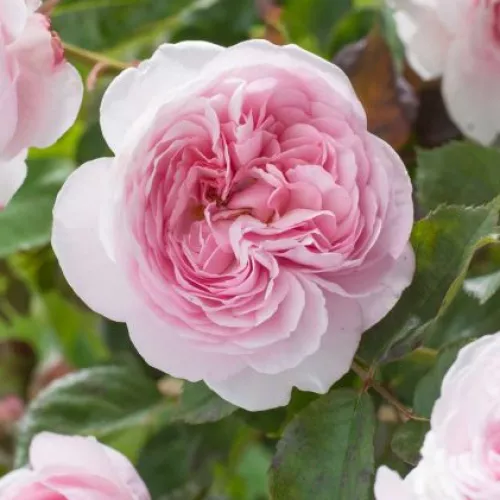
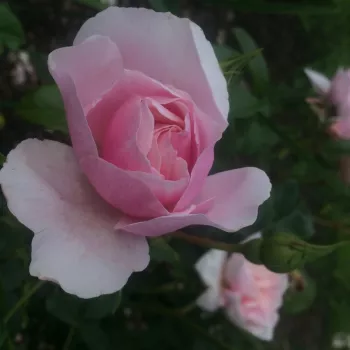
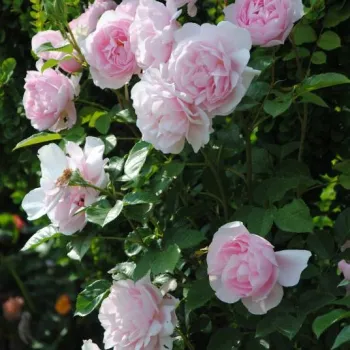
NATASHA RICHARDSON – pink bedding Floribunda rose - Harkness
Imagine stepping out after summer rain to a path lined with glossy dark foliage and clear mid‑pink blooms, their very strong, citrusy fragrance carrying on the damp air while the shrub’s upright habit holds its flowers neatly above the border. Designed for today’s smaller urban spaces, this floribunda works effortlessly in narrow London front gardens or raised beds where good drainage helps on heavier clay and wetter plots, and its moderate disease resistance supports low‑input, sustainable gardening. As an own‑root plant it establishes steadily and, over a few seasons, regenerates into a long‑lived feature with reliable flowering and enduring structure that suits busy gardeners seeking calm, balanced planting.
Usage options
| Target area |
Reasoning |
| Front garden focal shrub |
The upright structure and dense, glossy foliage give an immediate, tidy presence in a small front garden, while the steady own‑root growth promises a long‑lived, reliable feature with minimal renovation over the years for the busy urban gardener. |
| Bedding and mixed borders |
Clustered, mid‑pink flowers repeat through the season, creating a long flowering display that sits comfortably among perennials and grasses, offering colour from early summer into autumn without demanding complex pruning for the time‑pressed beginner. |
| Statement container (40–50 L+) |
In a large pot of at least 40–50 litres, the compact height and upright habit suit patios, balconies and paved front gardens, giving a strong vertical accent and room for roots to support its long‑term, own‑root resilience for the space‑conscious homeowner. |
| Fragrant seating area |
The very strong, far‑reaching citrus rose fragrance makes this cultivar ideal beside a bench or doorway, where even a light breeze carries scent, adding daily enjoyment without extra care demands for the scent‑loving non‑expert. |
| Part‑shade side garden |
Tolerance of partial shade allows planting along side paths or between buildings where sun is limited, maintaining flower production and tidy form so awkward, less‑used corners still feel intentional and welcoming for the practical town gardener. |
| Low‑maintenance small hedge |
Regular spacing creates a short, flowering line that defines front boundaries or separates driveways from planting, using its own‑root durability to form a stable, long‑term structure with only light annual trimming for the low‑maintenance seeker. |
| Cut‑flower picking corner |
Long‑stemmed, cup‑shaped blooms in a harmonious pink tone and strong fragrance translate well into vases, so a compact group in a border can supply repeat bunches without needing specialist cutting‑garden skills for the home flower arranger. |
| Rain‑aware urban planting strip |
Suited to raised beds or permeable strips beside paths where improved soil provides good drainage on heavy clay and helps cope with frequent rain, supporting healthy growth and long display with simple seasonal care for the sustainability‑minded city gardener. |
Styling ideas
- Elegant entrance – Plant a pair in large clay pots flanking a front door, underplanted with silver‑leafed sage for contrast – ideal for homeowners wanting scented, welcoming kerb appeal.
- Soft hedge – Create a short, pink flowering line along a low front fence, weaving in lavender for scent and pollinator interest – perfect for families upgrading a plain boundary.
- Romantic bed – Combine with airy nepeta and Cheddar pinks for a cottage‑style, mid‑pink and blue border – suited to beginners seeking classic charm without complex design.
- Patio retreat – Use a single shrub in a 50‑litre container beside a small table, with trailing thyme around the base – for balcony and courtyard users wanting fragrance in tight spaces.
- Seasonal cut corner – Group three plants in a sunny bed corner for steady cutting stems, backed by tall Liatris spicata – for hobby florists who like home‑grown, scented arrangements.
Technical cultivar profile
| Parameter |
Data |
| Name and registration |
Floribunda bedding rose, shrub type; registered as HARpacte, marketed as Natasha Richardson Bedding rose HARpacte, a premium own‑root garden rose for consumer plantings. |
| Origin and breeding |
Bred by R Harkness & Co Ltd in the United Kingdom in 2011, registered in 2012 with EU PBR 2012/1125 and introduced after 2012 through Harkness Roses. |
| Growth and structural characteristics |
Upright shrub, about 85–115 cm high and 60–85 cm wide, with dense, dark green, glossy foliage and moderate prickles, forming a balanced, medium‑sized garden rose. |
| Flower morphology |
Double, cup‑shaped floribunda clusters with approximately 29–39 petals per bloom, large flower size, and remontant habit, giving a plentiful, clearly defined second flush of flowers. |
| Colour data and phenology |
Vibrant mid‑pink blooms (ARS Mp, RHS 62C–62D) that open with deeper inner tones, then gently fade toward soft, sometimes creamy pink edges before petal drop, retaining a clear overall pink effect. |
| Fragrance and aroma |
Very strong, far‑reaching perfume built around citrus and lemon base notes, with classic rose character evident around seating areas or paths during warm, still weather. |
| Hip characteristics |
Produces moderate numbers of small, ellipsoidal red hips, around 7–10 mm in diameter, adding a discreet seasonal accent without dominating the shrub in late season. |
| Resistance and winter hardiness |
Rated to approximately −21 to −18 °C (RHS H7, Swedish zone 3, USDA 6b), with moderate resistance to powdery mildew, black spot and rust under typical garden conditions. |
| Horticultural recommendations |
Best at 40–75 cm spacing depending on use; 4.2–4.8 plants/m² for bedding, in beds or 40–50 L containers, with medium maintenance and occasional plant protection as required. |
NATASHA RICHARDSON offers long seasonal flowering, strong citrus fragrance and durable own‑root growth, making it a thoughtful choice for creating a long‑lived, characterful rose feature in compact gardens.