NAGYHAGYMÁS – pink bedding floribunda rose - Márk
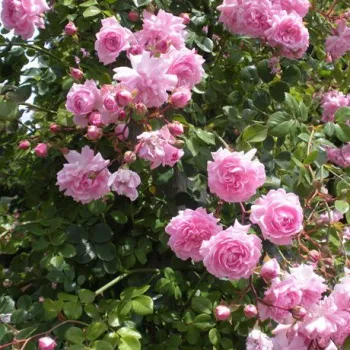
Step off the pavement into a front garden of gentle balance, where the soft mid-pink clusters of NAGYHAGYMÁS sit naturally among perennials and gravel, helping manage wetter spells in our increasingly unpredictable rainfall. This compact floribunda has a bushy, low habit that fits neatly into London terraces and small urban beds, creating a calm, “girly” welcome without demanding complex care. As an own-root rose it offers quiet longevity, regenerating well from the base so you can lightly prune and enjoy stable ornamental value over many seasons. Its moderate disease resistance and good heat tolerance make it reassuring for beginners facing both humid summers and drier weeks. In the first years it concentrates on root development, then fills out with sturdy shoots and, by about the third season, achieves its full, floriferous bedding impact.
Usage options
| Target area |
Reasoning |
| Small front-garden flowerbed |
The compact, bushy shrub habit (around 40–60 cm high) creates a neat, low pink band that works especially well along paths or beneath windows, giving clear structure without overpowering a modest London terrace plot, ideal for the beginner. |
| Informal “girly” border with perennials |
Clustered, mid-pink flowers provide a soft, romantic look that pairs beautifully with cranesbill, asters or airy verbena, delivering that feminine, cottage-style feel in a small space for the style-conscious urban homeowner. |
| Urban, rainwater-friendly planting strip |
Used in free-draining beds with gravel mulch, this rose sits comfortably among drought-tolerant companions and copes with the UK’s pattern of sudden downpours followed by dry spells, supporting rainwater-wise layouts for the eco-aware gardener. |
| Low flowering hedge along a front boundary |
Planted at about 55 cm intervals, its even height and bushy shape form a tidy, informal hedge, giving soft colour and a sense of enclosure without the pruning demands of taller shrubs, helpful for the time-pressed urban family. |
| Standalone accent in a small bed |
When spaced at roughly 100 cm, one plant becomes a rounded focal point, letting the clear mid-pink blooms read as a calm anchor among mixed planting, particularly effective where you want one easy-care highlight as a visual centrepiece. |
| Mixed planting in sunny, heat-exposed spots |
Its good tolerance of heat and moderate drought makes it suitable for south-facing or more exposed front gardens, where it can be combined with lavender or nepeta to create a resilient scheme for climate-conscious city gardeners. |
| Own-root, long-term family garden planting |
As an own-root rose it ages steadily, reshooting from the base after harder pruning or minor damage, maintaining a reliable, bushy outline over many years with less fear of graft failure, reassuring for long-term-minded garden owners. |
| Low-maintenance bedding in public or shared spaces |
Moderate disease resistance and medium maintenance needs suit shared courtyards or communal front gardens where occasional deadheading and basic care are realistic, yet a presentable, balanced look is expected by busy local residents. |
Styling ideas
- Soft-Frontage – Edge a small front bed with NAGYHAGYMÁS and pink cranesbill for a low, cloud-like pink border – ideal for terrace owners wanting a gentle, welcoming look.
- Heat-Border – Mix this rose with lavender and nepeta in a sunny strip to create a resilient, fragrant framework – suitable for city gardeners with hot, reflective front paths.
- Girly-Accent – Plant a single shrub in gravel with a few pastel salvias for a chic, minimal feature – perfect for beginners seeking one easy-care, feminine focal point.
- Ribbon-Hedge – Run a loose line along a front boundary, underplanted with low grasses, to give soft structure without heavy clipping – good for families needing tidy but simple planting.
- Courtyard-Drift – Group three plants in a triangle with blue verbena behind to form a rounded pink drift – aimed at shared or communal spaces needing robust, repeatable structure.
Technical cultivar profile
| Property |
Data |
| Name and registration |
NAGYHAGYMÁS is a pink bedding floribunda shrub rose, marketed as a flowerbed rose; breeder Márk Gergely, commercialised by PharmaRosa® with verified cultivar authenticity for home garden use. |
| Origin and breeding |
Bred in Hungary in 2004 by Márk Gergely, with parentage unknown; introduced via PharmaRosa® Ltd., reflecting Central European selection for dependable bedding use in continental and temperate gardens. |
| Growth and structural characteristics |
Compact, bushy shrub reaching about 40–60 cm in height and 75–105 cm spread, moderately thorny, with mid-green, slightly glossy foliage of medium density suited to low borders and hedging. |
| Flower morphology |
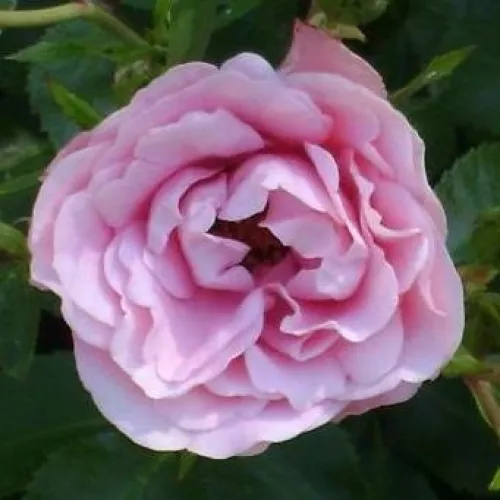
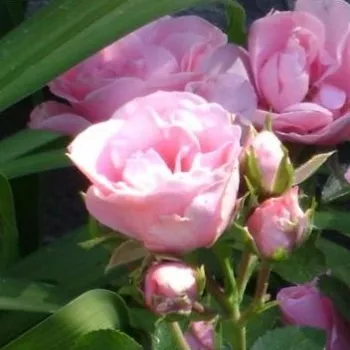
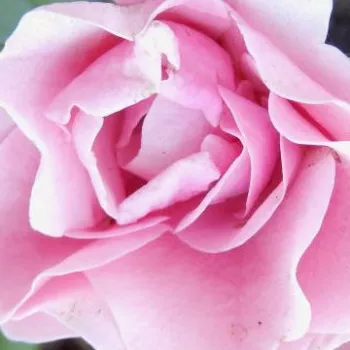
Bears medium-sized, cupped, double flowers with 26–39 petals in clusters; once-blooming over the season rather than remontant, with weak self-cleaning so spent blooms generally benefit from deadheading. |
| Colour data and phenology |
Soft mid-pink blooms, ARS LPk, RHS 65C outer and 65D inner petals; colour lightens slightly in strong sun yet keeps a pure, silky tone from bud through full bloom to gentle fading. |
| Fragrance and aroma |
This variety is essentially scentless, bred primarily for colour effect and bedding performance rather than perfume, making its main contribution visual structure and soft pink tonality in the planting. |
| Hip characteristics |
Due to the double flowers, hips form sparsely; where present they are small, spherical, orange-red fruits, around 7–10 mm in diameter, adding occasional, discreet autumn interest to the shrub. |
| Resistance and winter hardiness |
Rated RHS H4 and USDA 9a, tolerating average UK winters; disease resistance is moderate to common fungal issues, with good heat and moderate drought tolerance assisting performance in warmer microclimates. |
| Horticultural recommendations |
Best in full sun with reasonable drainage; suitable for beds, small hedges, specimens and urban green spaces, spaced 55–100 cm apart depending on use, and ideally grown in ground or 40–50 litre containers. |
NAGYHAGYMÁS offers compact structure, soft pink bedding impact and reassuring heat tolerance in a durable own-root form that settles in for many seasons, making it a thoughtful choice for understated, long-term front gardens.