MOZART – pink-white park rose - Lambert
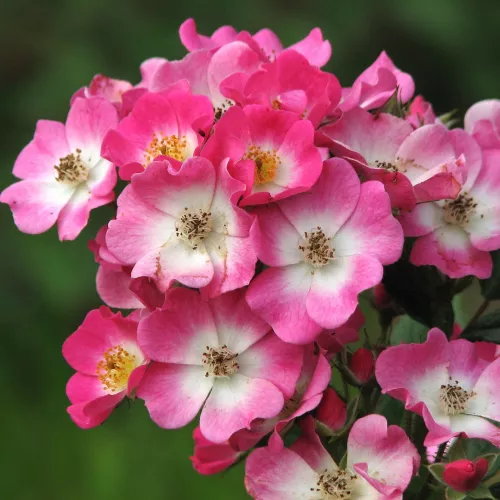
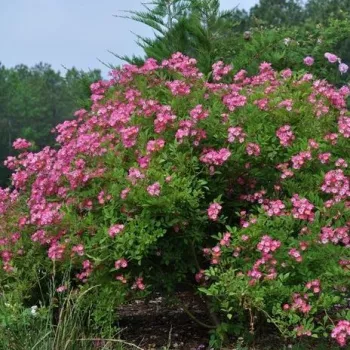
Step outside after rain and this refined shrub rose brings a sense of balance to even the smallest London front garden, its single blooms lighting up paving, gravel or planting with clear pink and white colour. ‘Mozart’ is an easy-going park rose that tolerates typical urban conditions and rewards you with repeat flowering and a gentle, muscat-like fragrance, while its open flowers are a natural draw for bees and other pollinators. Own-root planting supports long-term longevity, with the plant building roots in the first year, strong shoots in the second, and full ornamental value by the third. Well suited to British gardens where you want reliable shrubs that cope with wet, heavy soils and breezy days on exposed streets, it offers relaxed maintenance, semi-transparent structure and autumn hips that all contribute to a sustainable, rainwater-friendly planting style.
Usage options
| Target area | Reasoning |
|---|
| Front-garden focal shrub |
Ideal as a main feature in a small front garden, forming an airy, upright shrub that softens brickwork and railings with its distinctive pink-and-white clusters over a long season, suiting design-conscious urban homeowners |
| Bee-friendly mixed border |
The simple, open flowers provide easy access for bees and other insects all summer, making it a natural choice for wildlife-oriented planting schemes where you want visual impact without complex care, attractive to pollinator-minded gardeners |
| Low-maintenance hedge or screen |
Planted at hedge spacing, it creates a semi-transparent, flowering screen that needs only light pruning and occasional dead-heading, offering a softer alternative to clipped evergreens that suits time-pressed family gardeners |
| Long-term specimen shrub |
As an own-root shrub, it establishes steadily and rebounds well after hard pruning or weather damage, giving years of stable shape and flowering without graft issues, reassuring for cautious beginner gardeners |
| Rainwater-friendly front border |
Works beautifully in permeable, gravel-mulched beds that take roof runoff, its roots coping well with typical British downpours and breezy conditions when given reasonable drainage, aligning with eco-aware city gardeners |
| Clay and chalk garden plantings |
Performs reliably in many UK soils, including improved clay and lighter chalky ground, provided you prepare the planting hole well and add organic matter, giving confidence to challenging-soil gardeners |
| Generous long-season flower display |
Flowers freely in a first flush and then remontantly, giving successive waves of colour that keep borders lively from early summer to autumn with only moderate input, appealing to colour-loving home stylists |
| Large container feature (40–50 L+) |
In a substantial, well-drained pot of at least 40–50 litres, it becomes a tall, elegant feature for terraces or balconies, especially where in-ground planting is limited, particularly useful for space-conscious apartment gardeners |
Styling ideas
- MUSICAL AVENUE – line a narrow front path with ‘Mozart’ underplanted with lavender and sage, allowing rainwater to soak into gravel between pavers – for urban homeowners wanting scented, low-fuss entrances
- SOFT HEDGE RIBBON – create a loose flowering hedge along a front boundary, weaving in nepeta and ornamental grasses to move in the wind – for families seeking a friendly, less formal street edge
- PINK-AND-WHITE DUET – pair ‘Mozart’ with airy clematis such as ‘Little Artist’ through the framework for layered summer interest – for enthusiasts who enjoy subtle, romantic combinations
- RAIN GARDEN GLOW – plant near a downpipe in a free-draining bed with globe thistles and fountain grass to sparkle after showers – for sustainability-focused gardeners managing roof runoff
- BALCONY FEATURE – grow one plant in a generous 50 L container with trailing thyme and hardy herbs for colour, scent and pollinators – for busy city dwellers with only a terrace or balcony
Technical cultivar profile
| Property | Data |
|---|
| Name and registration |
Park and shrub rose known commercially as ‘Mozart’, a classic shrub exhibition class cultivar used as a versatile park rose; an unregistered cultivar widely recognised under this established trade name. |
| Origin and breeding |
Bred by Peter Lambert, Germany, around 1936 from ‘Robin Hood’ × ‘Rote Pharisäer’; introduced 1937 by Baumschule Peter Lambert, reflecting Hybrid Musk and Hybrid Tea ancestry in its habit and repeat bloom. |
| Awards and recognition |
Holds the RHS Award of Garden Merit (1993) for reliable garden performance; American Rose Society Best Classic Shrub (1999, 2000) and Pacific Northwest District award (2000), confirming broad horticultural merit. |
| Growth and structural characteristics |
Upright shrub reaching about 140–200 cm high and 130–190 cm wide, with moderately dense, mid-green, slightly glossy foliage and moderate prickliness; forms a graceful, see-through structure suited to informal planting. |
| Flower morphology |
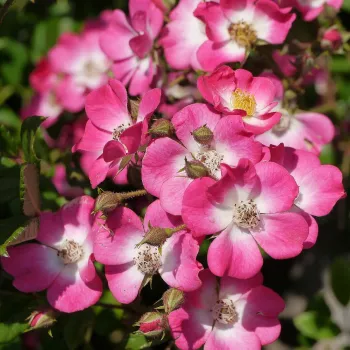
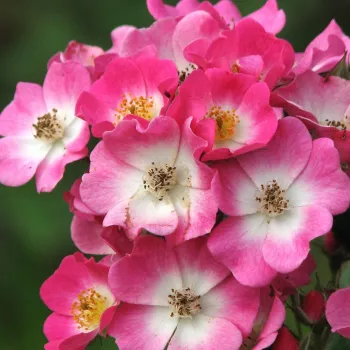
Small, flat, single flowers, typically 5–12 petals, carried in corymbose clusters; self-cleaning is moderate so large trusses may benefit from light dead-heading to maintain tidiness and encourage repeated flowering flushes. |
| Colour data and phenology |
Crimson-pink outer petals with a clear white eye (RHS 68A, 155D); buds dark pink, flowers fading to pale pink-lilac while the centre stays white; colour can lighten in strong sun, flowering in generous waves through the season. |
| Fragrance and aroma |
Fragrance is light and unobtrusive, with a delicate muscat-like character noticeable at close range on warm, still days; ideal for those preferring subtle scent rather than strong perfume near doors, windows or small seating spaces. |
| Hip characteristics |
Produces moderate quantities of small, spherical orange-red hips about 6–10 mm across in autumn, adding seasonal interest and informal structure, and supporting a more naturalistic, wildlife-friendly garden appearance. |
| Resistance and winter hardiness |
Rated to around -26 to -23 °C (RHS H7; USDA 5b; Swedish zone 4) with medium disease resistance to black spot, mildew and rust; performs best with good air movement, balanced feeding and appropriate watering practices. |
| Horticultural recommendations |
Best used in beds, hedges, specimen plantings or urban green spaces at 100–180 cm spacing; tolerates partial shade and moderate drought, but prefers improved soil, mulching and occasional pest and disease monitoring. |
MOZART – pink-white park rose - Lambert offers long-season colour, dependable pollinator-friendly flowers and durable own-root growth, making it a thoughtful, low-effort choice for long-lived family gardens and urban spaces.