ROSA MOYESII 'EOS' – pink wild rose - Ruys
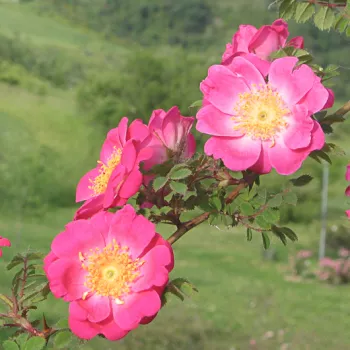
Step into the soft light of dawn with Rosa moyesii ‘Eos’, a statuesque wild rose that brings a sense of calm balance to small urban spaces and family gardens. Its once-a-year flush of vivid pink, single blooms is followed by glowing red hips that support birds and insects, creating a quietly sustainable habitat with almost no intervention from you. This own‑root shrub settles steadily, thriving even where soil is heavy and drainage is tested by wet weather and strong winds. After planting, it focuses first on strong roots, then building taller shoots, before reaching full ornamental value by around the third year. As it matures, its upright, bushy structure offers natural screening for London front gardens and rain‑aware planting schemes, while self‑cleaning flowers reduce the need for deadheading. Over decades, its durable wild‑rose genetics ensure long‑term presence and seasonal rhythm without demanding complex care or constant attention.
Usage options
| Target area |
Reasoning |
| Urban front garden feature shrub |
The tall, upright form creates a graceful vertical accent that frames doorways and railings without looking formal. Once established, the own‑root plant becomes a long‑lived fixture that suits busy homeowners seeking structure with minimal ongoing work for beginners |
| Wildlife-friendly hedge |
Single flowers and decorative red hips offer nectar, pollen and winter food, helping to support local birds and insects along streets or boundaries. The informal hedge look works well where you want privacy that still feels open and nature‑positive for sustainability‑minded |
| Low-input park or shared green |
The robust wild‑rose background allows ‘Eos’ to cope with moderate maintenance regimes, keeping its shape and presence without frequent pruning. Own‑root growth helps it recover from accidental damage and ensures a reliable, long service life for caretakers |
| Rain-aware clay or chalky soil planting |
This shrub is well suited to typical British conditions where heavy, wetter ground and coastal exposure can challenge more delicate roses, provided you improve drainage at planting. Over time it forms a stable, deep root system that anchors planting plans for urban‑gardeners |
| Seasonal “moment of drama” border |
The once‑a‑year pink flowering creates a strong focal highlight, then hands over interest to bottle‑shaped hips and textured foliage. This clear seasonal rhythm makes it easy to layer with perennials such as Echinacea or Echinops for colour‑lovers |
| Background screen for seating areas |
Its height and upright habit form a soft green backdrop that filters views without feeling oppressive. Because spent blooms largely drop on their own, you avoid constant deadheading around benches or play spaces, keeping maintenance light for families |
| Pollinator-friendly rose choice |
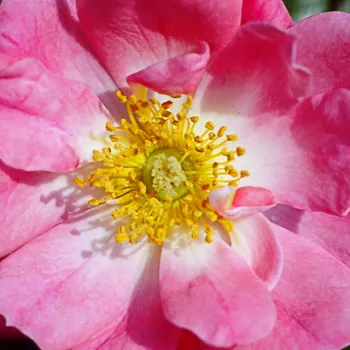
With 5–12 petals and open, visible stamens, ‘Eos’ provides easily accessible pollen and nectar during its flowering window, fitting well into city planting schemes that must balance ornament with ecological value for pollinator‑supporters |
| Large container on balcony or patio |
In a 40–50 litre or larger pot, its strong own‑root system gradually fills the container, creating a long‑term feature if you water with collected rain and refresh the compost surface annually, making rose growing accessible even in small spaces for balcony‑owners |
Styling ideas
- Dawn-Hedge – Plant as an informal hedge with staggered spacing, underplanted with Euonymus fortunei ‘Minimus’ to knit the ground and reduce weeding – for relaxed, low‑input front boundaries.
- WildScreen – Use two or three plants as a tall, wildlife‑friendly screen near seating, pairing with Echinops and ornamental grasses for movement and pollinator interest – for nature‑focused family gardens.
- Clay-Calm – In improved heavy or chalky soil, place ‘Eos’ as a structural anchor, softening hard surfacing while coping with rain‑runoff – for sustainable urban terraces and drives.
- Hip-Harvest – Let the once‑flowering display fade into a strong autumn show of red hips, highlighted with pale nepeta or lavender below – for gardeners who value seasonal change over constant bloom.
- Balcony-Grove – Grow a single shrub in a 50‑litre container with peat‑free compost, companioned by drought‑tolerant sage or thyme – for time‑pressed city dwellers wanting a long‑term, easy‑care statement.
Technical cultivar profile
| Characteristic |
Data |
| Name and registration |
Rosa moyesii ‘Eos’, Botanical rose shrub type; wild rose group with Hybrid Moyesii and shrub characteristics, marketed as Rosa moyesii 'Eos' Botanical rose Ruys; not formally registered with a separate cultivar code. |
| Origin and breeding |
Bred by Ruys at Koninklijke Kweekerij Moerheim, Dedemsvaart, Netherlands, around 1950, from a cross of Rosa moyesii × ‘Magnifica’ (Hesse, 1916); an unregistered, long‑established botanical rose for gardens and parks. |
| Growth and structural characteristics |
Strong, upright, bushy shrub reaching about 200–300 cm high and 150–260 cm wide, with moderately dense, matt, medium‑green foliage and moderate prickliness; forms a substantial, permanent framework over time. |
| Flower morphology |
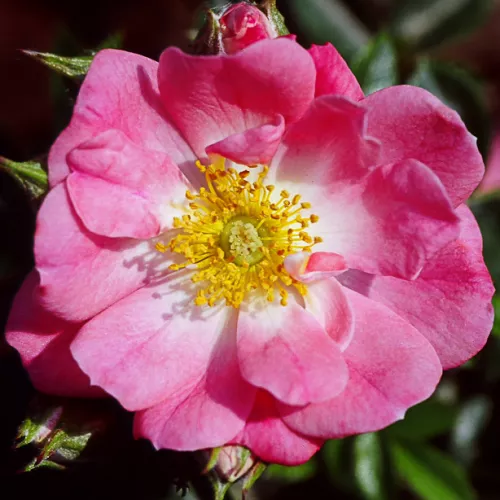
Single to slightly fuller blooms with 5–12 petals, flat and medium‑sized, borne in clusters; once‑flowering (non‑remontant) flush, with good self‑cleaning so most spent blooms fall away naturally after flowering. |
| Colour data and phenology |
Vivid fuchsia to raspberry‑pink flowers (RHS 40B outer, 40C inner) with lighter halo around the eye; colour softens to pastel pink with a lilac veil before fading, giving a strong early‑season display followed by ornamental hips. |
| Fragrance and aroma |
Fragrance is very weak and barely noticeable, so the cultivar is chosen mainly for its colour, natural habit and hips rather than scent; suitable where fragrance is not a priority or where visual impact is more important. |
| Hip characteristics |
Produces moderate quantities of decorative, bottle‑shaped red hips, around 15–23 mm in diameter; they extend the season of interest into autumn and provide additional wildlife value in mixed hedges or naturalistic plantings. |
| Resistance and winter hardiness |
Hardy to about −32 to −29 °C (USDA 4b, RHS H7, Swedish Zone 5); medium resistance to black spot, powdery mildew and rust; tolerates heat and periodic drought once established with reasonable cultural care. |
| Horticultural recommendations |
Best in full sun with well‑prepared soil; recommended spacings: 140 cm for mass plantings, 120 cm for hedges, 220 cm as a specimen. Moderate maintenance; occasional plant protection and formative pruning may be beneficial. |
Rosa moyesii ‘Eos’ offers a once‑a‑year pink spectacle, wildlife‑friendly hips and a tall, structural presence that endures on its own roots with modest care, making it a thoughtful choice for long‑term, sustainable planting.