MORSDAG® – red bedding polyantha rose - Grootendorst & Goey
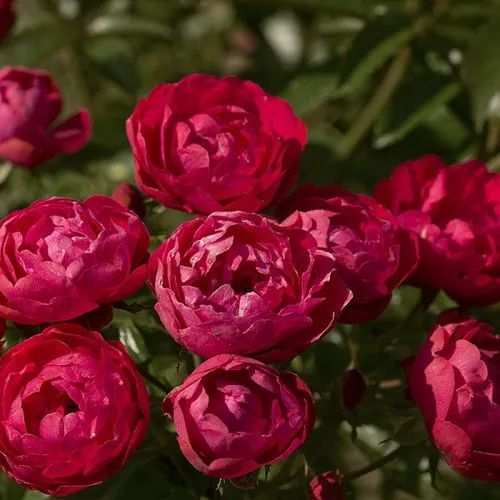
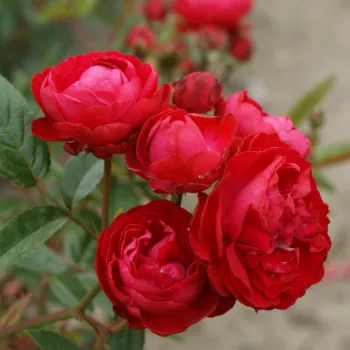
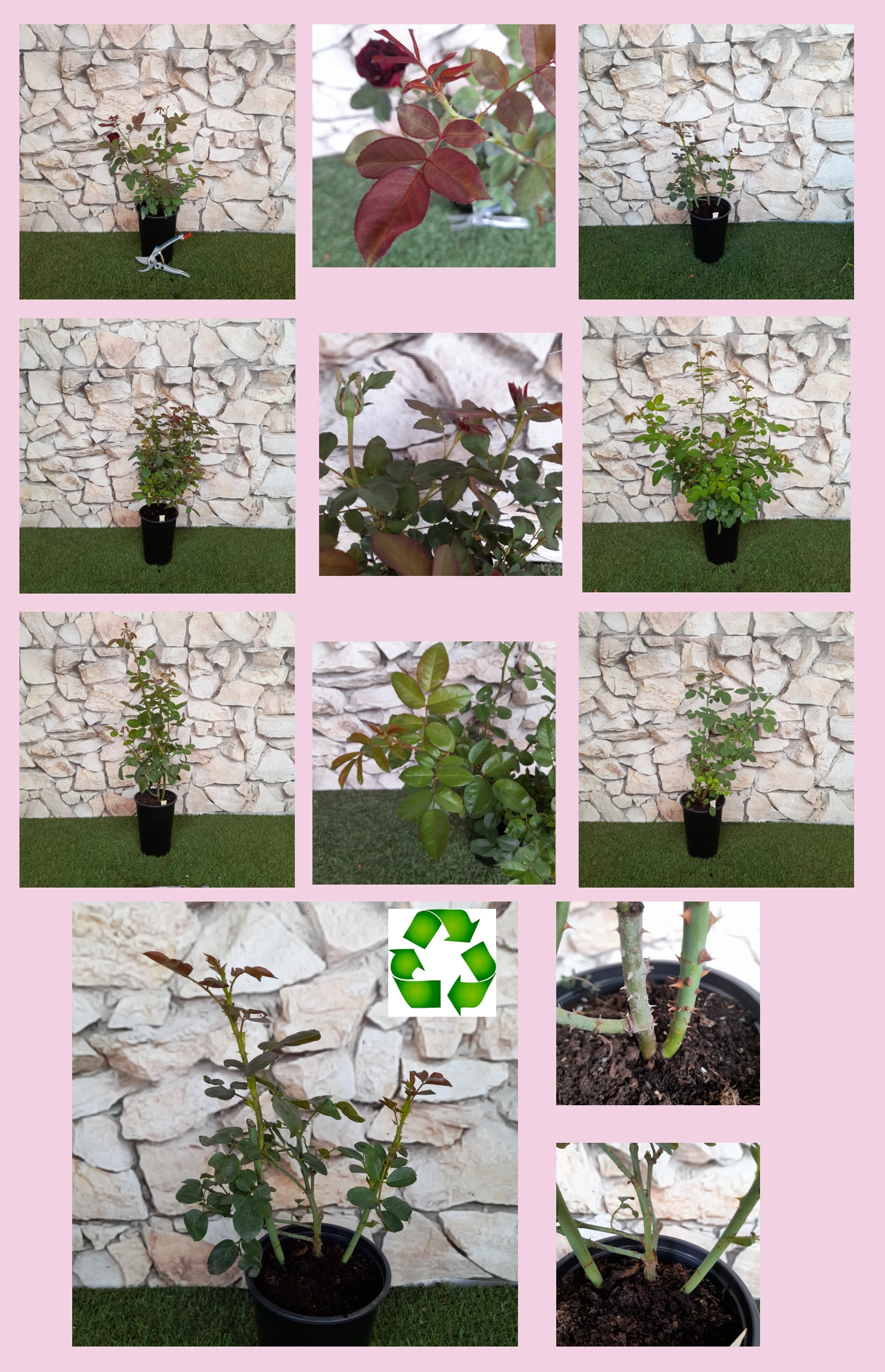
Step out after rain into a front garden edged with crimson cushions of MORSDAG®, a compact polyantha that keeps its colour flawless through unsettled British summers, even where coastal winds and heavier soils test lesser roses. Its low, neat habit and dense foliage lend instant structure to small London plots, while clusters of tiny pompon blooms provide a soft, romantic contrast to brick and railings. Planted as an own-root shrub, it builds a deep, resilient framework for a long life, quietly regenerating from the base and holding its shape with minimal effort. In a typical garden the story is simple: roots in year one, generous shoots in year two, full ornamental value in year three, giving you time to plan a balanced rainwater-wise layout and enjoy a low-stress, thoroughly sustainable garden feature.
Usage options
| Target area | Reasoning |
|---|
| Small front garden bedding strip |
The compact 40–60 cm height and 60–90 cm spread form a tidy ribbon of colour along paths or railings without overpowering a tight space, ideal for giving a terraced-house frontage a long red flowering season with very little shaping for busy urban gardeners |
| Low hedge or edging row |
Regular, bushy growth and dense dark green foliage make a visually solid, low boundary when planted at 45–55 cm spacings, giving you a refined hedge effect that stays neat with just light deadheading and occasional thinning for beginners seeking order |
| Container or large pot planting |
MORSDAG® adapts well to containers; in at least 40–50 litre pots its shallow but fibrous own-root system remains stable, providing long-term structure and repeat flowering on balconies or paved front gardens where deep soil is limited for space-conscious homeowners |
| Long-term, low-intervention planting |
As an own-root rose, it reshoots reliably from the base if cut back by weather or age, avoiding graft failures and helping the plant retain ornamental value over many years with only modest pruning and feeding for longevity-minded gardeners |
| Rainwater-aware, heavy-clay sites |
Once planted into improved, free-draining pockets within heavier clay, its moderate water needs and compact framework suit gardens that channel roof run-off into beds, coping steadily with showery summers and breezier exposure for sustainability-focused city dwellers |
| Low-maintenance family garden border |
Moderate disease resistance, including good tolerance to powdery mildew and black spot, means you can usually manage with basic hygiene and minimal spraying, supporting an easy-care approach around play areas and seating for time-poor families |
| Formal bedding and repeat-flower displays |
Abundant, cluster-flowered crimson pompons repeat through the season with a strong second flush, giving a carpet of consistent colour well suited to geometric beds, parterres, or driveway planting that you want to look good most of the summer for display-focused owners |
| Urban green spaces and shared planting |
The sturdy, compact structure and H7 hardiness help it cope with public or communal areas, where it can be mass-planted at 3.3–3.8 plants/m² to give a durable, easy-to-maintain red groundcover effect under light maintenance regimes for community-minded gardeners |
Styling ideas
- Front-door welcome – Line a short path with MORSDAG® underplanted with low thyme, echoing red door paint and softening paving – ideal for style-conscious terrace owners.
- Crimson cushion – Mass-plant in a rectangular bed with a backdrop of Cotinus ‘Royal Purple’ for layered burgundy tones – suited to gardeners seeking bold, compact structure.
- Balcony classic – Grow one or two plants in 50-litre tubs with trailing white lobelia to spill over the rim – perfect for small-space gardeners wanting easy, long-lived colour.
- Formal edging – Use as a uniform edging around a central lawn with clipped box or low yew behind for a traditional, ordered frame – for those who enjoy a classic, tidy look.
- Soft contrast – Combine with pale ornamental grasses and silver foliage (such as Stachys) to offset the deep red clusters – appealing to gardeners who favour gentle, romantic schemes.
Technical cultivar profile
| Parameter | Data |
|---|
| Name and registration |
Polyantha bedding rose from the Bedding rose collection; current trade name MORSDAG® Bedding rose Grootendorst & Goey; ARS exhibition name ‘Mothersday’; unregistered cultivar in formal registers. |
| Origin and breeding |
Spontaneous red sport from ‘Dick Koster’, with Rosa rugosa rubra × ‘Madame Norbert Levavasseur’ in its background; bred in Boskoop, Netherlands, by F. J. Grootendorst and J. de Goey, introduced from 1918–1949. |
| Awards and recognition |
Recognised in American Rose Society local exhibitions as a reliable polyantha spray cultivar, taking multiple first-place awards in its class between 1998 and 2001 in competitive show conditions. |
| Growth and structural characteristics |
Compact shrub 40–60 cm tall and 60–90 cm wide, with dense, glossy dark green foliage and a lightly thorned framework; naturally forms low mounds ideal for bedding, edging and container compositions. |
| Flower morphology |
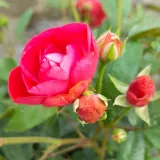
Small, fully double pompon blooms (26–39 petals), arranged in generous clusters on short stems; self-cleaning is partial, so light deadheading improves neatness and prolongs the decorative display in beds. |
| Colour data and phenology |
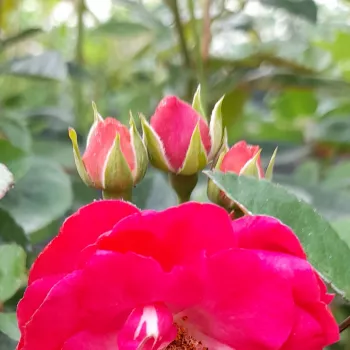
Rich crimson-red flowers, ARS MR, RHS 53A–53B; buds open dark and velvety, then lighten slightly while remaining clear red with very good colour retention and a consistently uniform, non-streaked appearance. |
| Fragrance and aroma |
Fragrance is very weak, with only a faint rose-like note close-up; selected primarily for colour impact, flower form and bedding performance rather than scent, making it best used where visual effect is the priority. |
| Hip characteristics |
Due to very double flowers, hip set is generally sparse; when present, produces small spherical red hips about 5–7 mm across, adding occasional discreet seasonal interest without seeding around aggressively. |
| Resistance and winter hardiness |
Hardy to around −26 to −23 °C (RHS H7; USDA 5b, Swedish zone 4); moderate overall disease resistance with good tolerance of powdery mildew and black spot, but only moderate resistance to rust in humid sites. |
| Horticultural recommendations |
Use in beds, edging, containers (40–50 litres+), low groundcover and urban green spaces; medium maintenance with periodic pest and disease checks; suitable for full sun to light partial shade settings. |
MORSDAG® offers compact, long-season crimson colour, durable own-root growth and reliable low hedging, making it a thoughtful choice for those planning a neat, easy-care family garden.