Deep raspberry-red bloom, with a delicate light-pink speckled edge. - flower bed shrub rose - very weak, barely perceptible scented rose - discreet, delicate character
– Bushy, compact habit for structured beds.
– Medium pink blooms with ruby undertones.
– Reliable repeat flowering through the season.
– Very hardy shrub, down to –40 °C.
– Moderately attractive to bees and pollinators.
– Special feature: Forms neat clusters of flowers above glossy dark foliage, ideal for low, colourful hedging.
Sustainable garden design – Shapes and contours
eleanorROSE® ORIGINAL 2-litre own-root potted rose
17,90 £
Unfortunately, we are currently unable to ship to the United Kingdom; we only deliver to countries within the European Union. For more information, please contact us!
4(6279)
MORDEN RUBY™ – pink bedding shrub rose
Step out after rain into a front garden that feels quietly composed: MORDEN RUBY™ brings a bushy, rounded structure of glossy dark foliage and ruby-pink flowers that repeat generously from early summer into autumn. Its semi-double blooms offer accessible centres for visiting bees, helping you build a more sustainable city planting without sacrificing colour. Bred in Canada for robust cold tolerance, it takes typical British weather in its stride, coping reassuringly with wind and wet spells in heavier soils near the coast. As an own-root rose it develops steadily, with roots in year one, stronger top growth in year two and full impact by year three, giving a long-lived, easily managed display in a modest space. In a London terrace front garden, a narrow bed or a generous 40–50 litre container, it offers reliable flowering, moderate maintenance, gentle fragrance and a calm sense of balance that works beautifully with rain‑watered, low‑input planting schemes.
Closed bud of Morden Ruby™ showing the rich raspberry-pink colour.
Closed bud of Morden Ruby™ showing a rich raspberry-pink tone.
Morden Ruby™ showing different opening phases in one clip.
Freshly opened bloom of Morden Ruby™ with warm raspberry-pink tones.
Usage options
Target area
Reasoning
Small urban front garden bed
The compact, bushy habit and mid‑height structure help define a narrow town‑house border without overwhelming it, while repeat flowers keep the space looking cared‑for between busy weeks for the beginner gardener
Pollinator‑friendly mixed border
Semi‑double clusters with visible stamens offer moderate nectar access, working well alongside herbs like lavender, nepeta or sage to support bees and hoverflies through a long flowering window for the wildlife‑minded owner
Rain‑watered, low‑input bed on heavier soil
Bred for tough climates, this shrub copes well with typical British rain and heavier ground, particularly where simple improvements to drainage are made in front‑garden beds that rely mainly on stored rainwater for the sustainability‑focused gardener
Long‑term family garden feature
As an own‑root shrub it matures into a stable, well‑shaped plant that regenerates well from pruning and minor damage, supporting a long design life in a family garden with children and pets for the long‑view homeowner
Low‑maintenance flowering hedge or edging
Planted at recommended spacings, its rounded form and repeat clusters create a soft, colourful line that needs only occasional deadheading and seasonal pruning to stay neat along paths or driveways for the time‑pressed household
Statement rose in a large container
In a 40–50 litre peat‑free container with regular watering, it offers a strong focal point of lush foliage and ruby‑pink blooms by the front door, with own‑root resilience giving reliable regrowth year after year for the balcony or patio gardener
Coastal or exposed suburban site
The moderately dense, glossy foliage and sturdy framework help it stand up to wind and rain, while its breeding background supports dependable performance where conditions are cooler and more changeable for the weather‑aware planter
Colour‑themed “girly” planting scheme
The raspberry‑pink flowers, softening to powdery blush tones, pair beautifully with silvers, creams and soft mauves, giving a romantic yet tidy look that stays attractive across the season for the style‑conscious gardener
Styling ideas
Terrace Welcome – Line a short London terrace path with three shrubs underplanted with low lavender and thyme, using soft pink and silver foliage to frame the doorway – ideal for urban homeowners wanting gentle structure.
Ruby Ribbon – Create a loose edging along a drive or shared front boundary, alternating MORDEN RUBY™ with clumps of nepeta for a bee‑friendly, easily trimmed band of colour – suited to families sharing front‑garden space.
Rain-Garden Jewel – Position the rose on a slight mound beside a shallow, gravelled swale, combining it with sage and ornamental grasses for a rain‑fed, low‑input feature – perfect for sustainability‑minded city gardeners.
Cottage Pocket – In a small bed, mix this shrub rose with foxgloves, soft pink geraniums and airy grasses to evoke a cottage feel without fussy care – good for beginners seeking romantic impact in limited space.
Balcony Focus – Grow one plant in a 50‑litre peat‑free container with trailing thyme and white lobelia to soften the rim, keeping watering simple with collected rainwater – ideal for busy balcony or patio owners.
Technical cultivar profile
Trait
Data
Name and registration
MORDEN RUBY™ bedding shrub rose, horticultural bush rose in the Shrub group; commercial bed rose type, currently marketed as Morden Ruby™ Bedding rose Marshall, with American Rose Society exhibition name ‘Morden Ruby’.
Origin and breeding
Bred by Henry H. Marshall at Agriculture Canada’s Morden Research Station from ‘Fire King’ × (‘J.W. Fargo’ × ‘Assiniboine’); breeding completed 1964, registered and introduced in 1977 for cold‑climate ornamental use.
Growth and structural characteristics
Bushy shrub habit, approximately 85–115 cm tall and 105–135 cm wide, with moderately dense, glossy dark green foliage and moderate prickliness, forming a rounded outline suited to beds, hedging and mixed planting schemes.
Flower morphology
Semi‑double cup‑shaped clusters, 13–25 petals, medium‑sized blooms around 1.5–2.75 inches across; flowers are carried in trusses, self‑cleaning is moderate so light deadheading keeps plants tidy and encourages repeat display.
Colour data and phenology
Deep raspberry‑red to pink blooms (RHS 53A–53B), opening with warm raspberry‑coral centres, then softening to dusty, powdery rose with pearly edges; moderate colour retention, flowering in generous waves with a strong second flush.
Fragrance and aroma
Fragrance is very weak and discreet, often barely perceptible in average conditions, so it is chosen more for colour and resilience than perfume; the subdued scent suits entrances and seating where strong aroma is not desired.
Hip characteristics
Produces moderate numbers of small, spherical orange hips, about 7–11 mm in diameter; hips add seasonal interest in late season and can provide modest wildlife value where some spent flowers are left un‑deadheaded.
Resistance and winter hardiness
Rated to about −40 to −37 °C (RHS H7; Swedish Zone 6; USDA 3a), with medium general disease resistance; black spot is resistant, while powdery mildew and rust are moderate, benefiting from good air circulation and hygiene.
Horticultural recommendations
Best in sunny positions for beds, parks, hedging or solitary use; plant 110–180 cm apart depending on purpose, at 0.7–0.8 plants/m²; maintenance is medium, with occasional plant protection and light pruning to renew flowering wood.
MORDEN RUBY™ offers a compact, long‑lived own‑root shrub with repeat flowering, reliable structure and cool‑climate toughness, making it a thoughtful choice if you want lasting colour with modest upkeep in a family garden.
Meaning of Cultivar Name:
"Ruby" refers to the ruby gemstone and to the flower's ruby-red colour, while "Morden" denotes the name of the breeding station.
Closed Bud:
Rich raspberry-pink–cyclamen, slightly darkening towards the tips, with a paler rosy sheen on the outer surface.
Newly Opened Flower:
Warm, raspberry–coral pink centre, the outer petal zone softens to a lighter blush pink with occasional subtle, luminous lightening at the margin.
Full Bloom:
Even, medium‑deep pink overall tone with a raspberry hue, the inner petals richer and deeper, with slight lightening at the edges and delicate marbled lightening in places.
Before Fading:
The pink softens and fades to a dusty–powdery rose, while the edges may take on a pearly/creamy hue.
Colour Fading Description:
As the bloom opens, the medium‑deep raspberry‑pink gradually mutes and fades to a dusty‑powder pink, the edges in places lightening to a pearly/creamy tone; in strong sunlight it fades slightly faster, while in cool conditions it appears more vivid.
Pollinator Attraction:
Semi-double flowers with 13–25 petals moderately attract pollinators, as the semi-double form and somewhat concealed stamens reduce but do not eliminate insect access.
Pollinator-Friendly Rating:
With its semi-double (13–25 petal) flowers it is moderately pollinator-friendly, the stamens are partially accessible.
Our product is a rose grown with pharmaROSA®’s unique cultivation technology!
2-litre, own-root, potted rose.
With a shoot system appropriate to the season.
With a root system that thoroughly permeates the growing medium.
Quality compliant with the requirements of the E.N.A. (European Nurserystock Association).
Supplied in unique packaging that prevents damage.
Can be planted during frost-free periods.
True-to-variety rose bush with a unique identifier.
The pharmaROSA® own-root potted rose is a well-rooted plant that supports reliable establishment when planted and cared for properly, so it can be planted whenever the soil is not frozen.
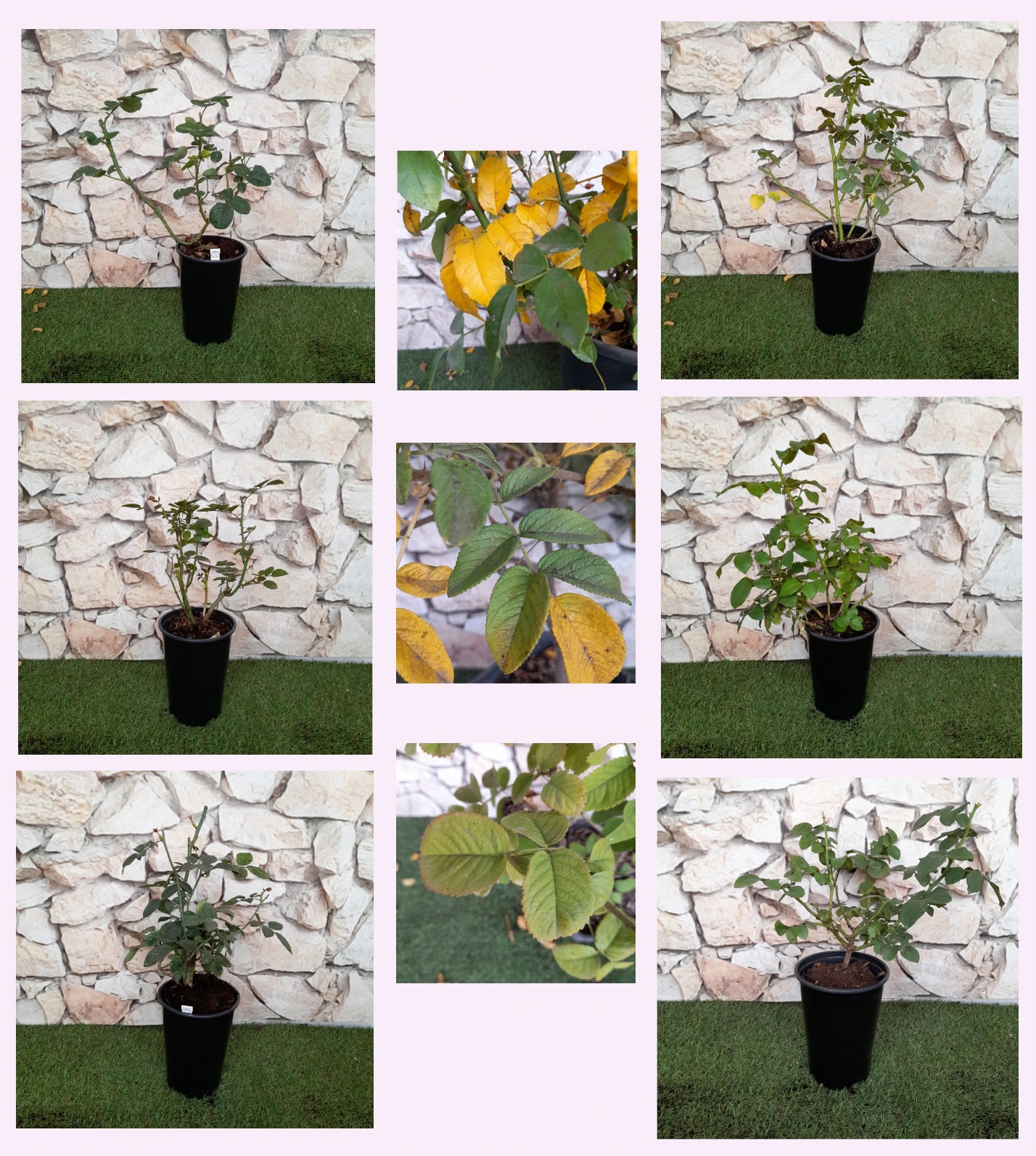
Crop overview: several varieties and growth stages in a short crop section.Shoot system: intensive growth of fresh basal shoots on a young plant.Root system: demonstration of a vigorous root system permeating the growing medium, by removing the pot.Balance: mature plant with root system and shoots in harmony with each other.
Information about the videos
The video series is not a “seasonal showcase”; it illustrates the essence of pharmaROSA® own-root cultivation in a tangible way: how the plant is built up, what the root system is like and how the shoot system regenerates. The recordings were therefore made at different times and with plants at various stages of development, so mixed foliage levels and differing stages of growth may appear in the videos. They are not a ‘sample’ of the batch dispatched, but a visual explanation of how the technology works. The current condition of the rose available to order — typical for the given period and similar to what you can expect to receive in the parcel — is shown in the upper part of the product page.
Pages for private customers Garden roses for the family garden, with minimal care → ORIGINAL® Premium garden roses – instant impact, a truly showpiece garden → EXTRA® Pages for professionals and private customers Roses for public spaces – large areas, sustainable maintenance → NATURAL® Roses for projects – hedge and row planting, fast implementation → RAPID® For professional partners only Production – propagation material for garden roses, wholesale → NEONATAL®
Company details
PharmaRosa Ltd. Company registration number: 01-09-717479 VAT number: 13075314-2-43 Plant health registration no.: HU130721 Bank account (IBAN): HU85117631891388688400000000 BIC (SWIFT): OTPVHUHB Bank name: OTP Bank Nyrt.