MILROSE – pink bedding floribunda rose – Chabert
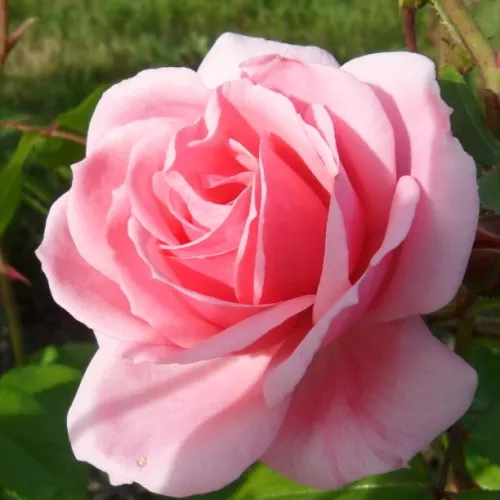
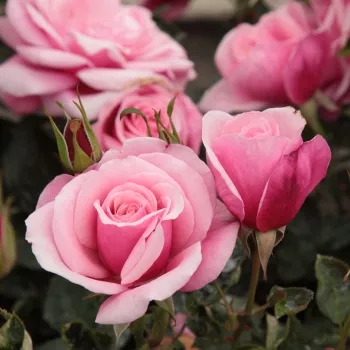
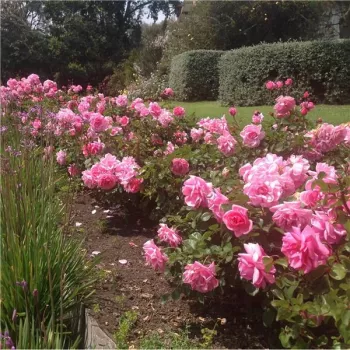
Step off the pavement and into a subtly perfumed front garden with Milrose, a compact floribunda bedding rose that brings balance and soft mid-pink colour to small London plots and terraces, even where heavy, moisture-retentive soils respond best to thoughtful drainage in wetter spells. Its bushy habit and glossy, light green foliage create a fresh backdrop for season-long clusters of semi-double blooms, ideal when you prefer reliable structure over complicated pruning. As an own-root rose, Milrose is bred for longevity, quietly thickening at the base and regenerating from its own wood if ever cut back hard or weather-damaged, helping to maintain stable ornament year after year with minimal fuss. In typical family gardens it settles quickly into a low, neat hedge or border rhythm, rewarding simple watering and mulching with repeat flushes from early summer to autumn and a scattering of small red hips. Plant once, then watch the natural progression as roots establish first, shoots strengthen the following season and full ornamental presence arrives by the third year, supporting a green, sustainable approach to city gardening. Milrose suits “girly” frontages, where its romantic pinks soften hard lines, and where rainwater from roofs and butts can be used efficiently on a resilient, low-intervention classic shrub that keeps its place in the scene.
Usage options
| Target area | Reasoning |
|---|
| Front garden bedding strip |
Milrose’s compact, bushy habit (around 70–100 cm tall) and dense, glossy foliage make it ideal for narrow urban front beds, where it gives clear structure and colour without overwhelming the space, appealing to the beginner gardener. |
| Low rose hedge along a path |
Regular spacing at 35–40 cm creates a tidy, low hedge of mid-pink blooms, guiding visitors along paths while remaining easy to manage with a simple yearly prune, perfect for the family homeowner. |
| Mixed border with perennials |
Reliable repeat flowering and moderate height allow Milrose to sit comfortably among lavender, sage or nepeta, adding rhythmic pink accents while companions support pollinators, suiting the sustainability-focused gardener. |
| Rainwater-conscious clay garden |
Once established in improved, free-draining pockets, Milrose offers stable structure and flowering in moisture-retentive urban soils that benefit from careful drainage in prolonged wet spells, reassuring the city front-garden owner. |
| Container on terrace or balcony |
In a large 40–50 litre pot with peat-free compost, Milrose forms a neat, flowering shrub that is easy to water with collected rain, giving long-term value on balconies and terraces for the busy urban dweller. |
| Low-maintenance family border |
Strong resistance to powdery mildew, black spot and rust keeps foliage healthy with minimal spraying, so borders look good even when time is short, which is reassuring for the time-poor parent. |
| Long-term structural planting |
As an own-root shrub, Milrose thickens from the base and can regenerate from its own shoots after hard pruning, supporting a long-lived, reliable framework valued by the long-range planner. |
| Softly romantic accent planting |
The semi-double, cup-shaped flowers open rich mid-pink and fade to pearly pastels, creating a gentle, feminine look that pairs beautifully with grasses and soft hues, delighting the romantic stylist. |
Styling ideas
- Terraced-Entrance – Line a short front path with Milrose and a low edging of Armeria maritima, creating a pink-and-soft-green welcome – ideal for design-conscious city homeowners.
- Balcony-Border – Plant Milrose in a 50 litre container with trailing nepeta for a long-flowering mini border – perfect for urban dwellers with limited ground space.
- Pastel-Ribbon – Combine Milrose with pale lavender and soft grasses for a ribbon of gentle colour along a drive – suited to those seeking a romantic but easy-care look.
- Family-Front – Use Milrose in a low hedge under front windows, with rainwater from a butt for irrigation – practical for busy families wanting smart kerb appeal.
- Structured-Softness – Anchor a small mixed bed with Milrose and compact junipers, softening evergreens with steady pink flowering – appealing to planners of long-lived plantings.
Technical cultivar profile
| Parameter | Data |
|---|
| Name and registration |
Floribunda bedding rose, registered as DELbir, sold as Milrose Bedding rose DELbir; ARS exhibition name Milrose; floribunda group shrub suitable for bedding and border use. |
| Origin and breeding |
Bred by André Chabert for Georges Delbard, France, from ‘Orléans Rose’ × (‘Français’ × ‘Lafayette’); introduced by Georges Delbard SA in 1965 as a reliable garden and bedding rose. |
| Awards and recognition |
Holder of four medals from international rose competitions, reflecting long-standing garden merit, dependable performance and ornamental quality assessed under varied European conditions. |
| Growth and structural characteristics |
Bushy shrub, about 70–100 cm high and 50–70 cm wide, with dense, light green, glossy foliage and notably thorny stems; forms a compact, coherent shape suited to edging or low hedging. |
| Flower morphology |
Semi-double, cup-shaped blooms with around 13–25 petals, produced in corymbose clusters; large flower size for a bedding rose, with remontant, abundant repeat flowering through the season. |
| Colour data and phenology |
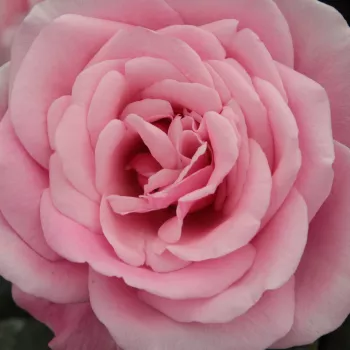
Mid-pink blooms (RHS 55C outer, 62D inner) opening vivid then lightening to pearly pastel pink; colour remains even at full bloom before fading to a soft, silky, pearlescent tone. |
| Fragrance and aroma |
Light, classic rose scent with a gentle, unobtrusive character that adds refinement close to paths and seating without overwhelming small spaces or competing with strongly scented companions. |
| Hip characteristics |
Produces moderately abundant, spherical red hips, about 5–8 mm across, adding subtle seasonal interest in late season and signalling successful flowering without dominating the plant’s appearance. |
| Resistance and winter hardiness |
Rated resistant to powdery mildew, black spot and rust; hardy to approximately –21 to –18 °C (RHS H7, Swedish zone 3, USDA 6b), reliable in most UK regions with typical garden care. |
| Horticultural recommendations |
Best in sunny positions with improved drainage; plant 35–65 cm apart depending on use, at 5.7–6.6 plants/m² for bedding; low maintenance with simple annual pruning and basic feeding. |
Milrose Bedding rose DELbir offers compact, repeat pink flowering, robust disease resistance and long-lived own-root reliability, making it a thoughtful choice for understated, sustainable family gardens.